

Why do patients stick with expensive medications even when cheaper, equally effective options exist? Why do some people fill their prescriptions, while others never pick them up-even when their life depends on it? The answer isn’t just about cost, education, or access. It’s about psychology. Behavioral economics reveals that human decisions around drugs are messy, emotional, and deeply influenced by hidden mental shortcuts we didn’t even know we had.
People Don’t Choose Drugs Like Robots
Traditional economics assumes people act rationally: they compare prices, weigh risks, and pick the best deal. But real patients don’t work that way. A 2022 study found that 68% of patients kept their current medication even when a similar one cost 30% less. Why? Fear. Loss aversion. Trust. These aren’t irrational-they’re predictable. Behavioral economics shows we’re wired to avoid losses more than we seek gains. Losing the comfort of a familiar pill feels worse than saving money on a new one.Take confirmation bias. Many patients believe pricier drugs must be better. A 2022 analysis showed prescription drug prices rose 47% faster than general inflation since 2010-not because they’re more effective, but because patients and doctors often assume cost equals quality. That belief sticks, even when studies prove otherwise.
The Hidden Forces Shaping Drug Decisions
Several psychological patterns drive medication choices, and they show up everywhere:- Loss aversion: Patients don’t want to give up what they have-even if it’s not ideal. Switching meds feels like a risk, even when the alternative is safer or cheaper.
- Present bias: We prioritize today’s convenience over tomorrow’s health. That’s why 33% of prescriptions go unfilled. The headache tomorrow feels distant; the trip to the pharmacy today feels like a hassle.
- Default settings: If a doctor’s electronic system automatically suggests Drug A, patients rarely question it. One study found that changing the default drug in order sets during shortages boosted appropriate substitutions by 37.8%.
- Social norms: People copy what they see. In one HIV clinic, posting adherence rates on a wall improved patient compliance by 22.3%. When patients saw others were sticking to their meds, they followed suit.
- Framing: Saying a vaccine is “95% effective” works far better than saying it’s “5% ineffective.” The same principle applies to drugs. Telling a patient “this medicine reduces your risk of heart attack by 40%” lands differently than “you still have a 60% chance of having one.”
These aren’t abstract theories. They’re measurable forces shaping real-world behavior. Patients managing five or more medications have adherence rates 23.7% lower than those on one drug. Dosing frequency matters too: each extra daily pill cuts adherence by about 8.3%. It’s not laziness-it’s cognitive overload.
Why Education Alone Fails
Doctors often assume that if patients just understood their condition better, they’d take their meds. But decades of research show patient education programs typically improve adherence by only 5-8%. That’s barely a blip.Behavioral interventions? They work better. A 2022 review of 44 studies found that 92% of behavioral approaches improved prescribing or adherence-far outperforming traditional education. The most powerful? Defaults and loss aversion.
For example, a 2021 NEJM study gave statin patients a chance to earn cash rebates if they took their pills consistently. Those who stood to lose money if they skipped doses had 23.8% higher persistence than those who just got reminders. The fear of losing something already in hand-money, a streak, a sense of control-triggers action more than any pamphlet ever could.
Real-World Interventions That Work
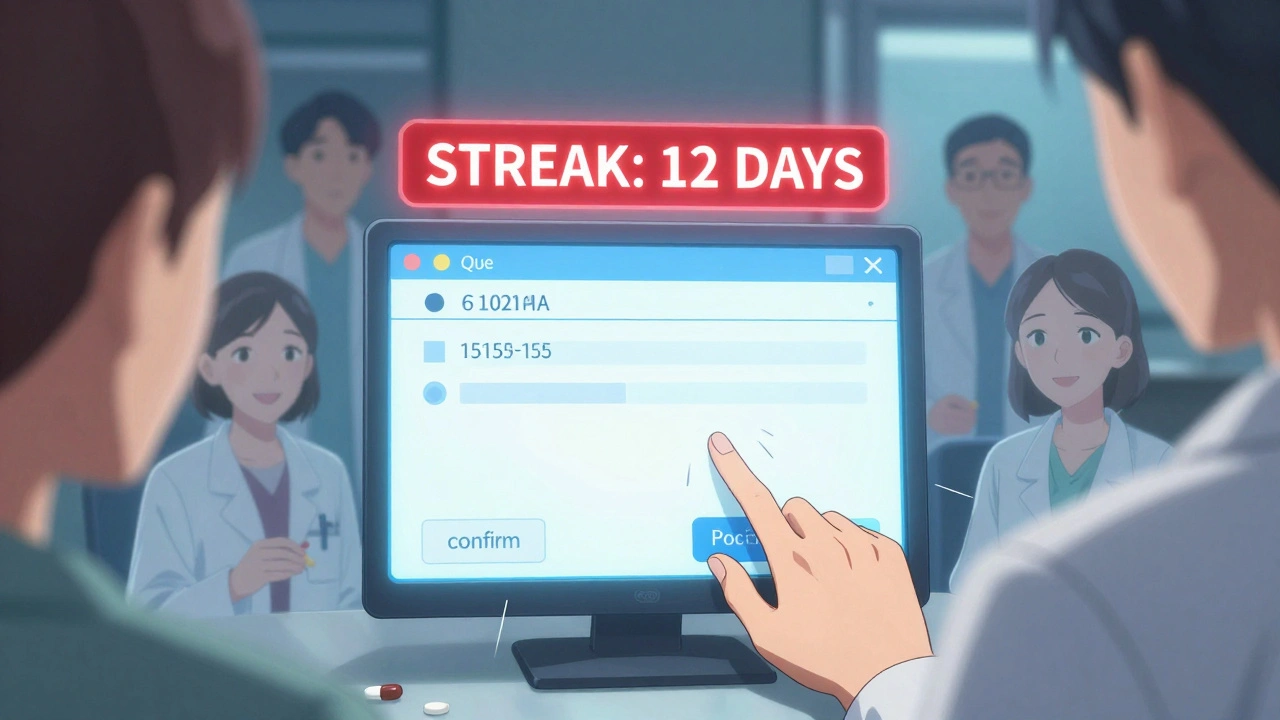
Health systems and pharma companies are now testing real behavioral nudges:- SMS reminders: “Don’t lose your streak!” increased adherence by 19.7%. Neutral messages like “Take your pill” didn’t.
- Smart pill bottles: These track when patients open the bottle and send feedback. They boosted adherence by 24.3%, but cost $47.50 per patient monthly.
- Simple text alerts: At $8.25 per patient, they’re cheaper and still effective-especially when timed with daily routines like brushing teeth.
- Formulary design: Pharmacy benefit managers now use behavioral insights to structure drug tiers. They don’t just list cheapest options-they make them the easiest to choose.
Some programs combine multiple nudges. One 2022 study used defaults (pre-selected alternative drugs), social proof (showing how many others switched), and loss aversion (offering a small reward for switching). The result? A 38.7% higher adherence rate than any single nudge alone.
Where It Doesn’t Work
Behavioral economics isn’t magic. It fails in certain situations:- When there’s no good alternative: In cancer care, patients often have only one effective drug. Nudges can’t fix a shortage.
- With severe mental illness: Depression and anxiety reduce the effectiveness of behavioral interventions by 31.4%. Patients struggling with these conditions need clinical support first, not nudges.
- When beliefs are deeply rooted: If a patient believes their medication is “poison” or “unnatural,” no amount of framing will change that. Trust has to be built first.
Also, the effects fade. Only 34.2% of programs keep their initial gains after 12 months. That’s why long-term success requires embedding nudges into daily workflows-not running them as one-off campaigns.
The Business Side: Why Pharma Companies Care
It’s not just about health outcomes-it’s about money. Medication non-adherence costs the U.S. healthcare system $289 billion a year and leads to 125,000 preventable deaths. For drug makers, patient persistence equals profit. A 2022 McKinsey report found that companies using behavioral economics in patient support programs saw 17.3% higher persistence and 22.8% lower discontinuation rates.The behavioral economics consulting market for healthcare grew from $187 million in 2018 to $432 million in 2022. Pharmaceutical companies are now the biggest buyers-58.7% of clients. Why? Because if you can keep patients on your drug longer, you win.
But it’s not just about sales. Regulatory bodies are catching on. In 2023, CMS required Medicare Part D plans to include at least two evidence-based behavioral interventions for high-risk patients. The FDA’s 2023 draft guidance now asks drug sponsors to evaluate “the impact of dosing frequency and route of administration on patient decision-making”-a direct nod to behavioral economics.

The Future: Personalized Nudges
The next frontier? Tailoring nudges to individuals. Machine learning is being trained to predict who will respond to loss aversion, who needs social proof, and who’s more likely to be swayed by defaults. Early pilot studies show this can boost effectiveness by 42.3%.Imagine a diabetic patient who gets a text saying, “Your neighbor Maria took her insulin today-she’s doing great.” Or a heart patient who sees a pop-up: “You’ve taken your pill for 12 days straight. Don’t break the chain.” These aren’t sci-fi-they’re being tested now.
But this raises questions. Is it manipulative to design choices for people? Dr. Aaron Kesselheim at Harvard says no-if patients can still choose otherwise, it’s not coercion. It’s helping people overcome their own mental blind spots.
Behavioral economics doesn’t replace doctors. It gives them better tools. It doesn’t fix broken systems. But it helps people navigate them better.
What Patients Can Do
If you’re on multiple meds, ask yourself:- Am I taking this because it’s the best option-or just because it’s familiar?
- Do I feel worse thinking about switching, even if the new drug is cheaper or simpler?
- Could I set up a daily reminder tied to something I already do-like brushing my teeth?
- Would I feel more motivated if I knew others were doing the same?
Small changes in how you think about your meds can make a big difference. You don’t need to be perfect. You just need to make it easier to stick with what works.
What Providers Can Do
Doctors and pharmacists aren’t powerless. You can:- Make the best option the default in your EHR system.
- Use loss-framed language: “Skipping your pill means losing the progress you’ve made.”
- Ask patients: “What’s the hardest part about taking your meds?” Then tailor the solution.
- Use simple text reminders-not just printed sheets.
You’re not just prescribing drugs. You’re designing behavior.
Why do patients stick with expensive drugs even when cheaper ones are available?
Patients often stick with expensive drugs due to psychological factors like loss aversion (fear of losing what they know), confirmation bias (believing higher cost means better quality), and present bias (preferring convenience over long-term savings). Studies show 68% of patients won’t switch to a cheaper, equally effective drug-even when it saves them 30%. It’s not about price alone-it’s about emotional comfort and perceived risk.
How effective are behavioral interventions compared to patient education?
Behavioral interventions are far more effective. While traditional patient education improves adherence by only 5-8%, behavioral approaches like defaults, loss aversion, and social norms improve adherence in 92% of studies. For example, rebate systems based on loss aversion boosted adherence by 14.3% more than education alone. The strongest results come from combining multiple nudges, like making the best drug the default option while showing how many others have switched successfully.
Can behavioral economics help with drug shortages?
Yes. During drug shortages, changing the default option in electronic prescribing systems to suggest an equally effective alternative increases appropriate substitutions by 37.8%. This works because doctors and patients rarely override defaults unless prompted. It’s not about forcing choices-it’s about making the right choice easier when the preferred option isn’t available.
Do behavioral nudges work for people with mental health conditions?
They’re less effective. Depression and anxiety reduce the impact of behavioral interventions by 31.4% compared to the general population. Patients with severe mental health conditions often need clinical support, therapy, or simpler regimens before behavioral nudges can work. Nudges aren’t a replacement for treatment-they’re a supplement, and only when the patient is stable enough to respond.
Is it ethical to influence patient choices using behavioral economics?
It’s ethical if patients can still choose freely. Behavioral nudges don’t remove options-they make better ones easier to pick. For example, a default drug in an EHR system can still be changed. Experts like Dr. Aaron Kesselheim argue that as long as patients retain autonomy, these tools help them overcome their own cognitive biases, not manipulate them. The goal isn’t control-it’s support.
How long do behavioral interventions last?
Most lose effectiveness after 6 months. Only 34.2% of programs maintain their initial adherence gains at the 12-month mark. That’s because habits fade without reinforcement. Long-term success requires integrating nudges into daily workflows-like automated reminders in EHRs, ongoing SMS check-ins, or tying medication routines to daily habits. One-time campaigns rarely stick.
What’s the biggest barrier to medication adherence?
The biggest barrier is complexity. Each additional medication reduces adherence by 8.3%. Patients taking five or more drugs have adherence rates 23.7% lower than those on one. Other major barriers include asymptomatic conditions (patients don’t feel sick, so they skip pills), negative beliefs about medication (41.2% of discontinuations), and mental health issues like depression (which cuts adherence by 28.4%). Simplifying regimens is often more powerful than any nudge.


this is so true i just started taking my blood pressure med and honestly i kept putting it off cause the pharmacy was far but now i set a reminder after my morning coffee and boom its stuck 😊