
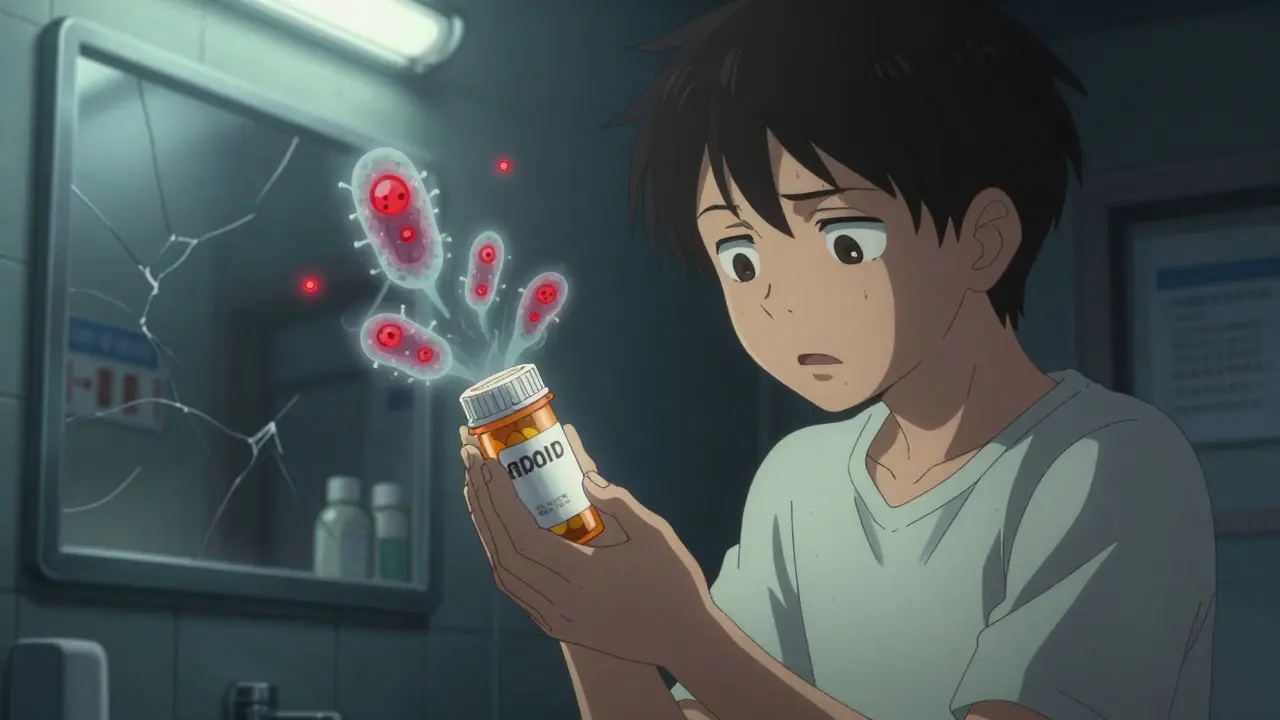
Most people assume that if a pill is still in its original bottle and looks fine, it’s probably safe to take-even if it’s months or years past the expiration date. But with antibiotics, this mindset can be dangerous. You might think you’re saving money or avoiding a doctor’s visit, but taking an expired antibiotic could make your infection worse, lead to longer illness, or even fuel a global health crisis: antibiotic resistance.
Expiration dates aren’t just paperwork. They’re the last day the manufacturer guarantees the drug will work as intended. That doesn’t mean the medicine suddenly turns toxic the next day. But it does mean you can’t be sure how much of the active ingredient is still working. And with antibiotics, even a small drop in potency can have serious consequences.
What Happens to Antibiotics After They Expire?
Not all antibiotics degrade the same way. Solid forms like tablets and capsules tend to hold up better. Studies from the U.S. Department of Defense’s Shelf Life Extension Program found that about 90% of medications-including many antibiotics-retained at least 90% of their original potency up to 15 years past expiration, if stored properly. That sounds reassuring, right? But here’s the catch: those were lab conditions. Controlled temperature, dry air, sealed containers. Most of us store our meds in humid bathrooms or hot medicine cabinets.
Real-world storage changes everything. A 2022 study found that amoxicillin tablets stored at 25°C with 60% humidity kept 85-92% of their potency even a year after expiration. But if that same pill sat in a bathroom where humidity hits 70% and temperatures climb above 30°C? That number drops fast. And liquids? They’re far more fragile.
Take amoxicillin suspension-the liquid form often given to kids. Once opened and mixed with water, it’s only stable for 14 days under refrigeration. After that, potency drops sharply. One study showed that just seven days past its expiration date, stored at room temperature, this suspension lost nearly half its strength. That’s not a little less effective. That’s not enough to kill the bacteria. And when antibiotics don’t fully wipe out an infection, the surviving bacteria become stronger. They adapt. They multiply. And now they’re resistant.
Why Degraded Antibiotics Fuel Resistance
This is the silent danger most people don’t realize. You take an expired antibiotic. It doesn’t kill all the bacteria. The weak ones die. The tough ones survive. They pass on their resistance genes. Next time, that same infection won’t respond to the same drug-even if it’s fresh.
A 2023 analysis of over 12,850 patient cases found that when expired amoxicillin was used, resistance rates against common bacteria like E. coli jumped from 14% to nearly 99%. The minimum dose needed to stop the infection-called the MIC-went from 0.5 μg/mL to a staggering 256 μg/mL. That’s more than 500 times stronger. In other words, the bacteria became nearly impossible to kill with the same drug.
That’s not just your problem. It’s everyone’s. Antibiotic resistance doesn’t stay in one person. It spreads. The World Health Organization now estimates that improper use of expired antibiotics contributes to nearly 4.3% of global resistance cases. That’s millions of infections each year that become harder to treat, leading to longer hospital stays, more expensive drugs, and higher death rates.
What Experts Actually Say
The FDA says: don’t use expired medications. Their official stance is clear-potency and safety can’t be guaranteed. But in real life, things get messy. During drug shortages, hospitals sometimes stretch expiration dates. Johns Hopkins Hospital extended 14 critical antibiotics by 12 months during a shortage, using lab tests to confirm potency. They treated over 2,300 patients with zero failures tied to degraded drugs.
Meanwhile, the Infectious Diseases Society of America warns that using expired antibiotics is a public health risk. They’ve documented cases where patients developed life-threatening infections because the expired drug didn’t work. The European Medicines Agency takes a middle ground: solid antibiotics stored properly might be okay for up to a year past expiration-but never liquids, never for serious infections.
Here’s the reality: there’s no universal rule. It depends on the drug, the form, how it was stored, and how sick you are. A single expired doxycycline tablet for a mild sinus infection? Maybe low risk. A six-month-old liquid amoxicillin for a child with pneumonia? Absolutely not.
What You Can Actually Do
Here’s what works in practice:
- Check the form. Tablets and capsules? More stable. Suspensions, eye drops, or injectables? Throw them out.
- Look at the storage. If it was kept in a cool, dry place-not the bathroom, not the car-it’s more likely still potent. If it was in a hot, humid drawer? Don’t risk it.
- Inspect the pill. Crumbly? Discolored? Smells weird? Don’t take it. But here’s the twist: most degraded antibiotics show no visible signs. A 2021 study found that 89% of pills that lost over 40% of their potency looked perfectly normal.
- Never use expired antibiotics for serious infections. Sepsis, meningitis, pneumonia, kidney infections-these are not the time to gamble. Go to the doctor. Get a new prescription.
- Don’t take them "just in case." That’s how resistance starts. If you’re not sure, don’t use it.
The CDC recommends that in emergencies, solid antibiotics may be used up to 12 months past expiration-if they’re from unopened, factory-sealed containers, show no signs of damage, and were stored properly. Even then, it’s a last resort.
What About Buying in Bulk or Stockpiling?
Some people buy antibiotics ahead of time, thinking they’re preparing for emergencies. But antibiotics aren’t like canned food. You can’t store them forever. A bottle of amoxicillin bought in 2023 won’t be reliable in 2027. And if you’re storing it in a drawer in a warm house? It’s probably already losing strength.
Pharmacies in low- and middle-income countries often sell antibiotics within months of expiration. A 2023 WHO study found that 44% of these pharmacies knowingly sold expired products during shortages. The result? Treatment failure rates were 18% higher than in places with reliable stock.
There’s a better way: keep a basic first-aid kit with pain relievers, antiseptics, and bandages. If you’re worried about infections, focus on prevention-handwashing, vaccines, clean water. Don’t rely on stockpiled antibiotics.
What’s Changing Now?
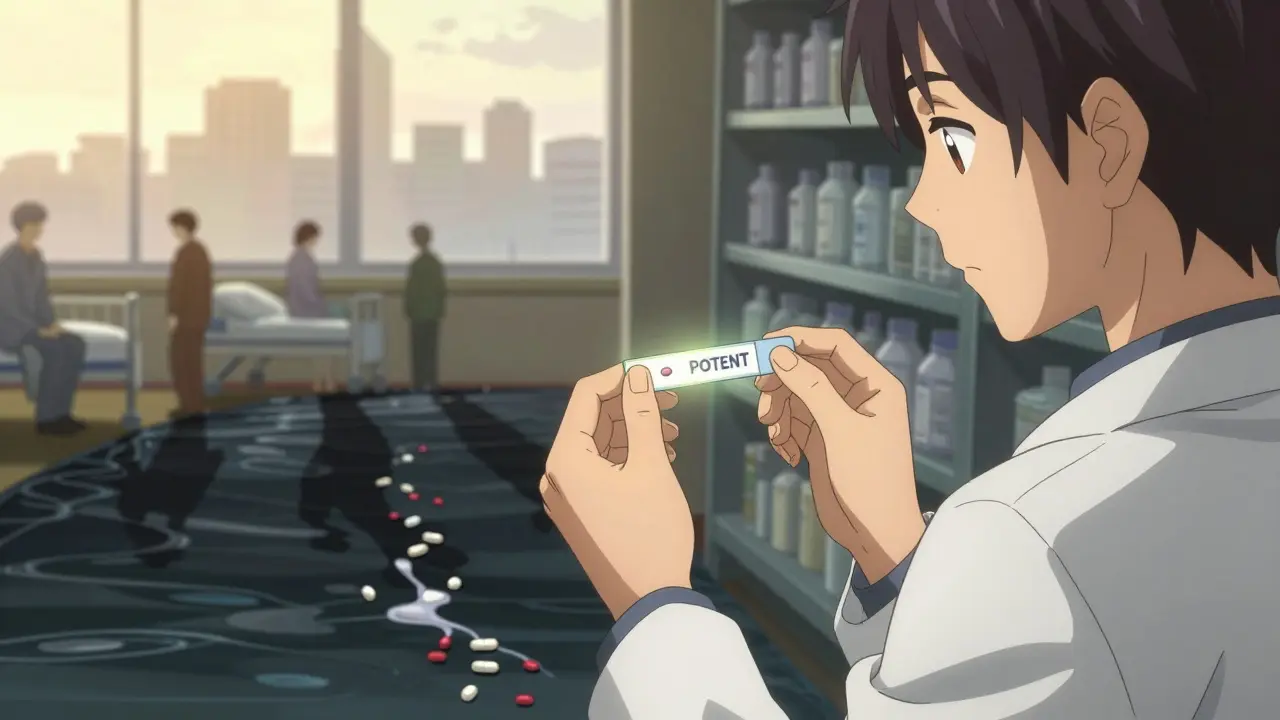
There’s growing pressure to update expiration policies. The FDA launched a pilot program in 2023 to test whether certain antibiotics can safely have their dates extended during shortages. Researchers at the University of Illinois are testing paper strips that can detect if amoxicillin is still potent-like a pregnancy test for medicine. Early results show 94% accuracy.
But manufacturers are still resistant. Over 90% of big drug companies oppose any system that changes expiration dates, citing legal risks. Until better testing becomes widespread, the safest rule remains: if it’s expired, don’t take it.
What Should You Do With Expired Antibiotics?
Don’t flush them down the toilet. Don’t throw them in the trash. Many pharmacies offer take-back programs. In Australia, you can drop off expired meds at any pharmacy for safe disposal. The goal isn’t just to clear your cabinet-it’s to stop these drugs from entering water supplies or falling into the wrong hands.
If you’re unsure whether an antibiotic is still good, ask your pharmacist. They can check storage conditions, look at the batch, and tell you if it’s likely still effective. Most won’t give you a guarantee-but they’ll give you the facts.
Bottom line: antibiotics aren’t like vitamins. They’re powerful tools-and like any tool, using them wrong can make them useless or even dangerous. When in doubt, throw it out. Get a new prescription. Your body-and the rest of us-will thank you.


I used to keep old antibiotics around 'just in case'-until my kid got a fever and I almost gave him a 3-year-old amoxicillin. Don't be that person. Throw it out. Simple.