
Azathioprine Dosage Calculator
Determine Your Safe Starting Dose
Based on TPMT and NUDT15 genetic testing results. Essential for preventing life-threatening side effects.
When you're prescribed azathioprine for Crohn’s disease, lupus, or after a kidney transplant, you're not just getting a drug-you're getting a chemical that your body has to process in a very specific way. For most people, it works fine. But for a small group, it can crash their blood cell production, leading to infections, bleeding, or even death. That’s where TPMT testing comes in. It’s not optional. It’s not just a suggestion. It’s a safety check that could save your life.
What Azathioprine Does-and Why It Can Be Dangerous
Azathioprine has been around since the 1960s. It’s cheap. It works. And for many people with autoimmune diseases, it’s the only long-term option that keeps their immune system from attacking their own body. But here’s the catch: your body breaks it down using an enzyme called TPMT. If you don’t have enough of this enzyme, the drug builds up to toxic levels. Instead of calming your immune system, it starts killing your bone marrow. The result? Severe myelosuppression. That means your white blood cells, red blood cells, and platelets drop dangerously low. You get sick from a cold that won’t go away. You bruise for no reason. You feel exhausted all the time. In extreme cases, you end up in the hospital with a life-threatening infection because your body has no defense left. About 0.3% of people-roughly 1 in 300-have two broken copies of the TPMT gene. They’re called homozygous deficient. For them, standard doses of azathioprine are basically poison. Another 10% have one broken copy. They’re heterozygous. They can handle the drug, but only if the dose is cut down.What Is TPMT Testing, and How Does It Work?
TPMT testing looks at your genes to see if you have the normal version of the enzyme or a faulty one. There are three main variants doctors test for: *2, *3A, *3B, and *3C. These are the broken versions that cause low enzyme activity. The test can be done with a simple blood sample or even a cheek swab. Results usually come back in 3 to 7 days. There’s also a second test called phenotyping, which measures enzyme activity directly in your red blood cells. But it’s less reliable if you’ve had a blood transfusion recently-your donated blood has its own enzymes, which mess up the results. So genotyping is now the gold standard. The goal isn’t to scare you away from azathioprine. It’s to give your doctor the right starting dose. If you’re homozygous deficient, you shouldn’t take azathioprine at all. Your doctor will switch you to methotrexate or a biologic like adalimumab. If you’re heterozygous, you start at 30% to 70% of the normal dose. Then, you get weekly blood tests for the first month to make sure your counts are stable.Why TPMT Testing Isn’t the Whole Story
A lot of people think if their TPMT test is normal, they’re safe. That’s not true. In one study of 139 patients on azathioprine, only 1 out of 13 who had to stop the drug because of side effects had low TPMT activity. That means 92% of the people who had serious reactions had normal TPMT levels. Why? Because other things can cause toxicity too. Allopurinol, a drug used for gout, blocks the same pathway as TPMT. If you’re on both, your azathioprine levels spike-even if your genes are fine. The same goes for ACE inhibitors and kidney problems. Your liver also makes a different metabolite called 6-MMP. If that builds up above 5,700 pmol per 8 x 10^8 red blood cells, you’re at risk for liver damage. And then there’s NUDT15. This gene is just as important as TPMT, especially if you’re of Asian descent. Up to 20% of people in some Asian populations have a variant that makes them super sensitive to azathioprine. In Europe and North America, TPMT is the main concern. But in Australia, where there’s a large Asian community, NUDT15 matters just as much. That’s why newer guidelines now recommend testing for both.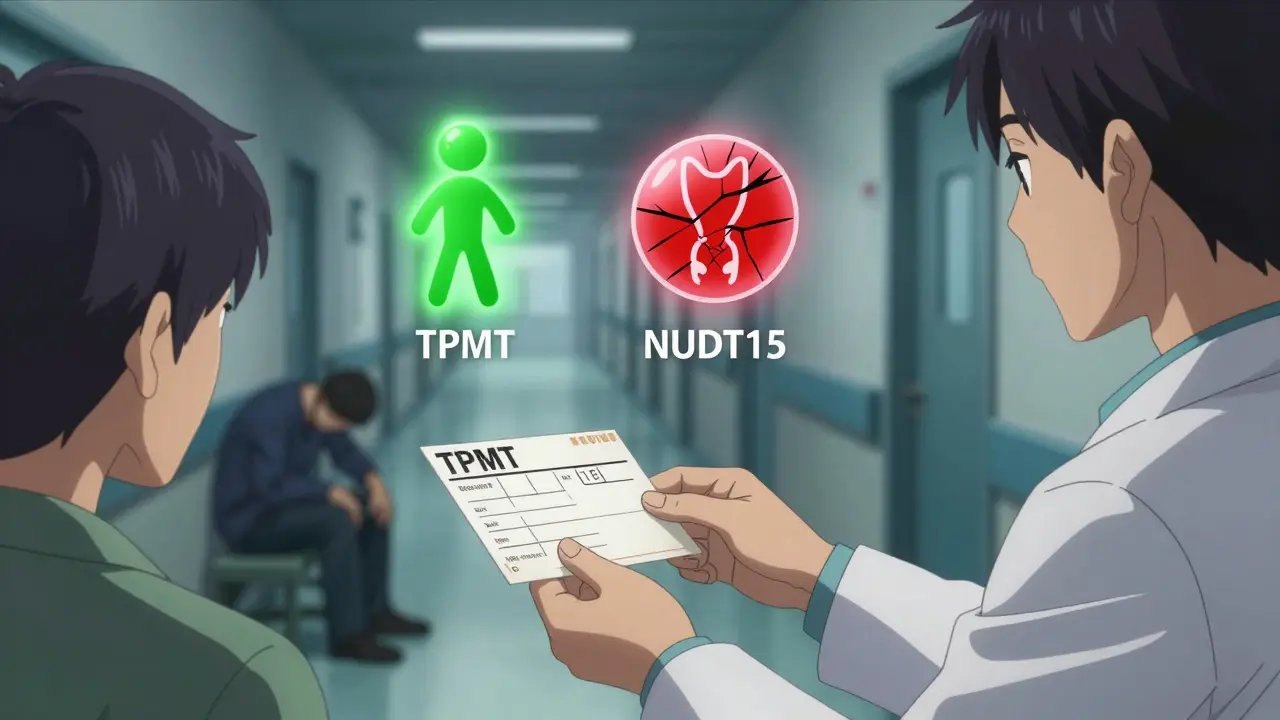
The Real Cost of Skipping the Test
Azathioprine costs $20 to $50 a month. TPMT testing runs $200 to $400. At first glance, testing seems expensive. But consider this: one hospital stay for severe neutropenia can cost $20,000 or more. Add in lost work time, emergency care, and the risk of death, and the math changes. A 2011 study with 333 patients found that TPMT testing didn’t reduce the overall number of side effects. But that’s because most side effects are mild-nausea, headaches, rashes. Those aren’t prevented by genetic testing. What it prevents is the rare, catastrophic event. The kind that makes headlines. The kind that leaves families asking, “Why didn’t they test her?” In Australia, most private insurers cover TPMT testing. Public hospitals in Melbourne and Sydney routinely offer it before starting azathioprine. But in rural clinics or with GPs who aren’t specialists, it’s still not automatic. Don’t assume your doctor knows. Ask.What Happens After the Test?
If your TPMT and NUDT15 results come back normal: you start the full dose (1.5-2.5 mg/kg/day) and get a complete blood count (CBC) every week for the first month, then every 3 months after that. Watch for fever, sore throat, unusual bruising, or extreme tiredness. Call your doctor immediately if you notice any. If you’re heterozygous: your doctor cuts your dose to 30-70% of normal. You still need weekly CBCs for the first month. Many patients do fine on this lower dose and stay on azathioprine for years. If you’re homozygous deficient: don’t take azathioprine. Period. Your options are methotrexate, mycophenolate, or a biologic like infliximab. These cost more, but they’re safer for you. There’s no compromise here. And if you’re taking allopurinol? Tell your doctor. You might need to stop it, or your azathioprine dose needs to be cut by 75%-even if your genes are fine.What About Other Side Effects?
Nausea is the most common. About half of people feel sick when they start. It usually fades after a few weeks. Take the pill with food. Split the dose. Try a different time of day. Don’t quit unless you’re vomiting constantly. Liver damage happens in about 7% of patients. That’s why your doctor checks your liver enzymes every few months. Skin reactions? Yes. Azathioprine can make you more sensitive to the sun. Wear sunscreen. Cover up. This isn’t mentioned enough. Pancreatitis? Rare. But if you get sudden, severe belly pain after starting the drug, get it checked. It’s not common, but it’s serious.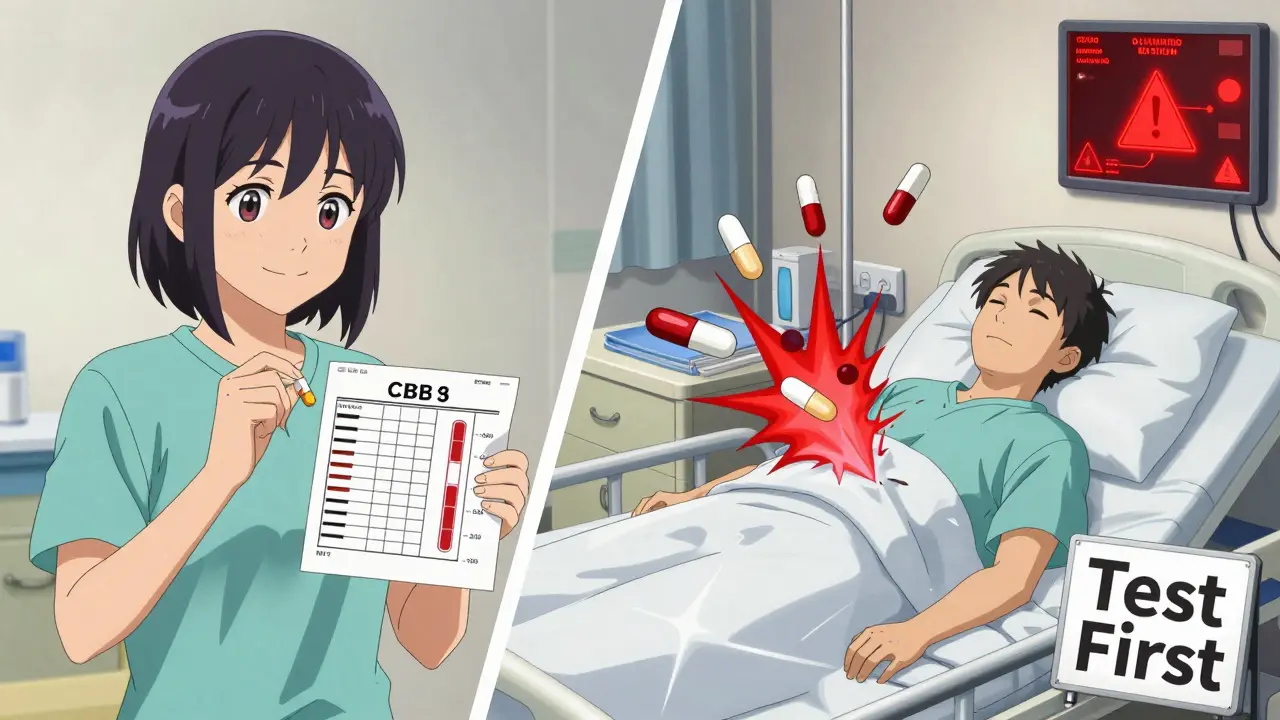


Just had my TPMT test done last week before starting azathioprine for lupus. My doctor didn't mention it at first, so I had to bring it up. Glad I did-heterozygous. Dose cut by half. Still feel weird taking meds based on DNA, but I'd rather be safe than end up in the ER with no white cells.