

When your nose stays stuffed up for months-not just a few days-and your face feels heavy, your smell fades, and nothing seems to help, you’re not just dealing with a bad cold. You might have chronic sinusitis. This isn’t a quick infection you shake off. It’s a stubborn inflammation deep in your sinuses that lasts 12 weeks or longer, even with treatment. About 9% of people worldwide live with it, and in the U.S. alone, 31 million get diagnosed every year. It’s one of the most common reasons people visit their doctor, yet most don’t understand what’s really going on.
What Chronic Sinusitis Actually Is
Chronic sinusitis, also called chronic rhinosinusitis, isn’t just a long cold. It’s when the lining of your sinuses-those hollow spaces behind your forehead, cheeks, and nose-stays swollen and inflamed. This blocks the tiny channels that let mucus drain out. When mucus builds up, it traps bacteria, irritants, and allergens, which keeps the inflammation going. You don’t need an active infection to have it. In fact, about 70% of cases aren’t caused by bacteria at all.
The key symptoms? You need at least two of these for 12 weeks or more: blocked nose, thick nasal discharge (clear or yellow), facial pressure or pain, and reduced or lost sense of smell. Some people also feel tired all the time, have a bad taste in their mouth from postnasal drip, or get headaches that feel like pressure behind the eyes.
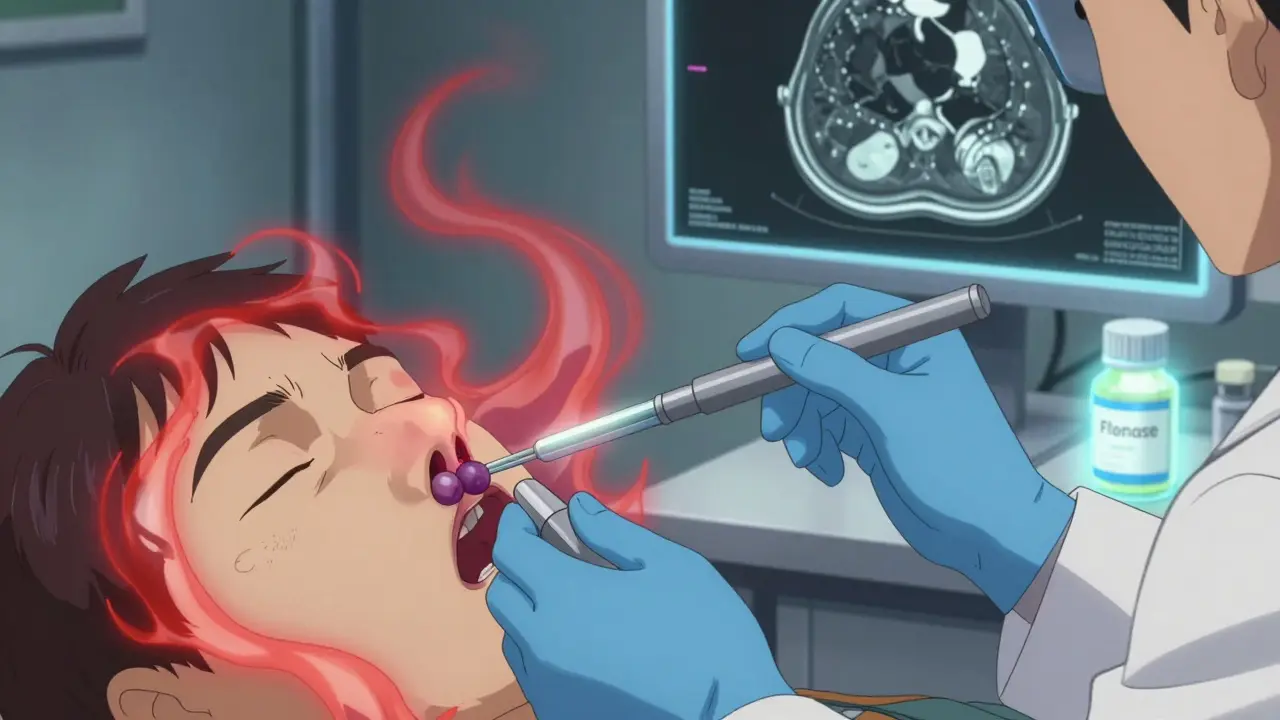
Doctors use a nasal endoscope-a thin, lighted tube-to look inside your nose. If they see pus, swollen tissue, or polyps, that’s a clear sign. A CT scan can show the exact extent of the inflammation. Without these tests, it’s easy to mistake chronic sinusitis for allergies or migraines.
Three Main Types of Chronic Sinusitis
Not all chronic sinusitis is the same. There are three main types, and knowing which one you have changes your treatment path.
- Chronic sinusitis without nasal polyps: This is the most common. The lining is swollen, but there are no growths. Often linked to allergies or environmental irritants like smoke or pollution.
- Chronic sinusitis with nasal polyps: About 25-30% of cases involve soft, grape-like growths inside the nose. These block airflow and smell. People with this type often also have asthma or aspirin sensitivity-a condition called Samter’s triad.
- Allergic fungal rhinosinusitis: Less common but serious. Fungi in the air trigger an allergic reaction in the sinuses, leading to thick mucus and inflammation. Common in warm, humid climates like Melbourne.
Each type responds differently to treatment. Polyps, for example, rarely go away without targeted therapy. Allergies need long-term control. And fungal cases need antifungal and steroid approaches.
Allergies Are a Major Trigger
If you have hay fever, eczema, or asthma, your risk of chronic sinusitis jumps. People with asthma are 3 to 4 times more likely to develop it. Allergies don’t just cause sneezing-they turn your nasal lining into a constant battleground. Pollen, dust mites, mold, and pet dander all trigger the same inflammatory response that keeps your sinuses swollen.
Antihistamines like loratadine or cetirizine can help reduce allergy-related symptoms. But they don’t fix the inflammation deep in the sinuses. That’s why nasal steroid sprays are the real first-line treatment. Sprays like fluticasone (Flonase), mometasone (Nasonex), and budesonide (Rhinocort) work directly on the inflamed tissue. Studies show they improve symptoms in 60-70% of people after 4 to 8 weeks of daily use.
But here’s the catch: most people stop using them too soon. They don’t feel better right away. Or the spray stings a little. Only about 60% of patients stick with it long enough to see results. That’s why doctors emphasize consistency-not just starting, but continuing.
Infections Play a Small Role
Many people think chronic sinusitis means a lingering bacterial infection. That’s a myth. While bacteria like Streptococcus pneumoniae and Haemophilus influenzae can cause acute sinus infections, they’re rarely the main problem in chronic cases.
Antibiotics like amoxicillin-clavulanate are sometimes prescribed-but only if there’s clear evidence of a bacterial flare-up, like sudden thick yellow discharge and fever. For most people with chronic symptoms, antibiotics won’t help. The American Academy of Allergy, Asthma & Immunology says using them routinely is ineffective and can lead to resistance.
Instead, the real enemy is inflammation. And that’s where nasal irrigation comes in. Rinsing your nose with saline (saltwater) daily flushes out allergens, mucus, and irritants. It’s simple, cheap, and backed by strong evidence. People who use it regularly report better breathing, less congestion, and fewer flare-ups. A neti pot, squeeze bottle, or nasal spray-all work. Just use distilled or boiled water to avoid rare but serious infections.
Surgery Isn’t a Last Resort-It’s a Tool
If you’ve tried nasal steroids, saline rinses, and allergy control for 12 weeks and still feel awful, surgery might be the next step. It’s not failure. It’s a targeted fix.
Functional Endoscopic Sinus Surgery (FESS) is the gold standard. A thin scope goes into your nose. The surgeon removes blockages-swollen tissue, polyps, or bone-that are keeping your sinuses from draining. It’s done through the nostrils, so no cuts on your face. Most people go home the same day and return to work in about a week.
Success rates? 75-90% of patients report major improvement in breathing, facial pain, and smell. It’s especially effective if you have a deviated septum or narrow sinus openings. In those cases, combining FESS with a septoplasty (to straighten the septum) boosts results to 65-75% improvement.
There’s also balloon sinuplasty. A tiny balloon is inflated inside the blocked sinus to widen it. Recovery is faster-3 to 5 days-and it’s less invasive. But long-term, it doesn’t work as well as FESS for people with large polyps or severe inflammation. It’s better for mild cases or as a first surgery.
For nasal polyps, a simple polypectomy (removal) gives quick relief. But without ongoing steroid spray use, polyps come back in 40-50% of cases within 18 months. Surgery doesn’t cure the inflammation-it just clears the path. You still need to manage the root cause.
Biologics: The New Game Changer
For people with severe chronic sinusitis and nasal polyps who don’t respond to steroids or surgery, a new class of drugs called biologics is changing lives.
Dupilumab (Dupixent), approved by the FDA in 2019, targets specific inflammation pathways. In clinical trials, it shrank polyps by 50-60% and improved smell and breathing in 30-40% of patients. It’s given as a shot every two weeks. Many users say they finally breathe again after years of struggle.
Other biologics like omalizumab (Xolair) and mepolizumab (Nucala) also help, especially for those with asthma or allergies. These aren’t for everyone-they’re expensive and reserved for severe cases. But for those who qualify, they can reduce the need for surgery and oral steroids.
And for the 9% with Samter’s triad (asthma, polyps, aspirin sensitivity), aspirin desensitization can help. Under medical supervision, patients slowly take increasing doses of aspirin. Over time, this reduces polyp growth and inflammation in 70-80% of cases.
Lifestyle Changes That Actually Work
Medication and surgery help, but daily habits make the biggest difference long-term.
- Use a humidifier in dry months. Dry air irritates the sinuses. In Melbourne’s winter, a simple room humidifier cuts congestion for 40% of users.
- Avoid smoke-cigarette, vape, or wood fire. Exposure increases risk by 35%.
- Wash bedding weekly in hot water to kill dust mites.
- Stay hydrated. Thinner mucus drains better.
- Check for mold in bathrooms and basements. Mold spores are a major trigger.
Some people swear by herbal remedies like butterbur or quercetin, but there’s little strong evidence they work. Stick with what’s proven: saline, steroids, and avoiding triggers.

What Happens If You Ignore It?
Chronic sinusitis isn’t just annoying. Left untreated, it can lead to complications. In rare cases-less than 0.5%-infection can spread to the eyes, bones, or even the brain. More commonly, it just wears you down. Sleep suffers. Concentration fades. You feel tired all the time. Your mood drops. Many patients say they’ve lost jobs or stopped socializing because they’re always congested or in pain.
The good news? Most people get better with the right plan. It takes time. It takes patience. But you don’t have to live like this forever.
When to See a Specialist
If you’ve had symptoms for more than 12 weeks, and over-the-counter meds haven’t helped, it’s time to see an ENT (ear, nose, and throat doctor) or an allergist. Don’t wait for it to get worse. A specialist can do the right tests, identify your type of sinusitis, and build a plan that works for you.
Coordinated care-where your allergist, ENT, and primary doctor talk to each other-leads to 35-45% better outcomes than seeing just one specialist. This isn’t just about pills and surgery. It’s about understanding your body’s unique triggers and building a long-term strategy.
Is chronic sinusitis caused by bacteria?
Usually not. While bacteria can cause acute sinus infections, chronic sinusitis is mostly driven by inflammation from allergies, nasal polyps, or environmental irritants. Antibiotics rarely help unless there’s a clear bacterial flare-up.
Do nasal steroid sprays really work?
Yes, for most people. Sprays like Flonase or Nasonex reduce inflammation in 60-70% of cases. But they take 4-8 weeks to work, and you need to use them every day. Stopping early is the main reason they seem ineffective.
Can surgery cure chronic sinusitis?
Surgery doesn’t cure it-it clears the blockages so treatment can work better. FESS improves symptoms in 75-90% of cases, but if you don’t keep using nasal steroids or avoid triggers, the inflammation can return. Surgery is part of a long-term plan, not a one-time fix.
What’s the difference between FESS and balloon sinuplasty?
FESS removes tissue and bone to open sinuses fully. Balloon sinuplasty just widens the passages with a balloon. FESS has higher long-term success, especially with polyps. Balloon sinuplasty has faster recovery but is less effective for severe cases.
Are biologic therapies like Dupixent worth it?
For severe chronic sinusitis with nasal polyps that won’t respond to steroids or surgery, yes. Dupixent reduces polyp size by half and improves breathing and smell in most users. It’s expensive and requires regular shots, but for many, it’s life-changing.
Can chronic sinusitis affect my sense of smell permanently?
Yes, if left untreated for years. The inflammation can damage the smell receptors in your nose. But if you treat it early-with steroids, saline, or surgery-many people regain most or all of their sense of smell. Don’t wait.
Next Steps: What to Do Now
Start with the basics: rinse your nose with saline daily. Buy a neti pot or squeeze bottle from the pharmacy. Use a nasal steroid spray every day for at least 8 weeks-even if you don’t feel better right away. Avoid smoke and allergens. Keep a symptom diary: note when your nose is blocked, when you lose smell, what you ate or were exposed to.
If after 12 weeks you’re still struggling, book an appointment with an ENT. Bring your diary. Ask about endoscopy and CT scans. Don’t accept "it’s just allergies" without proof. You deserve to breathe easily again.


THIS IS WHY AMERICA NEEDS TO STOP USING THAT SALT WATER NONSENSE AND JUST TAKE AN ANTIBIOTIC LIKE A NORMAL PERSON 😤🇺🇸 #SinusWarrior