

The skin around your eyes is the thinnest on your entire body-just 0.55 millimeters thick. That’s why even small amounts of everyday cosmetics can trigger a painful, itchy reaction called eyelid dermatitis. If you’ve had red, swollen, flaky eyelids that won’t go away, it’s not just dry skin or tired eyes. It’s likely allergic contact dermatitis, and the culprit isn’t always what you think.
Why Your Eyelids React So Easily
Your eyelids aren’t just sensitive-they’re exposed. Every time you apply mascara, wipe your face with a makeup wipe, or touch your eyes after using hand cream or nail polish, you’re transferring potential allergens right onto delicate skin. Unlike other parts of your face, eyelids don’t have a strong protective barrier. They’re also folded, which traps chemicals and keeps them in contact longer. A 2023 study from the National Institutes of Health found that 74% of eyelid dermatitis cases are caused by allergic reactions, not simple irritation. This isn’t an immediate reaction. Symptoms usually show up 24 to 48 hours after exposure. That’s why people often blame yesterday’s makeup, when the real trigger might have been yesterday’s shampoo, last week’s gel nails, or even the hand sanitizer you used before checking your phone.The Top 6 Allergens You’re Probably Exposed To
Most people assume their eyelid rash comes from eye makeup. But the most common allergens aren’t always applied directly to the lids. Here’s what’s actually causing the problem, based on a 2021 clinical study of over 200 patients:- Nickel (28.7%)-Found in cheap jewelry, eyeglass frames, and even magnetic eyelashes. If you wear metal frames or use magnetic lashes, you’re at risk.
- Shellac (21.4%)-This is the hardening agent in gel nail polish. Even if you don’t touch your eyes, transferring it from your fingers is enough to trigger a reaction.
- Preservatives (18.9%)-Methylisothiazolinone, parabens, and formaldehyde releasers are in almost every moisturizer, serum, and cleanser. They’re designed to keep products shelf-stable, but they’re also common triggers.
- Topical antibiotics (15.3%)-Neomycin and bacitracin are often in over-the-counter eye ointments and even some facial creams. People use them thinking they’re helping, but they’re making it worse.
- Fragrances (14.6%)-Even "natural" or "unscented" products can contain hidden fragrance compounds. The EU now requires these to be listed, but many U.S. brands still hide them under "fragrance" on labels.
- Acrylates (12.1%)-These are in long-wear, waterproof makeup, lash glues, and even some "clean beauty" products marketed as hypoallergenic.
Why Patch Testing Isn’t Optional
You can’t guess your trigger. A 2022 study in the Journal of the American Academy of Dermatology showed that doctors relying only on patient history correctly identified the cause in just 37% of cases. That means more than two out of three people are misdiagnosed. Patch testing is the only reliable way to find your allergen. A dermatologist places tiny amounts of 60-100 common allergens on your back, covers them, and checks for reactions after 48 and 96 hours. The test isn’t painful-it’s just sticky tape and small metal discs. But it’s powerful. When done correctly, it’s 95% accurate. Many patients come in thinking they’re allergic to mascara, only to find out their reaction comes from nail polish. Dr. Mark G. Rubin, a leading dermatologist, says 42% of cases involve indirect exposure-like touching your face after applying gel nails or using hand lotion.What Happens If You Don’t Find the Cause
Ignoring the problem doesn’t make it go away. It gets worse. Chronic eyelid dermatitis leads to thickened, leathery skin (lichenification), deep cracks, and constant itching. The more you scratch, the more you damage the skin barrier, making future reactions easier and more severe. And here’s the scary part: using the wrong treatment can cause permanent damage. High-potency steroid creams-like those used for eczema on the arms or legs-can thin the eyelid skin in as few as 7 to 10 applications. This can lead to visible wrinkles, loose skin, and even increased risk of glaucoma if the steroid seeps into the eye. That’s why you need a dermatologist, not just a pharmacist. The only FDA-approved steroid specifically for eyelid use is Eysuvis 0.25%, which was approved in December 2022. It’s designed to reduce inflammation without damaging the eye.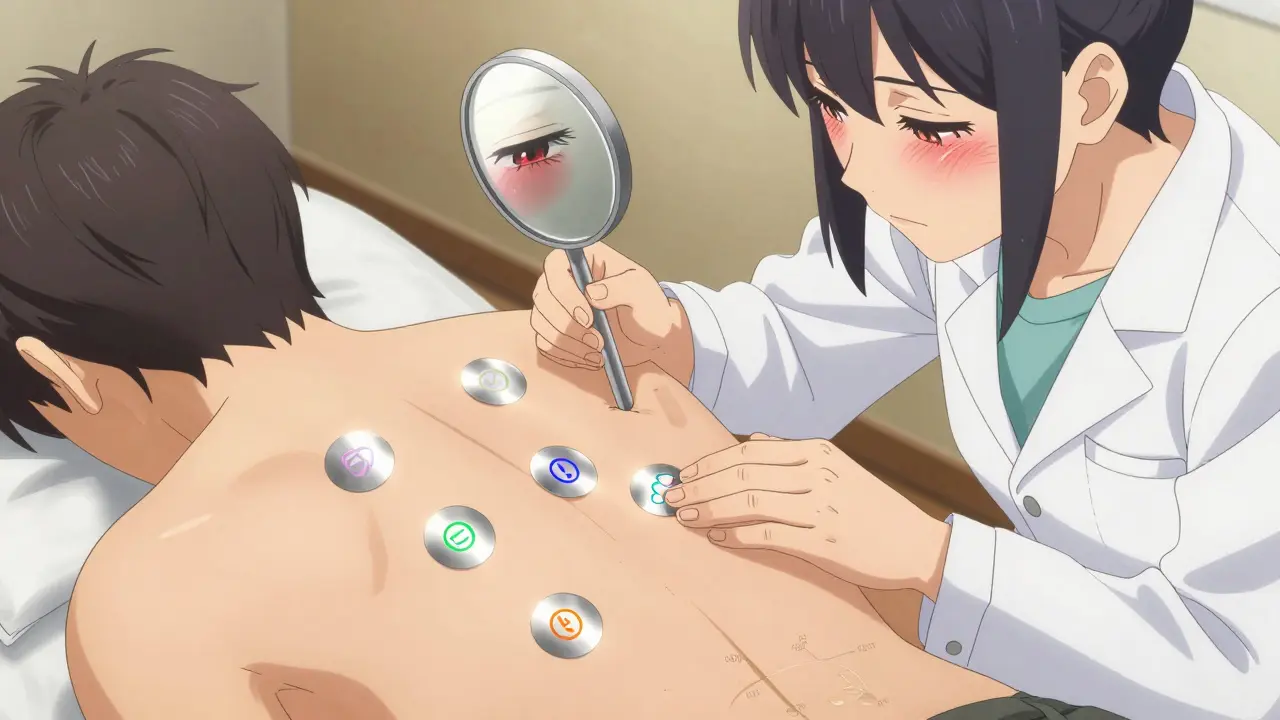
How to Treat It-Step by Step
There’s no quick fix. But there’s a proven 3-phase approach backed by the American Contact Dermatitis Society:- Phase 1: Stop Everything (Days 1-3)-Remove all eye makeup, facial creams, and hair products. Use only plain water or saline to clean the area. Apply cool compresses for 10 minutes twice a day to reduce swelling.
- Phase 2: Protect and Wait (Days 4-14)-Apply a thin layer of petroleum jelly (Vaseline) to lock in moisture. Avoid anything with water, preservatives, or fragrance. Don’t start new products yet. This is when you schedule your patch test.
- Phase 3: Avoid and Rebuild (Day 15+)-Once your test results come back, eliminate the specific allergens. Use the Contact Allergen Replacement Database (CARD) to find safe alternatives. CARD has over 12,800 verified products as of November 2023, including makeup, cleansers, and shampoos.
How to Read Labels Like a Pro
Cosmetic labels use INCI names, which are scientific and confusing. Here’s what to look for:- Preservatives: Methylisothiazolinone, methylchloroisothiazolinone, parabens (methylparaben, propylparaben), formaldehyde, quaternium-15.
- Fragrances: "Fragrance," "Parfum," "Essential Oil Blend," "Natural Scent." Even if it says "unscented," it may still contain masking fragrances.
- Acrylates: Ethyl acrylate, hydroxyethyl acrylate, methacrylates.
- Nickel: Not always listed, but check metal parts of makeup applicators or magnetic lashes.
Why "Clean Beauty" Can Be Riskier
Many people switch to "clean," "natural," or "organic" products thinking they’re safer. But that’s not always true. A 2023 study in JAMA Dermatology found that 33% of "natural" eye products contained botanical allergens like chamomile, marigold, or daisy family plants (Compositae). These are common triggers for people with pollen allergies. Just because something is plant-based doesn’t mean it’s non-allergenic. In fact, natural ingredients are less regulated and often untested for skin sensitivity. Always patch test new products-even "clean" ones-on your inner arm for 48 hours before using them near your eyes.
What Recovery Looks Like
Most people see improvement within 1-2 weeks of removing the allergen. A 2022 survey by Eczema.org showed:- 52% of patients cleared up in 1-2 weeks
- 29% needed 3-6 weeks
- 19% still had symptoms and needed prescription help
Who’s Most at Risk?
Women between 30 and 40 make up 78% of cases. Why? Higher rates of cosmetic use, nail polish, and skincare routines. But men aren’t immune-especially those who wear metal-framed glasses or use beard balms that run down the face. The number of cases has grown 4.7% per year since 2018, tied to the 28% increase in cosmetic preservatives. New products like magnetic lashes, waterproof mascaras, and "long-wear" foundations are introducing more acrylates and shellac into daily routines.What’s Next?
The future of diagnosis is getting smarter. AI tools like DermAI Contact, launched in mid-2023, analyze your symptoms and suggest likely allergens before you even get to the dermatologist. It’s not perfect yet-76% accuracy-but it’s helping cut down diagnostic delays. The European Contact Dermatitis Research Group predicts a 25% drop in chronic cases by 2027, thanks to better testing and collaboration between dermatologists and eye doctors. But new allergens are always emerging. Magnetic lashes? Nickel alloys. "Waterproof" brow gels? Acrylates. Even "biodegradable" makeup wipes can contain hidden preservatives. The bottom line: if your eyelids are red, itchy, or flaky, don’t just reach for a cream. Get tested. Find the trigger. Avoid it. And give your skin time to heal.Can eyelid dermatitis cause vision problems?
No, eyelid dermatitis itself doesn’t damage your vision. But if you use steroid creams incorrectly-especially high-potency ones-they can seep into the eye and increase the risk of glaucoma or cataracts. Always use only medications approved for eyelid use, like Eysuvis 0.25%, and never apply anything stronger without a dermatologist’s guidance.
Is eyelid dermatitis contagious?
No, it’s not contagious. You can’t catch it from someone else. It’s an allergic reaction, not an infection. Even if your eyelids are swollen or weeping, there’s no risk of spreading it to others through touch or sharing towels.
Can I wear makeup again after my eyelid dermatitis clears up?
Yes-but only after you know exactly what triggered your reaction. Use the Contact Allergen Replacement Database (CARD) to find safe alternatives. Start with one product at a time, patch test it on your arm for 48 hours, and wait before applying it near your eyes. Never go back to products you used before the reaction unless they’ve been confirmed safe.
Why does my eyelid dermatitis keep coming back?
It usually comes back because you haven’t fully avoided the allergen. Common hidden sources include nail polish, hair dye, hand lotion, and even your phone case. You might think you’ve stopped using the product, but you’re still touching your eyes after applying it. Patch testing helps identify these indirect sources.
Should I see a dermatologist or an eye doctor?
Start with a dermatologist who does patch testing. Eye doctors (ophthalmologists) treat eye diseases, not skin allergies. While they can rule out infections or dry eye, they can’t identify cosmetic allergens. A dermatologist trained in contact dermatitis is the only one who can find the real cause through testing.
Are there any home remedies that work?
Cool compresses and petroleum jelly can help soothe symptoms while you wait for a diagnosis. But nothing replaces identifying and removing the allergen. Aloe vera, coconut oil, or tea tree oil may seem natural, but they can themselves trigger allergic reactions. Stick to plain, unfragranced products until you know what’s safe.


I had this for months and thought it was just dry skin. Then I realized my magnetic lashes were full of nickel. Dropped 'em. Skin cleared in 10 days. Why does no one talk about this??