
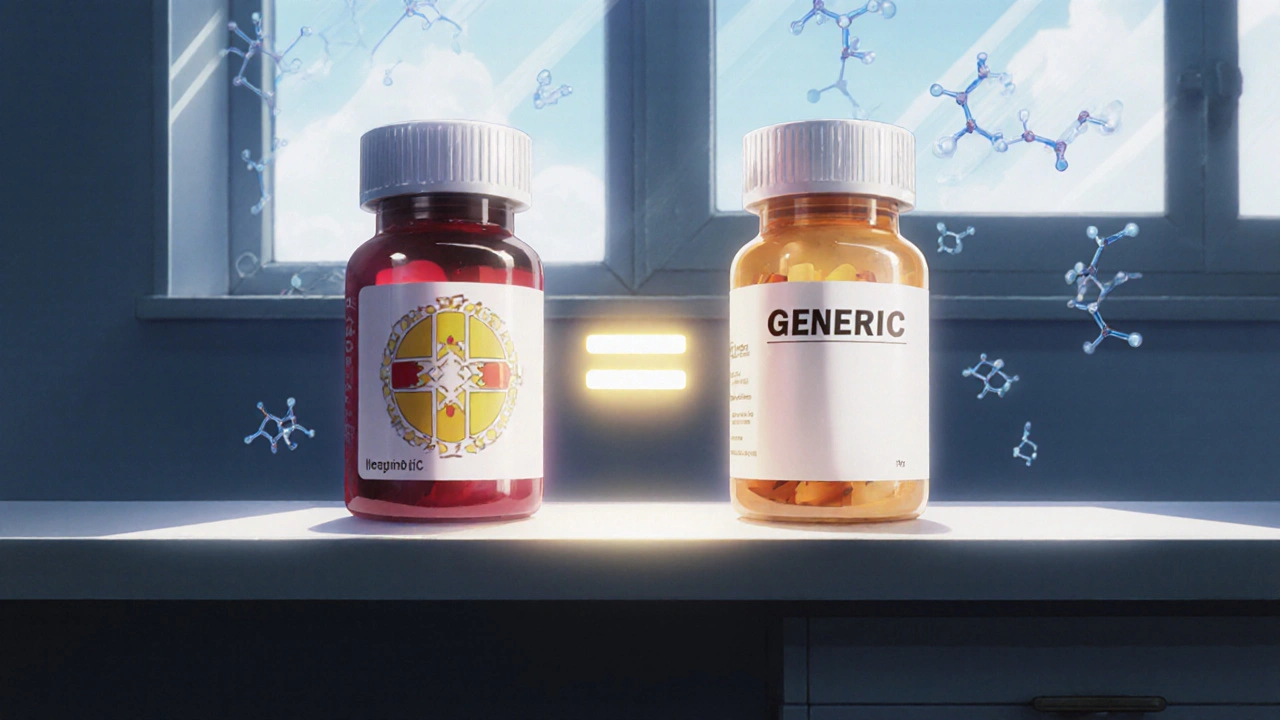
When you pick up a prescription, you might see two pills that look completely different-one branded, one plain. One costs $150. The other, $5. You might wonder: is the cheaper one just as good? The short answer is yes, for most people, most of the time. But there are important exceptions you need to understand before making a switch.
What Exactly Makes a Drug "Generic"?
A generic drug isn’t a copy. It’s the exact same medicine. The FDA requires that generic versions contain the same active ingredient, in the same strength, and delivered the same way as the brand-name drug. That means if you take a generic version of lisinopril, you’re getting the same molecule that lowers blood pressure as the brand-name Zestril. No shortcuts. No diluted formulas. No hidden ingredients. The difference isn’t in what the drug does-it’s in how it got to the shelf. Brand-name companies spend years and billions developing a drug, running clinical trials, and proving it’s safe. Once the patent expires, other manufacturers can step in. They don’t need to repeat those expensive tests. Instead, they prove their version delivers the same amount of active ingredient into your bloodstream at the same rate. This is called bioequivalence. The FDA allows a small range of variation-80% to 125%-and most generics fall well within that.Why Are Generics So Much Cheaper?
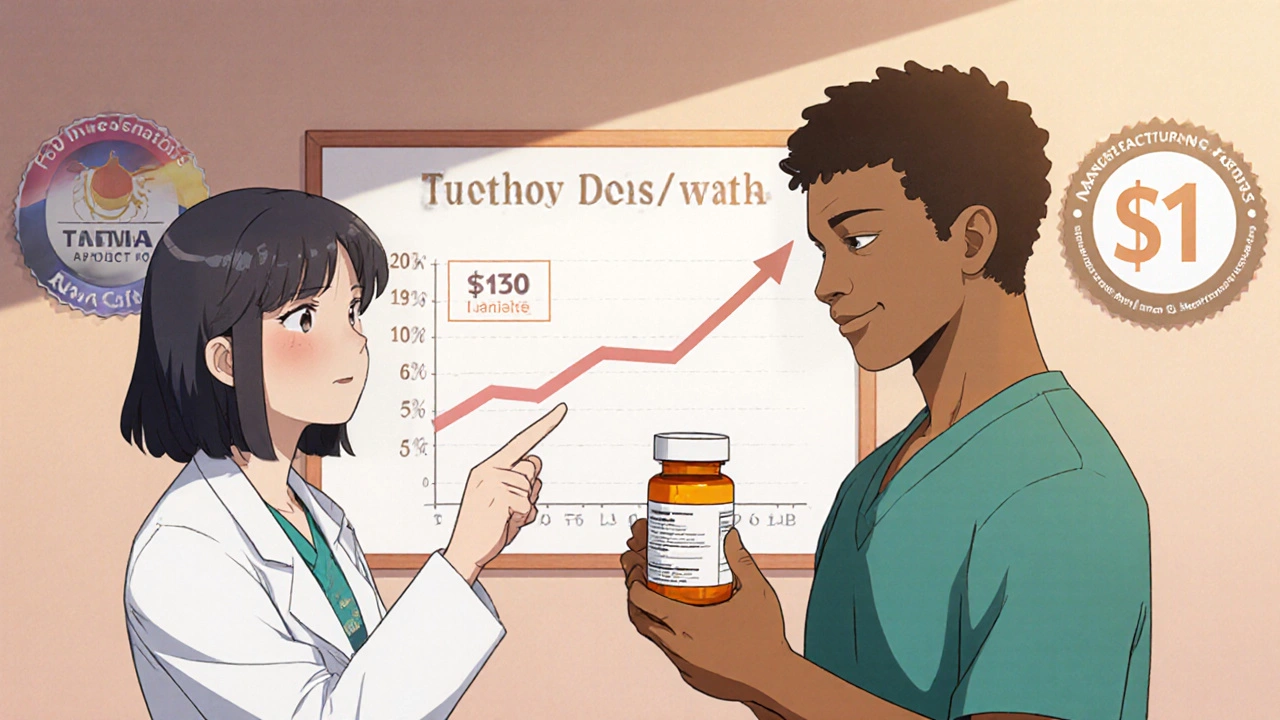
The price gap isn’t about quality. It’s about cost structure. Brand-name drugs carry the weight of research, marketing, and patent protection. The FDA estimates it costs about $2.6 billion to bring a new drug to market. That money has to come from somewhere-usually, your co-pay. Generic manufacturers skip all that. They don’t fund clinical trials. They don’t pay for TV ads. They don’t need to recoup billions. They just need to make the pill, prove it works like the original, and get FDA approval. That’s why, on average, generics cost 80% to 85% less. GoodRx data from 2022 shows an average savings of 82.5%. For some drugs, the drop is dramatic. Atorvastatin (Lipitor) went from $130 a month to under $1 after generics entered the market.Are Generics as Safe and Effective?
Yes. The FDA holds generic manufacturers to the same strict standards as brand-name companies. Same quality controls. Same factory inspections. Same testing for purity, potency, and stability. In fact, many brand-name companies actually make their own generics under different labels. A major 2016 study in JAMA reviewed over 2,000 bioequivalence studies. It found that generics varied from brand-name drugs by only 3.5% on average in how much of the drug reached the bloodstream. That’s less than the FDA’s allowed 25% swing. For most conditions-high blood pressure, diabetes, cholesterol, depression-generics work just as well. A 2020 editorial in JAMA Internal Medicine summed it up: "The overwhelming body of evidence demonstrates therapeutic equivalence between generic and brand-name cardiovascular drugs."When Generics Might Not Be the Same
Not all drugs are created equal in how sensitive they are to small changes. These are called narrow therapeutic index (NTI) drugs. A tiny difference in how much enters your bloodstream can mean the difference between effectiveness and danger. Examples include:- Warfarin (blood thinner)
- Levothyroxine (thyroid hormone)
- Phenytoin, carbamazepine (seizure medications)
What About the Pill’s Look and Color?
You might notice your generic pill looks nothing like the brand-name one. That’s not a mistake. U.S. trademark laws forbid generics from looking identical to the original. So the color, shape, or markings change. But the active ingredient? Still the same. The FDA says 65% of medication errors involving generics happen because patients think a different-looking pill means a different drug. If your pill suddenly looks different, don’t assume something’s wrong. Check the label. Ask your pharmacist. But don’t stop taking it unless your doctor says so.State Laws and What Pharmacists Can Do
In 49 states, pharmacists are legally allowed to swap a brand-name drug for a generic without asking you-unless your doctor writes "dispense as written" on the prescription. That’s called automatic substitution. It’s meant to save money. And it works. About 90% of all prescriptions filled in the U.S. are for generics. But it also means you might get a different generic version each time you refill, especially if your pharmacy changes suppliers to get a better price. If you’re on an NTI drug and you notice a change in how you feel after a refill, it could be because you got a different manufacturer’s version. Talk to your doctor. You can ask them to write "dispense as written" or "no substitution" on your prescription. Or, you can ask your pharmacist to always give you the same generic brand.Who Makes These Generic Drugs?
The generic market is dominated by a few big players: Teva, Sandoz (part of Novartis), and Viatris (which merged Mylan and Upjohn). But thousands of smaller companies also make generics. Most generics sold in the U.S. are made overseas-mainly in India and China. The FDA inspects these facilities, but a 2023 GAO report found that 18% of foreign plants had at least one inspection issue, compared to 8% of U.S. plants. That doesn’t mean they’re unsafe. It means there’s more risk of quality control problems. That’s one reason some patients prefer brand-name drugs: they’re made in facilities they trust. But again, the FDA says both are held to the same standard.
What About Biosimilars?
Biosimilars are the generic version of biologic drugs-complex medicines made from living cells, like Humira, Enbrel, or insulin. They’re harder to copy than regular pills. That’s why they cost more and are less common. As of 2023, the FDA has approved 35 biosimilars. They’ve saved billions, but they still make up only 2.3% of the total biologics market. Humira, which lost patent protection in 2023, was a $21 billion-a-year drug. Its biosimilars are now cutting costs dramatically.How to Decide: Generic or Brand?
Here’s a simple guide:- For common conditions (blood pressure, cholesterol, diabetes, depression): Go with generic. You’ll save hundreds or thousands a year with zero loss in effectiveness.
- For NTI drugs (thyroid, seizure, blood thinners): Talk to your doctor. If you’ve been stable on a brand or a specific generic, stick with it. If you’re switching, monitor how you feel. Keep a log of symptoms.
- If you have allergies: Check the inactive ingredients. Generics can use different fillers, dyes, or preservatives. If you’re allergic to red dye or lactose, make sure your new pill doesn’t contain it.
- If you’re on Medicare or insurance: Generics are almost always cheaper. Your co-pay might be $5 vs. $50. That’s not even a choice.
What to Do If You Think the Generic Isn’t Working
If you switch to a generic and start feeling worse-more fatigue, dizziness, mood swings, or symptoms returning-don’t assume it’s all in your head. It might be real. Write down:- When you switched
- What changed
- What generic you got (check the pill imprint or pharmacy label)
The Big Picture: Why This Matters
Generic drugs aren’t just a convenience. They’re a lifeline. From 2007 to 2016, generics saved the U.S. healthcare system $1.67 trillion. Medicare saved $77 billion. Medicaid saved $38 billion. Without generics, millions of people couldn’t afford their meds. The FDA expects generics to save another $1.7 trillion by 2032. That’s not a number. That’s people keeping their jobs, staying out of hospitals, living longer. The truth is simple: for most people, generics are just as good. For a small number, they need extra care. But the system works-when you understand it.Are generic drugs less effective than brand-name drugs?
No, for most medications, generic drugs are just as effective. The FDA requires them to deliver the same amount of active ingredient into your bloodstream at the same rate as the brand-name version. Studies show no meaningful difference in outcomes for conditions like high blood pressure, diabetes, or depression. The only exceptions are narrow therapeutic index drugs like warfarin or levothyroxine, where even small differences can matter.
Why do generic pills look different from brand-name ones?
U.S. trademark laws prevent generic manufacturers from making their pills look exactly like the brand-name version. So the color, shape, or markings may be different-but the active ingredient, strength, and how it works are identical. The difference is purely cosmetic. If your pill looks different, don’t stop taking it. Check the label or ask your pharmacist to confirm it’s the same medicine.
Can I switch between different generic brands?
For most drugs, yes. But if you’re taking a narrow therapeutic index drug-like levothyroxine, warfarin, or certain seizure medications-switching between generic manufacturers can sometimes cause problems. If you notice changes in how you feel after a refill, talk to your doctor. You can ask for your prescription to be marked "dispense as written" or request the same generic brand each time.
Are generic drugs made in unsafe factories?
Most generic drugs are made overseas, mainly in India and China. The FDA inspects all manufacturing facilities-foreign and domestic-to ensure they meet the same quality standards. While a 2023 report found slightly more inspection issues at foreign plants, that doesn’t mean they’re unsafe. The FDA has the authority to block imports if standards aren’t met. Both brand-name and generic drugs are held to identical safety rules.
How much money can I save with generic drugs?
On average, generic drugs cost 80% to 85% less than brand-name versions. For example, the generic version of Lipitor (atorvastatin) dropped from $130 per month to under $1 after generics entered the market. For common medications like metformin or lisinopril, you might pay $5 instead of $50. Over a year, that can mean hundreds or even thousands in savings.
Do insurance plans cover generic drugs better than brand-name?
Yes. Most insurance plans, including Medicare Part D, have lower co-pays for generics. Some plans won’t cover the brand-name version unless you’ve tried the generic first. Even without insurance, discount programs like GoodRx often show generics priced far below the brand. Generics are the default choice for cost-conscious plans.
Can I trust generics if I’m on multiple medications?
Absolutely. Most people on multiple medications take generics without issue. The key is consistency. If you’re on an NTI drug like warfarin or levothyroxine, try to stick with the same generic brand. Keep a list of all your medications, including the manufacturer name, and share it with your pharmacist. This helps avoid unintended switches that could affect your treatment.


This is the most important thing I've read all year. I switched my blood pressure med to generic and my co-pay dropped from $67 to $5. I almost cried in the pharmacy. My grandma couldn't afford hers before this.
Generics saved my life. Don't let anyone tell you otherwise.