
Migraine with Aura Birth Control Risk Checker
This tool helps you understand your personal stroke risk when using estrogen-based birth control with migraine with aura. Based on current medical guidelines and research.
WHO & CDC Guidelines: Estrogen birth control is generally not recommended for women with migraine with aura.
Key Takeaway: Progestin-only methods (like IUDs or implants) are the safest alternative.
Always consult your doctor before making any birth control changes.
If you get migraines with aura and are thinking about birth control, you’re not alone. But you’re also facing a decision that could affect your long-term health. The question isn’t just whether estrogen-based birth control works-it’s whether it’s safe for you. And the answer isn’t simple.
What Is Migraine with Aura?
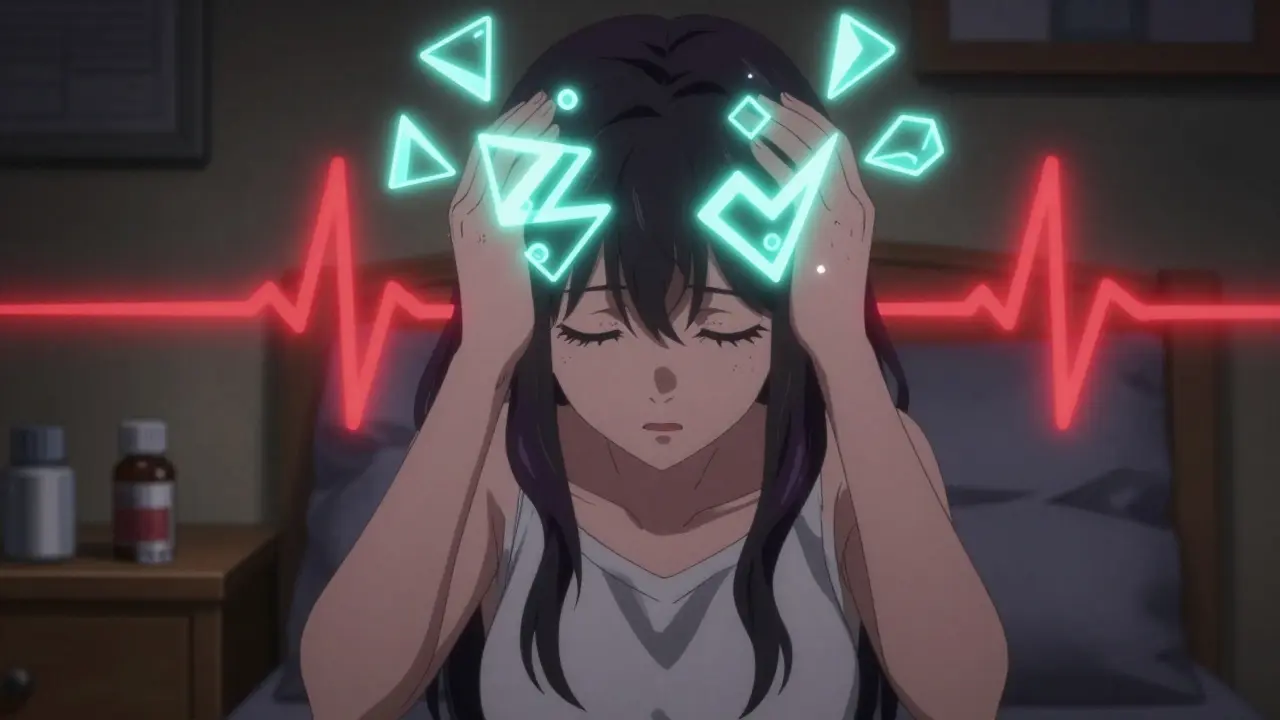
Migraine with aura isn’t just a bad headache. It’s a neurological event. Before the pain starts, you might see flashing lights, blind spots, or zigzag lines. Some people feel tingling in their hands or face. Others have trouble speaking. These symptoms usually last 5 to 60 minutes and fade before the headache hits. They’re not just warnings-they’re temporary brain disruptions.
It’s critical to know: nausea, sensitivity to light, or feeling tired aren’t aura. Aura means actual neurological changes. If you’ve had these symptoms even once, you’re in a higher-risk group when it comes to estrogen birth control. That’s not a guess-it’s backed by decades of research.
Why Estrogen Birth Control Is a Concern
Estrogen in birth control pills increases clotting factors in your blood. For most women, that’s fine. But for women with migraine with aura, it can be dangerous. The brain is already in a sensitive state during an aura. Estrogen can tip the balance toward a stroke.
Here’s the hard number: healthy young women without migraines have about a 6 in 100,000 chance of having an ischemic stroke each year. For women with migraine with aura who take estrogen-containing pills, that jumps to about 30 in 100,000. That’s a fivefold increase. The CDC says the combined risk of having both migraine with aura and estrogen birth control is six times higher than having neither.
The World Health Organization (WHO) says this combination is absolutely not safe. They’ve held this position since 2015, and updated it in 2019. No exceptions. No gray areas. If you have aura, don’t use estrogen birth control.
The New Research That’s Changing the Conversation
But here’s where things get messy. A 2022 study led by Dr. Pinar Batur at the American Migraine Foundation looked at modern low-dose pills-those with 20 to 35 micrograms of ethinyl estradiol-and found the stroke risk might be lower than we thought. Some women in the study didn’t show the expected spike in stroke events.
Even more surprising, Dr. Anne Calhoun’s 2017 review suggests that ultra-low-dose pills (10-15 micrograms) might actually reduce aura frequency. Less aura = less stroke risk. That’s a game-changer. These pills didn’t exist 20 years ago. Back then, birth control had 50-100 micrograms of estrogen. Today’s pills are much gentler.
But here’s the catch: Dr. Batur’s study only included 127 women who had strokes. That’s not enough to draw firm conclusions. And while some doctors are starting to consider low-dose options, major health organizations still say no.

Not All Migraines Are the Same
It’s easy to think “I get migraines,” and assume the rules apply. But migraine with aura and migraine without aura are different diseases. If you have migraine without aura, estrogen birth control is generally safe. The stroke risk doesn’t go up.
And frequency matters. If you have more than 12 aura attacks a year, your stroke risk jumps even higher. Studies show an odds ratio of 10.4 for frequent aura. That’s a huge red flag. But if you only get aura once or twice a year, the risk is lower-though still elevated compared to someone without aura.
Also, recent aura matters. If you haven’t had an aura in over a year, your risk drops significantly. Past aura isn’t the same as current aura. Your doctor needs to know when your last attack was.
What About Smoking and Other Risk Factors?
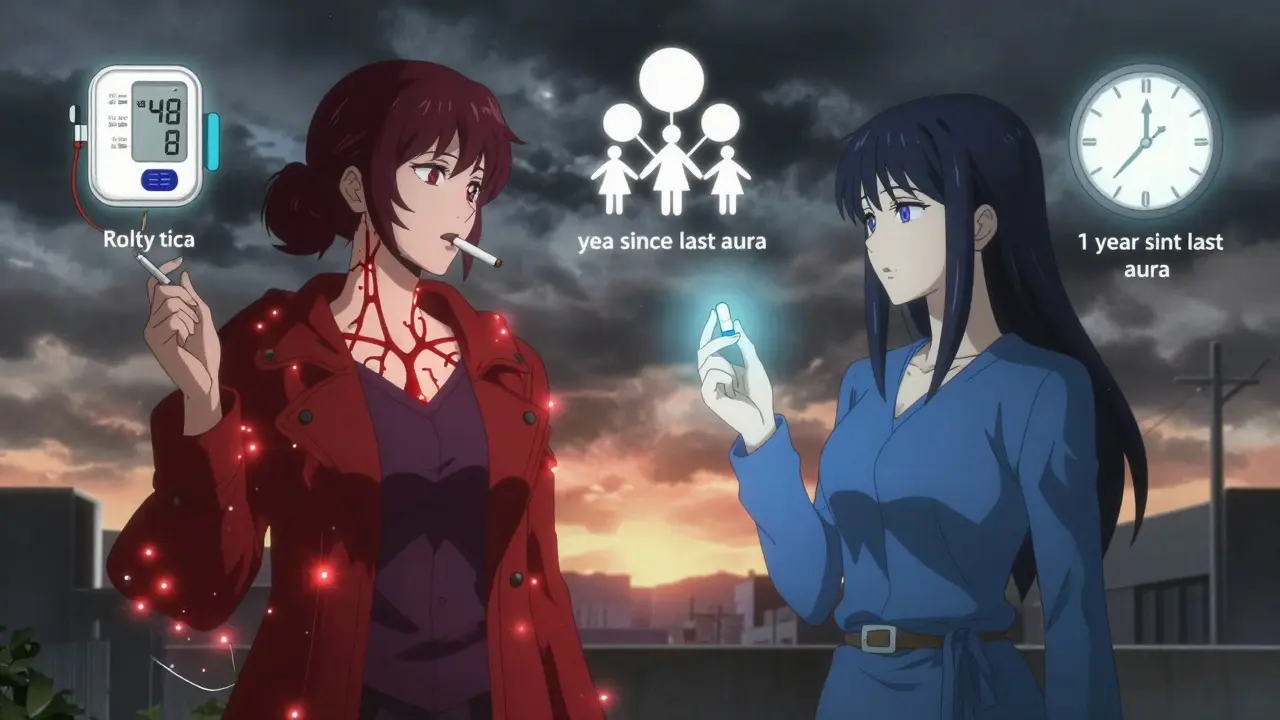
Estrogen birth control isn’t risky in isolation. It’s risky when combined with other factors. Smoking? Big problem. High blood pressure? Even worse. Diabetes? Family history of stroke? All of these stack on top of the migraine aura risk.
If you’re over 35 and smoke, the WHO says estrogen birth control is absolutely off-limits-even if you don’t have migraines. Add aura into the mix, and the danger multiplies. That’s why doctors don’t just look at your migraine history. They check your blood pressure, ask about smoking, and review your family health history.
One study found that women with migraine with aura who smoked had a 30-fold higher stroke risk than women with neither condition. That’s not a typo. It’s 30 times.
Safe Alternatives: Progestin-Only Options
Good news: you have plenty of safe options. Progestin-only methods don’t raise stroke risk in women with migraine with aura. That’s why the American College of Obstetricians and Gynecologists (ACOG), the CDC, and the WHO all recommend them.
- Progestin-only pill (POP): Taken daily. No estrogen. Works well for women who need daily control.
- Implant (etonogestrel): A small rod placed under the skin of your arm. Lasts up to 3 years. Over 99% effective.
- Levonorgestrel IUD: Placed in the uterus. Lasts 3 to 8 years depending on the brand. Reduces or stops periods-many women with migraines prefer this.
- Depo-Provera injection: Given every 3 months. Easy to manage if you forget pills.
- Copper IUD: Non-hormonal. Works for up to 12 years. No hormones at all.
These options are just as effective as estrogen pills. Some, like the IUD and implant, are even more reliable because you don’t have to remember to take them every day.
What Should You Do?
Don’t panic. Don’t stop your birth control cold turkey without a plan. But do talk to your doctor. Here’s what you need to bring to the appointment:
- A detailed migraine history: When did your first aura happen? How often do you get them? What do they feel like? Have you had one in the last year?
- Your current birth control: What’s the brand? How much estrogen does it contain? (Check the package or ask your pharmacist.)
- Your health history: Do you smoke? What’s your blood pressure? Any family history of stroke or blood clots?
Your doctor should use this info to assess your personal risk-not just follow a blanket rule. If you’re on a high-dose estrogen pill (30+ micrograms) and have frequent aura, switching to a progestin-only method is the safest move.
If you’re on a low-dose pill (20-25 micrograms), have infrequent aura, don’t smoke, and have no other risk factors, you and your doctor might decide to continue-while monitoring closely. But that’s a personal decision, not a standard recommendation.
The Bottom Line
There’s no one-size-fits-all answer. But the safest path is clear: if you have migraine with aura, avoid estrogen birth control unless your doctor gives you a very specific reason to try it-and even then, only with ultra-low doses and close follow-up.
Progestin-only methods are effective, safe, and widely available. They don’t carry the same stroke risk. And for many women, they’re actually better-fewer side effects, more predictable cycles, and no estrogen to trigger aura.
Don’t let fear stop you from getting birth control. But don’t ignore the science either. Migraine with aura is a signal from your brain. Listen to it. Choose a method that protects your future, not just your present.


I had my first aura at 22 and was on the pill for three years before I even knew it was a red flag. My doctor never mentioned it. I got lucky-no stroke-but I almost didn’t make it to 30. Now I have a copper IUD and feel like I can breathe again. If you’re reading this and you have aura? Talk to your doctor. Don’t wait like I did.
Also, side note: the nausea from the pill was worse than the migraine. Who knew hormones could make you feel like you’d been hit by a bus?