

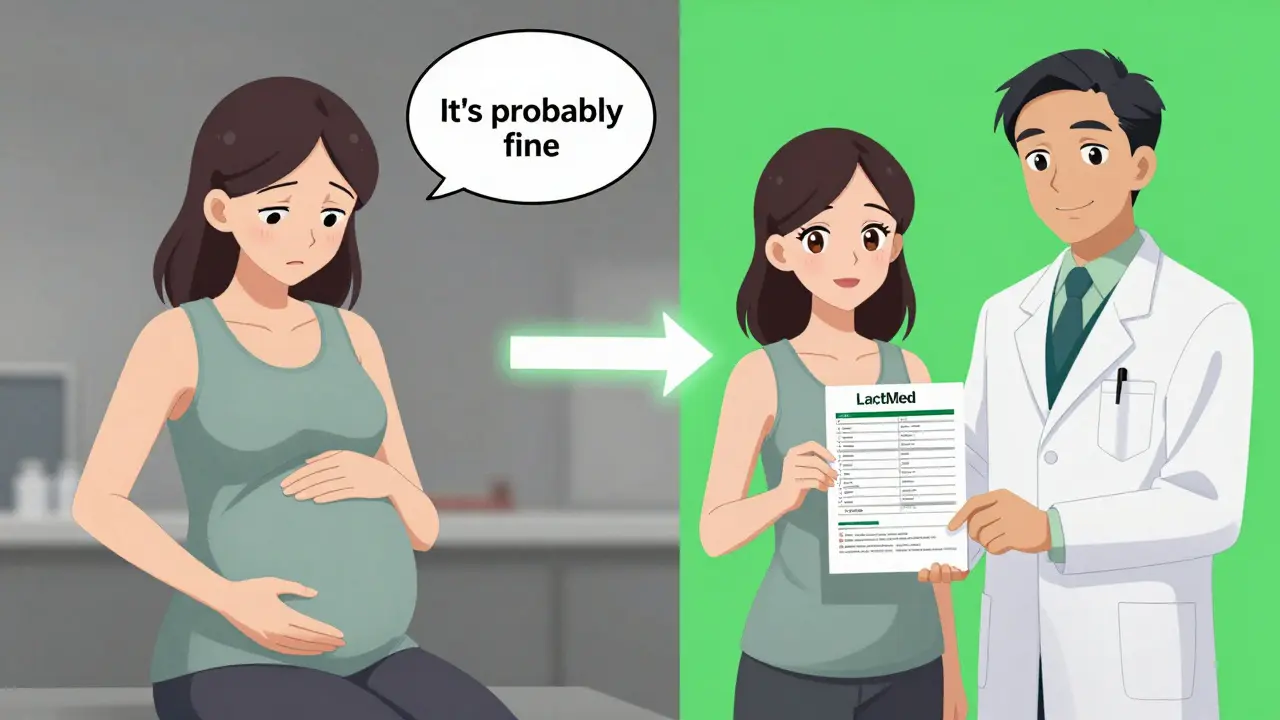
When you're pregnant or planning to be, every medication you take - even a simple pain reliever - carries a question: Is this safe for my baby? The answer isn't simple, and it shouldn't be left to guesswork. Too often, patients are told, "It's probably fine," or handed a pamphlet with no real guidance. But medication safety during pregnancy and breastfeeding isn't about avoiding all drugs - it's about making informed, personalized choices. And that starts with how you talk to your provider.
Why This Conversation Matters More Than You Think
Nearly 90% of pregnant people in the U.S. take at least one medication during pregnancy. About 70% take prescription drugs - for conditions like depression, asthma, diabetes, or high blood pressure. Stopping these without guidance can be just as dangerous as continuing them. For example, untreated depression increases the risk of preterm birth and low birth weight. Uncontrolled diabetes can lead to severe birth defects. The goal isn’t to eliminate all medication use - it’s to match the right drug, at the right dose, at the right time. The old letter system (A, B, C, D, X) for drug safety during pregnancy was scrapped in 2015 because it was misleading. A "C" didn’t mean "risky" - it just meant there wasn’t enough human data. Today, labels use plain language: "Fetal risk summary," "clinical considerations," and "data from pregnancy registries." This shift means providers need to explain what the data actually says - not just label it.When to Start the Conversation
This isn’t a one-time talk. It happens in three phases:- Before pregnancy: If you're trying to conceive, review all your medications - even over-the-counter ones. A 2023 study found that 61% of women on chronic medications didn’t realize they needed to adjust them before getting pregnant.
- During pregnancy: Every prenatal visit should include a quick check-in on medications. Don’t wait until something goes wrong. Providers should ask: "Are you still taking everything you were before? Any new meds?"
- After birth: Breastfeeding changes everything. Some drugs that are safe in pregnancy aren’t safe while nursing - and vice versa. LactMed, a free database from the National Library of Medicine, has data on over 1,000 drugs and their presence in breast milk. Ask your provider to use it.
What Your Provider Should Be Doing
A provider who takes medication safety seriously will do more than nod and say "It’s okay." Here’s what to expect:- They use up-to-date resources: MotherToBaby (1-800-733-4727) and LactMed are gold standards. These aren’t websites you search - they’re trusted clinical tools providers should have on hand.
- They explain risk in numbers: Instead of "rare side effects," they say: "Based on studies of 10,000 pregnancies, about 1 in 1,000 babies exposed to this drug had a mild heart issue. The background risk for any baby is 3 in 100." That’s real context.
- They offer alternatives: If a drug carries even a small risk, they should say: "Here’s a safer option," or "Here’s a non-drug approach we can try." For example, paracetamol (acetaminophen) is still the only recommended pain reliever for all trimesters - despite rumors about autism links, FDA reviews of 7 million pregnancies found no clear connection.
- They document it: Proper documentation uses ICD-10 codes like Z33.1 (pregnancy incidental) and Z34.00 (normal pregnancy supervision). If your chart doesn’t show this, the conversation didn’t happen.
What You Should Bring to the Appointment
Don’t rely on memory. Bring this:- A complete list of all medications - prescription, OTC, supplements, and herbal products. Even "just a daily vitamin."
- Any recent lab results or specialist notes. If you’re on blood thinners or insulin, your OB needs to know.
- Questions written down. Examples: "Is my antidepressant safe for breastfeeding?" or "Can I keep taking my migraine med?"
- Your biggest fear. Say it out loud: "I’m scared of harming my baby." That opens the door for honest discussion.
Red Flags in Provider Communication
If your provider does any of these, push back:- Says "It’s never been studied" - then offers no alternative or resource.
- Uses vague terms like "probably safe" or "rare risk" without numbers.
- Doesn’t ask about medications you’re taking after you’ve been pregnant for months.
- Refuses to coordinate with your pharmacist or specialist.
- Doesn’t offer written materials or follow-up resources.
One patient on Reddit shared that her OB told her to stop her antidepressant cold turkey because "it might affect the baby." She ended up in the ER with severe anxiety. Another had her ibuprofen prescription renewed at the ER after 28 weeks - a known risk for fetal kidney damage. These aren’t rare mistakes. They’re failures in communication.
The Power of Shared Decision-Making
This isn’t about the provider deciding for you. It’s a team effort. You bring your values: "I want to avoid all medication," or "I need to stay on this drug to function." Your provider brings the science: "Here’s what we know about this drug in 2026." Together, you choose. For example:- If you’re on lithium for bipolar disorder: "The risk of heart defects is 1 in 1,000. We can monitor with frequent ultrasounds. Stopping it could trigger a relapse - which carries a 20% risk of miscarriage or preterm birth. Let’s adjust your dose and test your blood levels every 4 weeks."
- If you’re on asthma inhalers: "These are safe. Not treating asthma can cut oxygen to your baby. We’ll keep using them - and add a spacer to reduce throat exposure."
Studies show that when providers use structured communication - like the 5 Rights of Medication Safety (right drug, right dose, right timing, right reason, right patient) - medication errors drop by 53%. That’s not magic. That’s a checklist.
What to Do If Your Provider Isn’t Helping
If you feel dismissed:- Ask for a referral to a maternal-fetal medicine specialist. They handle high-risk pregnancies and are trained in medication safety.
- Call MotherToBaby. Their team includes pharmacists and teratologists who answer questions 24/7. They’ll give you a written summary you can bring back to your provider.
- Request a pharmacy consult. Pharmacists are medication experts. Many clinics now include them in prenatal care.
- Use the LactMed app. It’s free, updated weekly, and has data on breastfeeding compatibility.
Don’t be afraid to switch providers. Medication safety isn’t optional. It’s standard care - and you have the right to it.

The Bigger Picture
This isn’t just about individual visits. The system is changing. By 2025, all OB/GYN residencies in the U.S. must include medication safety training. Medicare and Medicaid are starting to require documentation of these discussions for reimbursement. Hospitals using Epic and Cerner now have built-in alerts that flag unsafe drugs during pregnancy. But progress is uneven. In rural clinics, only 35% have access to teratology specialists. Medicaid patients are half as likely to get a proper medication review as those with private insurance. These gaps aren’t just inconvenient - they’re dangerous.Final Takeaway
You don’t need to be an expert. But you do need to be heard. The best outcome isn’t zero medication - it’s the right medication, chosen with full understanding. If your provider doesn’t offer clear, evidence-based, personalized advice, you’re not getting the care you deserve. Ask for it. Demand it. Bring your list. Ask for numbers. Request written info. Push for a follow-up. Your baby’s health depends on it.Is it safe to take ibuprofen during pregnancy?
No - ibuprofen and other NSAIDs are not recommended after 20 weeks of pregnancy. They can cause premature closure of a fetal blood vessel, leading to kidney problems and low amniotic fluid. Even before 20 weeks, they’re not the first choice. Paracetamol (acetaminophen) is the only recommended pain reliever for all trimesters. If you’ve taken ibuprofen accidentally, talk to your provider - but don’t panic. A single dose rarely causes harm.
Can I keep taking my antidepressants while pregnant or breastfeeding?
Many antidepressants are considered safe during pregnancy and breastfeeding, especially SSRIs like sertraline and citalopram. Stopping them suddenly can trigger a relapse, which is more dangerous than the medication itself. Studies show that untreated depression increases risks of preterm birth, low birth weight, and developmental delays. Your provider should review your specific drug using MotherToBaby or LactMed data, not just guess. Never stop medication without medical guidance.
Are herbal supplements safe during pregnancy?
No - most herbal supplements haven’t been tested for safety in pregnancy. Unlike prescription drugs, they’re not regulated by the FDA for safety or purity. Ginger is generally considered safe for nausea, but others like black cohosh, goldenseal, or dong quai can cause contractions or harm fetal development. Always check with your provider before taking any supplement - even ones labeled "natural."
What if my doctor says a medication is "safe" but I read online it’s risky?
Online sources often misrepresent risk. A 2022 study found only 43% of top Google search results on medication safety during pregnancy matched expert guidelines. Trust peer-reviewed databases like MotherToBaby, LactMed, or the FDA’s pregnancy labeling. Ask your provider: "Can you show me the data behind this?" If they can’t, request a referral to a specialist. You’re not being paranoid - you’re being informed.
Do I need to talk to my provider if I’m only taking a prenatal vitamin?
Yes. Even prenatal vitamins matter. Some contain high doses of vitamin A, which can be harmful in excess. Others include herbal ingredients like raspberry leaf, which some experts believe may stimulate contractions. Also, your provider needs to know what you’re taking to avoid interactions with other medications. Every pill - even a vitamin - should be on the list.
Next Steps
- If you’re planning pregnancy: Schedule a preconception visit. Bring your full medication list.
- If you’re already pregnant: Ask your provider at your next visit: "Can we review my medications?"
- If you’re breastfeeding: Use the LactMed app to check any new drugs. Print the summary and bring it to your next appointment.
- If you feel unheard: Call MotherToBaby (1-800-733-4727) or ask for a pharmacist consult. You have the right to clear, evidence-based answers.


Let me just say this: I was told by my OB that ibuprofen was "probably fine" at 26 weeks - until I had a silent fetal demise at 32 weeks. No one mentioned the vascular closure risk. No one. I now carry a printed LactMed sheet in my purse. Every. Single. Appointment. If your provider doesn’t treat medication safety like a life-or-death protocol, they’re not doing their job. I’m not angry - I’m just done trusting the system.