
Diabetes Medication Safety Checker
Current Medications
Current Symptoms
Recommendation
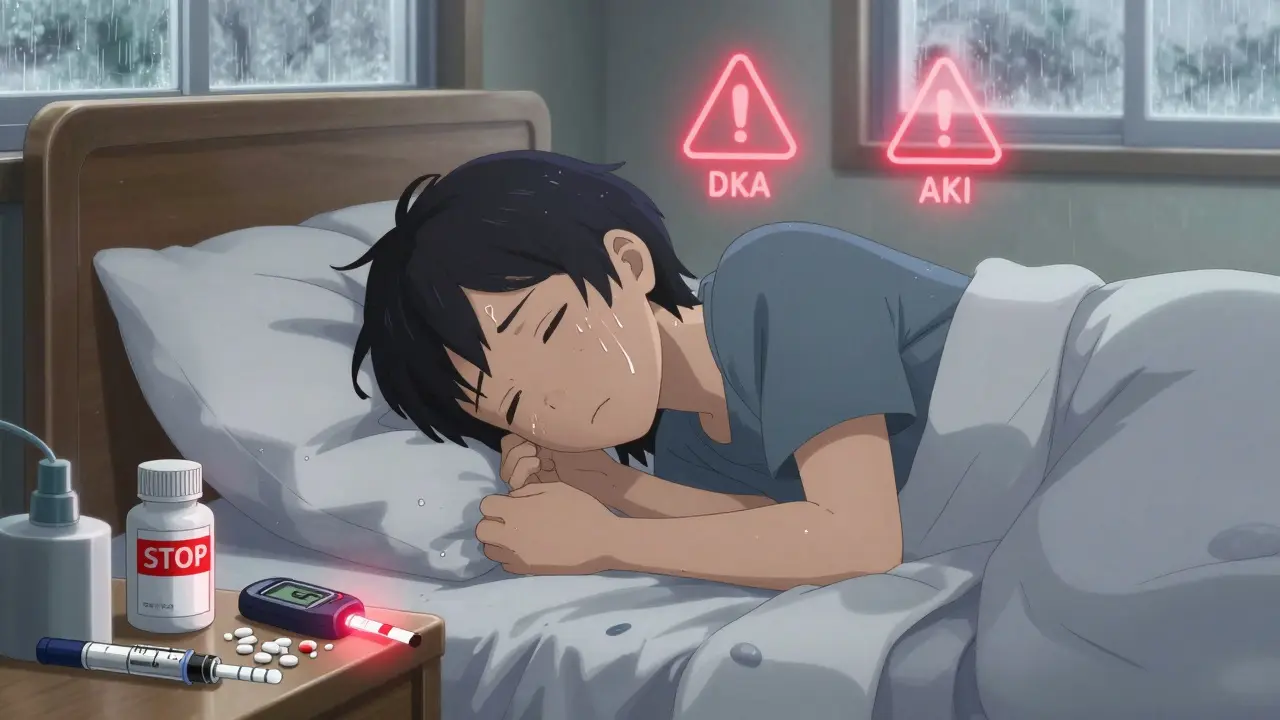
When you’re sick-whether it’s a cold, flu, stomach bug, or even just a fever-your body is under stress. For people with diabetes, that stress can turn a minor illness into a medical emergency. Diabetic ketoacidosis (DKA) and acute kidney injury (AKI) don’t wait for you to feel better. They strike fast, especially when diabetes medications aren’t managed correctly during illness. And the scary part? Diabetes sick day rules are designed to stop this before it happens. But most people don’t know them-or worse, they’ve heard conflicting advice from different doctors.
Why Illness Is Dangerous for People with Diabetes
When you’re sick, your body releases stress hormones like cortisol and adrenaline. These hormones tell your liver to pump out extra glucose. But if you have diabetes, your body can’t use that glucose properly. Without enough insulin, your body starts breaking down fat for energy. That produces ketones. Too many ketones? That’s DKA. It’s life-threatening. And if you’re not drinking enough fluids because you’re vomiting or have diarrhea, your kidneys can’t filter waste properly. That’s AKI. Both can land you in the hospital.A 2022 JAMA study of nearly 48,000 hospital admissions found that people with diabetes are 3 times more likely to develop DKA and twice as likely to get AKI during illness compared to when they’re healthy. And here’s the kicker: over 12% of all diabetes-related hospitalizations are caused by mistakes in medication use during sickness. Not the illness itself. The meds.
Which Diabetes Medications to Stop-And When
Not all diabetes medications are safe to keep taking when you’re sick. Some become dangerous. The rules aren’t the same for everyone. It depends on what you’re taking.Metformin is the most common oral diabetes drug. It’s usually safe-but not when you’re dehydrated. If you’re vomiting, have diarrhea, or can’t drink enough fluids, your kidneys can’t clear metformin properly. That raises your risk of lactic acidosis-a rare but deadly condition. The rule? Stop metformin at the first sign of vomiting or diarrhea. Don’t wait. Don’t hope it gets better. Stop it. Restart only after you’ve been eating and drinking normally for 24 hours-and only if your doctor says it’s okay.
SGLT2 inhibitors (like empagliflozin, dapagliflozin, canagliflozin) are even riskier during illness. These drugs make your kidneys flush out sugar through urine. That sounds good-until you’re sick and can’t drink enough. Then, they can trigger euglycemic DKA: dangerously high ketones even when your blood sugar looks normal. The FDA warned in 2021: stop SGLT2 inhibitors immediately if you have a fever over 100.4°F (38°C), vomiting, or reduced fluid intake. Waiting even 24 hours increases your DKA risk by 300%. No exceptions.
ACE inhibitors and ARBs (like lisinopril, losartan, valsartan) are often prescribed for blood pressure or kidney protection. But during illness, they can cause your kidneys to shut down. If you’re not drinking at least 1,500 mL (about 6 cups) of fluid in 24 hours, pause these meds. Your creatinine level might rise quickly. That’s a red flag for AKI. Don’t assume they’re safe just because they’re for your heart or kidneys. Fluids come first.
Insulin: Don’t Skip It-Adjust It
This is the biggest mistake people make: thinking they should stop insulin when they’re sick and not eating. That’s the opposite of what you should do. Your body still needs insulin-even if you’re not eating. Without it, ketones rise fast.If you have type 1 diabetes, you need to increase your basal insulin by 10-20% every 4 hours if your blood sugar is above 15 mmol/L (270 mg/dL). Test your blood sugar every 2-4 hours. Check ketones if your sugar is over 240 mg/dL (13.3 mmol/L). If ketones are above 0.6 mmol/L (blood) or 1.5 mmol/L (urine), call your doctor or go to the ER. Don’t wait.
If you have type 2 diabetes and take insulin, you’ll likely need more too. A 2023 Diabetes Care trial found 68% of type 2 patients on insulin needed higher doses during illness. Don’t guess. Use your correction factor. If you don’t know it, call your provider. Missing insulin during illness is one of the top reasons people end up in the hospital with DKA.
What to Do When You’re Sick: The 5-Day Rule
The American Diabetes Association’s 2023 guidelines say this: if you haven’t eaten or drunk normally for more than 5 days, don’t restart your diabetes meds without talking to your doctor. That’s the 5-day rule. Why? Because your body’s still recovering. Restarting metformin too soon can cause lactic acidosis. Restarting SGLT2 inhibitors too early can trigger DKA. Restarting ACE inhibitors before you’re hydrated can cause AKI.That means: if you’ve been sick for 4 days and feel better, don’t just grab your pills. Call your clinic. Ask: “Can I restart my meds today?” Even if you’re eating again, your kidneys might still be stressed. Don’t risk it.

Hydration Is Non-Negotiable
You can’t out-drug dehydration. No matter what meds you’re on, fluids are your lifeline. Aim for at least 1,500 mL (6 cups) of fluid per day. If you’re vomiting or have diarrhea, you need more. Water is best. Sugar-free drinks like unsweetened tea, broth, or electrolyte solutions (Nuun, Pedialyte) help replace lost minerals.Don’t drink soda, juice, or sweetened drinks unless your blood sugar is low. Even then, use glucose tablets or juice boxes-not a whole bottle. Too much sugar spikes your glucose. Too little fluid spikes your ketones and creatinine. Balance is everything.
What to Pack in Your Sick-Day Kit
Don’t wait until you’re sick to prepare. Build your kit now. Keep it in your medicine cabinet or fridge. Here’s what you need:- Glucose meter with 50+ test strips
- Ketone test strips (urine or blood-blood is more accurate)
- 7-day supply of all your diabetes meds (including insulin)
- 6 sugar-free drinks (12 oz each)
- Electrolyte packets (Nuun, Liquid IV, or generic)
- Glucose tablets or juice boxes (for lows)
- ADA Sick Day Log (print it from diabetes.org)
Set phone alarms to check your blood sugar every 2-4 hours. Write down each reading. Track your fluids. Note vomiting or diarrhea times. This log helps your doctor make smart decisions if you need to call them.
When to Go to the ER
You don’t have to wait until you’re collapsing. These are red flags:- Blood sugar below 70 mg/dL and doesn’t rise after 30g carbs (like 4 glucose tablets + 4 oz juice)
- Ketones above 1.5 mmol/L (blood) or persistent above 0.6 mmol/L after 2 hours
- Vomiting for more than 4 hours
- Diarrhea for more than 6 hours
- Not urinating in 12 hours, or swelling in legs/feet
- Fruity breath, fast breathing, confusion, or extreme fatigue
If any of these happen, go to the ER. Don’t call your doctor first. Don’t wait till morning. DKA and AKI don’t wait.
Why Guidelines Conflict-and What to Do
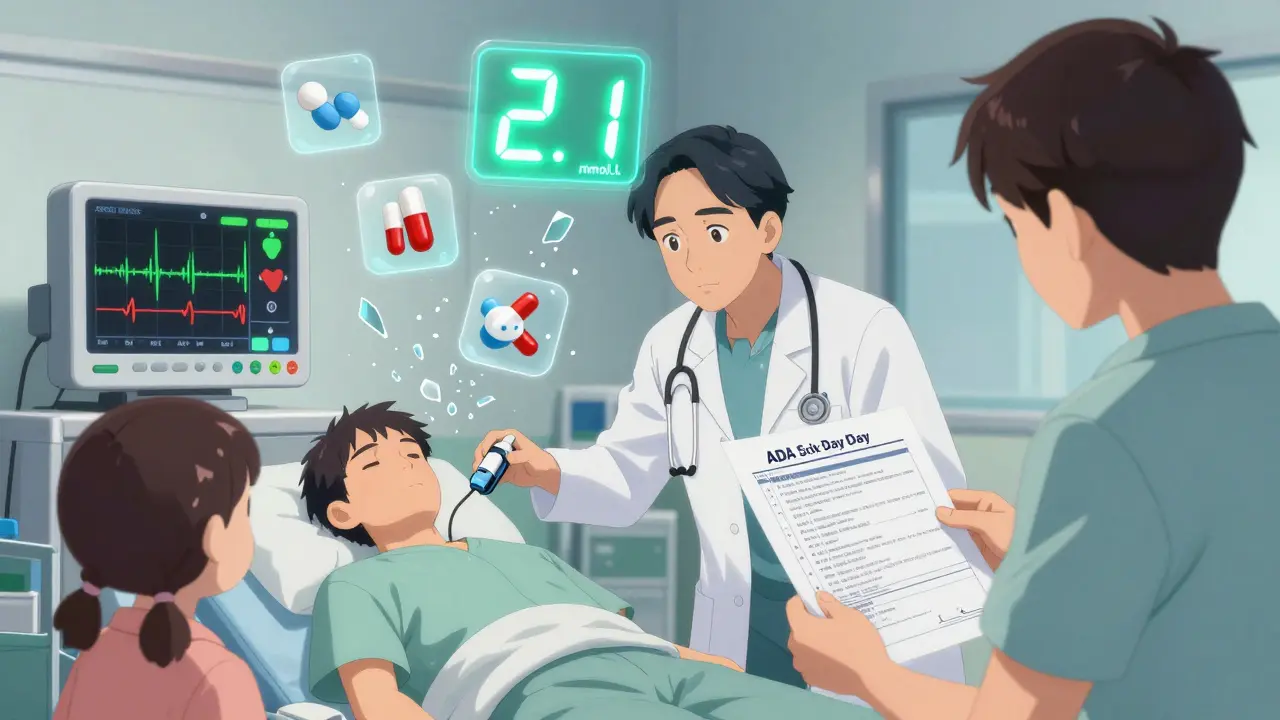
You’ve probably heard different advice. Your endocrinologist says keep metformin. The ADA website says stop it. Your pharmacist says one thing. Your mom says another. That’s real. The ADA, IDF, NICE, and Joslin all have slightly different rules. The ADA says stop SGLT2 inhibitors but keep metformin in mild illness. IDF says stop metformin anytime you’re sick. NICE says pause meds if you drink less than 1,200 mL/day. Joslin says “always take your meds unless told otherwise.”That’s confusing. And dangerous. A 2024 survey found 62% of patients had at least one medication mistake during illness. 27% ended up in the ER.
Here’s what to do: write down your exact meds. Ask your doctor: “Which ones do I stop, and when?” Get it in writing. Save it on your phone. Show it to ER staff if you go. Don’t rely on memory. Don’t trust Google. Trust your provider’s personalized plan.
What Experts Agree On
Despite the confusion, experts agree on three things:- Never skip insulin during illness.
- Stop SGLT2 inhibitors at the first sign of illness.
- Hydration is your #1 defense against DKA and AKI.
Dr. Anne Peters says: “Waiting 24 hours to stop an SGLT2 inhibitor when you’re vomiting is like waiting to put out a fire after the house burns down.” Dr. Robert Gabbay adds: “The 5-day rule isn’t optional. Restarting meds too soon causes preventable kidney injury.”
But here’s the truth: guidelines aren’t perfect. They’re based on averages. If you’re 70, have heart failure, and take metformin 2000 mg/day, your risk is higher than a 35-year-old on 500 mg. There’s no algorithm yet that adjusts for that. So you have to be your own advocate.
Final Word: Prepare Now, Stay Safe Later
Illness doesn’t care if you’re busy, tired, or scared. It hits fast. But you don’t have to be caught off guard. Build your sick-day kit. Know your meds. Know your numbers. Know when to call for help. The goal isn’t to avoid getting sick. It’s to avoid letting sickness turn into a crisis.Every year, thousands of people with diabetes end up in the hospital because they didn’t know what to do. You don’t have to be one of them.
Should I stop my metformin if I have a stomach bug?
Yes. Stop metformin immediately if you’re vomiting, have diarrhea, or can’t keep fluids down. Metformin builds up in your system when your kidneys aren’t working well due to dehydration, which can cause lactic acidosis-a rare but dangerous condition. Restart it only after you’ve been eating and drinking normally for 24 hours, and only after checking with your doctor.
Can I still take my SGLT2 inhibitor if I’m sick but my blood sugar is normal?
No. SGLT2 inhibitors can cause euglycemic DKA-even when your blood sugar looks normal. If you’re vomiting, have a fever over 100.4°F (38°C), or aren’t drinking enough fluids, stop the medication right away. Don’t wait for high blood sugar. Ketones can rise fast. This is a medical emergency waiting to happen.
Do I need to check ketones if I have type 2 diabetes?
Yes. While DKA is more common in type 1 diabetes, it’s happening more often in type 2 people-especially those on SGLT2 inhibitors. Check ketones if your blood sugar is above 240 mg/dL (13.3 mmol/L) or if you’re vomiting, have abdominal pain, or feel unusually tired. Blood ketone strips are more accurate than urine strips. If ketones are above 0.6 mmol/L, call your doctor.
What should I drink when I’m sick with diabetes?
Drink at least 1,500 mL (6 cups) of fluid daily. Water, unsweetened tea, clear broth, or sugar-free electrolyte drinks like Nuun or Pedialyte are best. Avoid soda, juice, and sweetened drinks unless your blood sugar is low. If your sugar drops below 70 mg/dL, use 15g of fast-acting carbs like glucose tablets or 4 oz of juice-not a whole bottle.
When should I go to the ER during illness?
Go to the ER if: your blood sugar stays below 70 mg/dL after treating with carbs; ketones are above 1.5 mmol/L (blood) or don’t drop after 2 hours; you’ve been vomiting for more than 4 hours or had diarrhea for more than 6 hours; you haven’t urinated in 12 hours; or you have fruity breath, fast breathing, confusion, or extreme fatigue. These are signs of DKA or AKI-both need immediate treatment.
Can I use the same sick day rules if I take GLP-1 agonists like Ozempic?
Currently, there are no official guidelines for GLP-1 agonists (like semaglutide or liraglutide) during illness. They’re not linked to DKA or AKI like SGLT2 inhibitors, but they can slow digestion and make vomiting worse. If you’re sick and can’t eat, talk to your doctor about pausing your dose. Don’t assume it’s safe to keep taking it. The ADA plans to release updated guidance in 2025.


Stop metformin when sick. Period. No excuses. I’ve seen too many people die because they thought ‘I’ll just wait it out.’ Lactic acidosis doesn’t care if you’re ‘feeling okay.’