
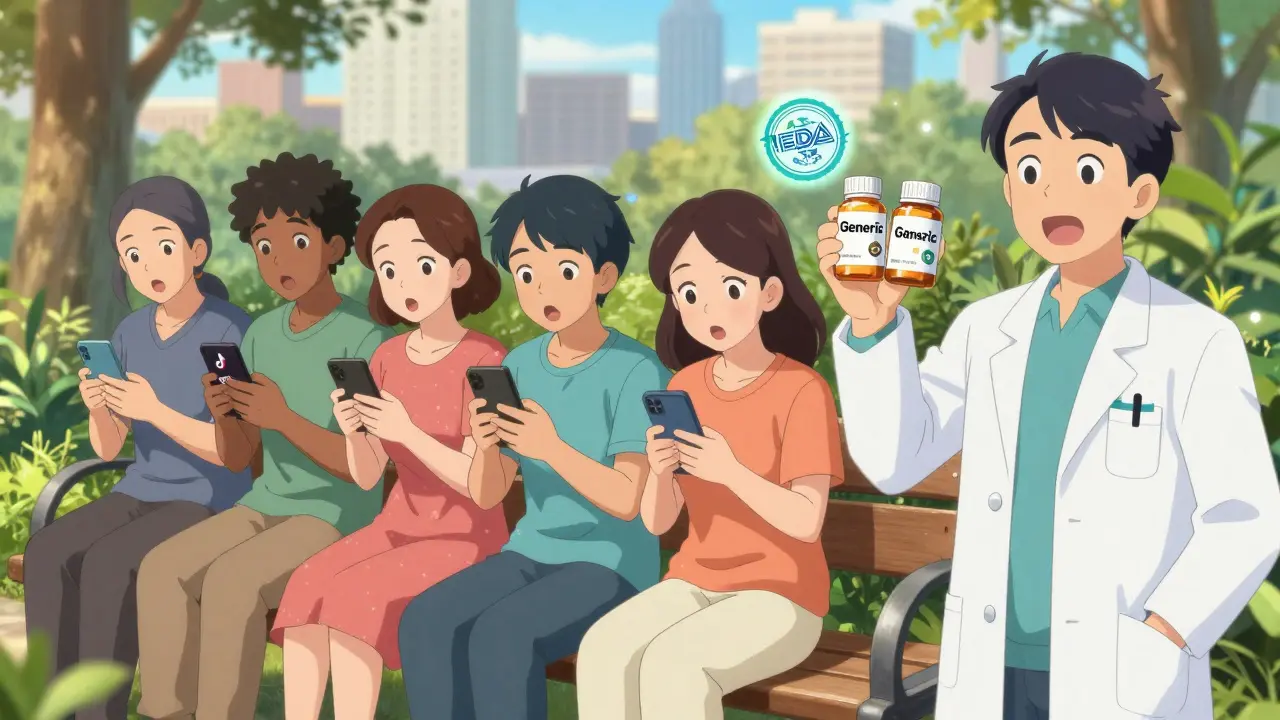
Patients are already on social media. Are you speaking to them there?
Most people don’t go to a doctor’s website first when they have a health question. They open Instagram, TikTok, or Facebook. They search for symptoms. They watch short videos about medications. They read comments from others who’ve tried the same treatment. And if your clinic or hospital isn’t there, you’re missing the moment when trust is being built - or broken.
Generic drugs are one of the most misunderstood areas in healthcare. Patients hear "generic" and think "weaker," "cheap," or "not as good." But generics are identical in active ingredients, dosage, safety, and effectiveness to brand-name drugs. The only difference? Price. And yet, 42% of patients still refuse to fill a generic prescription - not because of their doctor’s advice, but because of what they saw on social media.
Health systems that use social platforms to explain generics aren’t just sharing facts. They’re changing behavior. One community health center in Ohio saw generic prescription fills rise by 31% in six months after launching a TikTok series featuring real patients explaining why they switched. No ads. No scripts. Just honest conversations.
Why social media works better than brochures for patient education
Printed handouts gather dust. Email newsletters get deleted. But a 60-second video of a pharmacist opening a pill bottle and saying, "This is the exact same medicine - just $12 instead of $98,"? That sticks.
Patients trust people like them more than doctors in digital spaces. A 2025 study from the Journal of Digital Health found that 68% of patients said they believed patient-generated content more than official hospital posts. That’s why the most effective social media education doesn’t come from a CEO or a PR team. It comes from patients, nurses, and pharmacists who are real, relatable, and unfiltered.
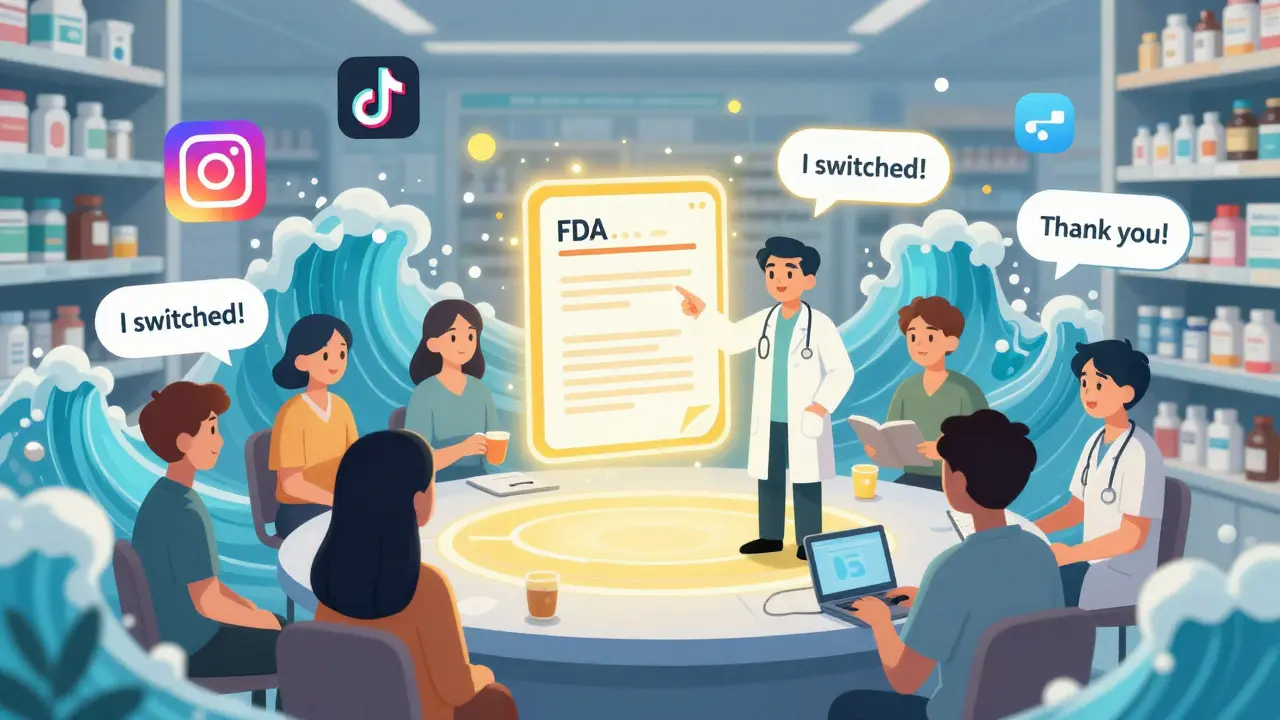
Take Instagram Reels. A clinic in Chicago started posting 30-second clips of pharmacists answering common questions: "Why does my generic pill look different?" "Does it work as fast?" "Can I trust it?" Each video ended with: "Ask your pharmacist - they’ll show you the FDA approval letter." Engagement jumped 217%. Comments filled with "I had no idea," "I’m switching tomorrow," and "Thank you for explaining this."
Which platforms actually work for patient education?
Not every platform is right for every message. Here’s what’s working in 2026:
- TikTok - Best for quick, visual explanations. Short videos (15-60 seconds) with captions get 4.2x more completion than long ones. Use real patients, real pharmacies, real labels. Avoid stock footage.
- Instagram - Great for before-and-after visuals, pharmacist Q&As, and carousel posts breaking down how generics are approved. Use Stories for polls: "Would you try a generic if it saved you $50?"
- Facebook - Still the top platform for older adults. Use Groups to host weekly live Q&As with pharmacists. Share patient stories in text form. People over 50 trust Facebook more than any other platform for health info.
- YouTube - Ideal for longer explainers. A 5-minute video titled "How the FDA Makes Sure Your Generic Drug Is Just as Safe" can rank for search terms like "are generic pills safe?" and bring in organic traffic for months.
- LinkedIn - Don’t ignore it. Use it to share clinical data with other providers. When doctors see peer-reviewed stats posted by your team, they’re more likely to recommend generics to patients.
Don’t try to be everywhere. Pick two platforms that match your patient population. If most of your patients are seniors, focus on Facebook and YouTube. If you serve young families, go all-in on TikTok and Instagram.
What to post - and what to avoid
Here’s what successful health organizations are posting:
- Side-by-side photos of brand-name and generic pills with identical active ingredients listed
- Short videos of pharmacists pulling a generic from the shelf and saying, "This is what your insurance wants you to take - and it’s not a downgrade."
- Testimonials from patients who saved money and saw no difference in results
- Infographics showing how the FDA requires generics to be 90-110% as effective as brand names
- Live Q&As with pharmacists answering common myths: "No, generics don’t take longer to work."
Avoid these mistakes:
- Using corporate jargon like "therapeutic equivalence" or "bioequivalence" without explaining it
- Posting only polished ads. Patients can spot a marketing video from a mile away. Authenticity beats perfection.
- Ignoring comments. If someone says, "I had a bad reaction to the generic," don’t delete it. Respond with: "We’re sorry you had that experience. Can you tell us which medication? We’ll look into it."
- Posting too infrequently. One post a week is the minimum. Three to five times a week is what top performers do.
How to get started - even with a small team
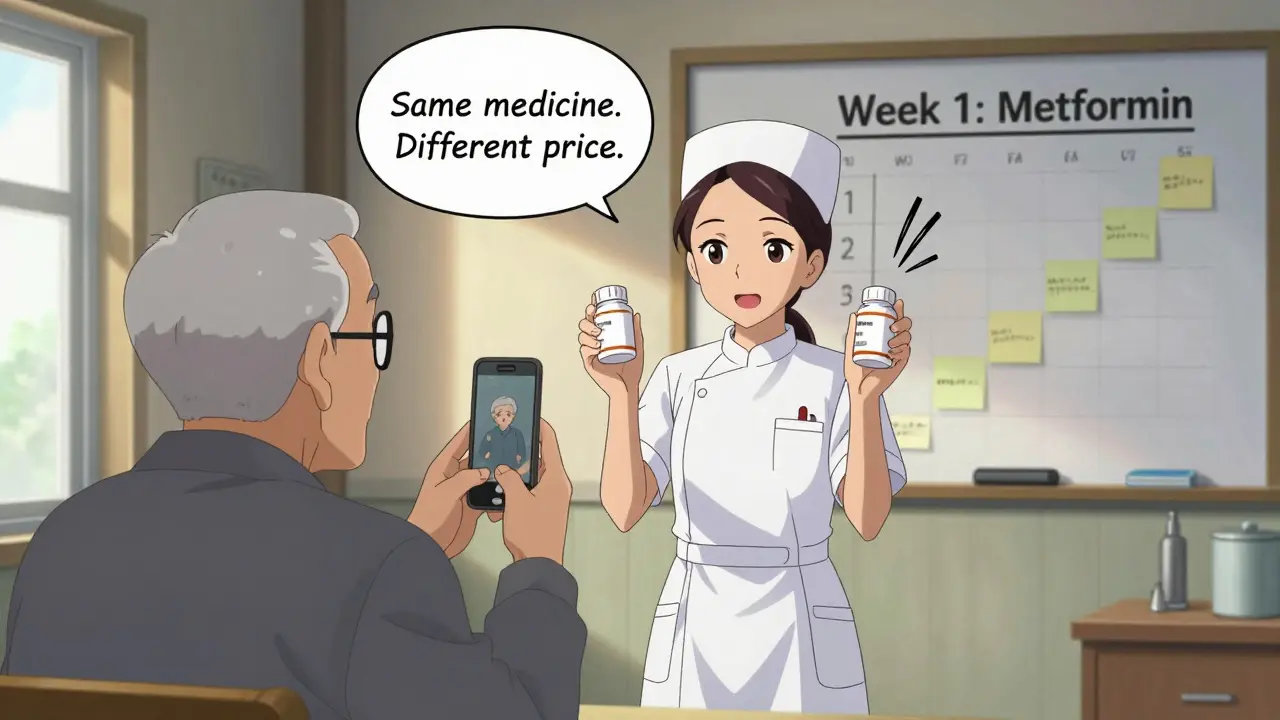
You don’t need a marketing department. You don’t need fancy equipment. Here’s how a single nurse in a rural clinic did it:
- Used her phone to film a 45-second video explaining why her patient took metformin instead of Glucophage. She held up both bottles side by side.
- Posted it on Facebook with the caption: "Same medicine. Different price. Same results."
- Answered every comment for the next 48 hours.
- Repeated it every Monday for six weeks.
By week 6, 17 patients came in asking for generics. The clinic’s pharmacy saved $2,100 in brand-name prescriptions that month.
Start small. Pick one drug. Pick one platform. Film one video. Post it. Engage. Then do it again.
Measuring success - beyond likes and shares
Did your video get 10,000 views? Great. But did it change behavior? That’s what matters.
Track these real metrics:
- Change in generic prescription fill rates at your pharmacy (compare month-over-month)
- Number of patients asking about generics during visits
- Reduction in calls to the pharmacy asking "Is this the real medicine?"
- Positive comments referencing your content: "I saw your video and switched."
Use free tools: Google Analytics to track traffic from social media to your site’s generic drug page. UTM tags on links in your bio. Facebook Insights to see which posts led to profile visits.
One clinic in Texas tracked a 29% increase in generic prescriptions after a 3-week TikTok campaign - and linked it directly to their posts. They didn’t need a fancy dashboard. Just a spreadsheet and a little patience.
The biggest risk? Not doing anything
There’s a myth that social media is too risky for healthcare. But the real risk is letting misinformation win.
Right now, someone is posting a video saying generics cause liver damage. Someone else is claiming they’re made in China and contain poison. These aren’t facts. They’re fear. And without credible voices stepping in, patients believe them.
Health systems that ignore social media aren’t protecting themselves. They’re handing the conversation to strangers.
The most trusted voices in health aren’t always the loudest. They’re the ones showing up - consistently, honestly, and humanly.
What’s next? The future of patient education on social media
By 2027, 73% of Gen Z and millennial patients will use TikTok or Instagram to research medications before talking to a doctor. That’s not a prediction. That’s already happening.
AI tools are now helping clinics auto-generate captions, suggest posting times, and even flag misleading comments. But the human touch still matters most. A bot can’t hold up a pill bottle and say, "I’ve filled this for 12 years. I know it works."
Platforms are also rolling out new tools. Instagram’s Broadcast Channels let clinics send updates to thousands of followers at once. TikTok’s new Education Verification program flags verified health content. Facebook is testing prescription lookup tools in Groups.
But the real shift isn’t in the tech. It’s in the mindset. Social media isn’t a marketing channel. It’s a public health tool.
Every post about generics is a chance to reduce costs, improve adherence, and save lives.
Frequently Asked Questions
Are generic drugs really as effective as brand-name drugs?
Yes. The FDA requires generic drugs to have the same active ingredient, strength, dosage form, and route of administration as the brand-name version. They must also be absorbed into the body at the same rate and to the same extent. Studies show generics work just as well - in 98% of cases, there’s no measurable difference in effectiveness or safety.
Why do generic pills look different from brand-name ones?
By law, generics can’t look exactly like brand-name drugs - that’s to avoid trademark infringement. But the difference is only in color, shape, or markings. The medicine inside is identical. Pharmacists can show you the FDA’s approval documents if you’re unsure.
Can I trust generics if they’re so much cheaper?
Price doesn’t reflect quality. Generics are cheaper because they don’t need to pay for advertising, branding, or patent development. The manufacturing standards are the same. Many hospitals use generics for 90% of their medications - including for heart disease, diabetes, and infections - because they’re proven to work.
What if I have a bad reaction to a generic drug?
While rare, some people may react to inactive ingredients (like fillers or dyes) that differ between brands. If you notice new side effects after switching, talk to your doctor or pharmacist. They can check if it’s the formulation or something else. Most reactions aren’t caused by the active ingredient - and switching back to the brand or trying a different generic often fixes it.
How can I find reliable information about generics on social media?
Look for accounts run by hospitals, pharmacies, or licensed pharmacists. Check if they cite sources like the FDA, WHO, or peer-reviewed journals. Avoid accounts that use fear-based language like "dangerous" or "secret ingredients." If a post doesn’t show proof, don’t believe it. When in doubt, ask your provider.
Next steps for clinics and hospitals
Start with one drug. Pick one platform. Film one video. Post it. Answer every comment. Track prescriptions. Repeat.
If you’re unsure where to begin, ask your pharmacy team: "What’s the most common question patients ask about generics?" That’s your first video topic.
Don’t wait for perfection. Don’t wait for a big budget. The best social media education isn’t made in a studio. It’s made by someone who cares enough to show up - and say, "This matters."


so like... we're just supposed to believe some guy on tiktok with a pill bottle instead of the guy in the white coat? i mean... i guess if your pharmacy is run by a 19-year-old with a ring light and a filter, sure. but i'm still gonna ask my doc. also, why does everyone think patients are dumb? we know the difference between a $12 pill and a $98 one. we just don't trust the system anymore.