
Medication Management: How to Stay Safe, Effective, and In Control
When you’re managing medication management, the systematic process of tracking, taking, and adjusting drugs to get the best results while avoiding harm. Also known as drug adherence, it’s not just about remembering your pills—it’s about understanding why they’re prescribed, how they interact, and what to do when things go wrong. Many people think if they take their medicine as directed, they’re doing fine. But what if your doctor didn’t tell you that your blood pressure pill could make your teeth fall out? Or that your antidepressant might take two months to kick in—and quitting early could make things worse?
Medication side effects, unwanted reactions from drugs that range from mild dry mouth to life-threatening interactions. Also known as adverse drug reactions, they’re often ignored until it’s too late. That’s why tracking lot numbers, knowing your drug’s generic name, and checking for recalls isn’t optional—it’s survival. Look at rasagiline for Parkinson’s: it helps movement but causes dry mouth, which increases cavities. Or pitavastatin, a cholesterol drug that can raise blood sugar. These aren’t rare oddities. They’re standard risks built into common prescriptions. And if you’re on multiple meds—like someone with PCOS taking GLP-1s while also managing thyroid levels—interactions multiply fast.
Pill tracking, the practice of recording what you take, when, and how you feel. Also known as medication logs, it’s the simplest tool that saves the most lives. Think of it like a car’s dashboard. You wouldn’t drive without checking your fuel or oil. Yet millions skip checking their meds. Did your TSH level change after starting levothyroxine? Did your hives flare after switching antihistamines? Did your sleep get worse after starting a night shift and forgetting your melatonin? These aren’t random events. They’re signals. And if you’re not writing them down, you’re flying blind.
Medication management isn’t about being perfect. It’s about being aware. It’s knowing that your Zyrtec isn’t just for allergies—it’s a tool that could interfere with your night shift sleep. It’s realizing that buying cheap generic Prozac online might save money, but only if you verify the pharmacy. It’s understanding that Donepezil for dementia or Montelukast for asthma doesn’t work the same for everyone—and that’s why comparing options matters.
You’ll find real stories here: how someone with cystic fibrosis planned a family, how a Parkinson’s patient protected their teeth, how a person with IBS found relief after years of trial and error. These aren’t theory. They’re lived experiences. No fluff. No marketing. Just what works, what doesn’t, and what no one told you to watch for.
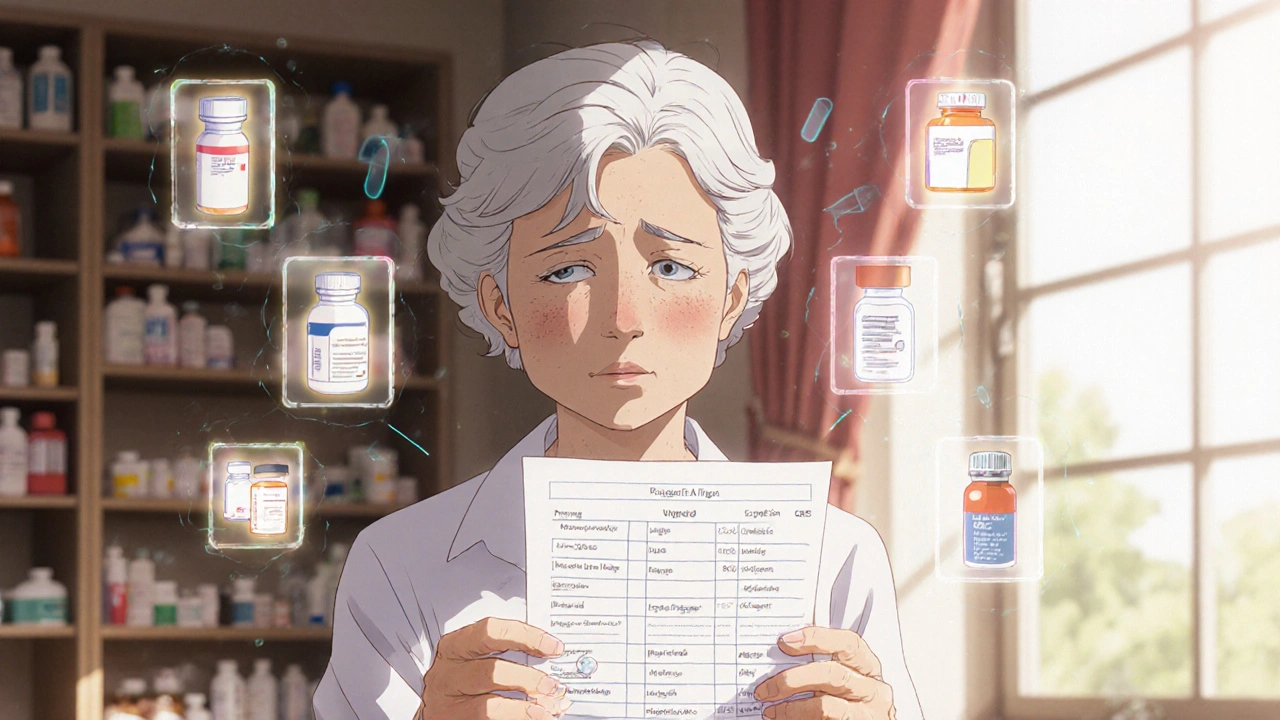
Creating Your Personal Medication List: What to Include for Safety
A personal medication list is a simple but powerful tool to prevent dangerous drug interactions, reduce errors, and protect your health. Know exactly what to include and how to keep it updated.
More Detail