
Most kids don’t know the difference between a brand-name pill and a generic one. They see the colorful packaging of Tylenol or Advil and assume that’s the only kind that works. But in reality, the little white pill your pharmacist hands you with no logo on it? It’s just as effective. Teaching children about generic drugs isn’t about pharmacy jargon-it’s about building trust in medicine, saving money, and reducing confusion when they need treatment.
Why Kids Need to Understand Generic Drugs
Children are surrounded by medicine. They take syrup for colds, chewables for fevers, and sometimes even pills for allergies or asthma. But when they see two identical pills-one with a big name, one without-they start asking questions. And if no one explains it, they might assume the cheaper one is less good. That’s dangerous thinking.
Generic drugs are not second-rate. They contain the exact same active ingredient, in the same strength, and work the same way as brand-name versions. The FDA requires them to meet the same strict standards. But because they don’t spend millions on ads or fancy packaging, they cost 80% less on average. In Australia, a month’s supply of generic ibuprofen might cost $3 instead of $15 for the brand version. That’s money families can use for food, school supplies, or doctor visits.
When kids understand this, they stop seeing medicine as something tied to logos or price tags. They learn that what matters is the science inside the pill-not the picture on the box.
How to Explain Generic Drugs to Young Children (Ages 3-7)
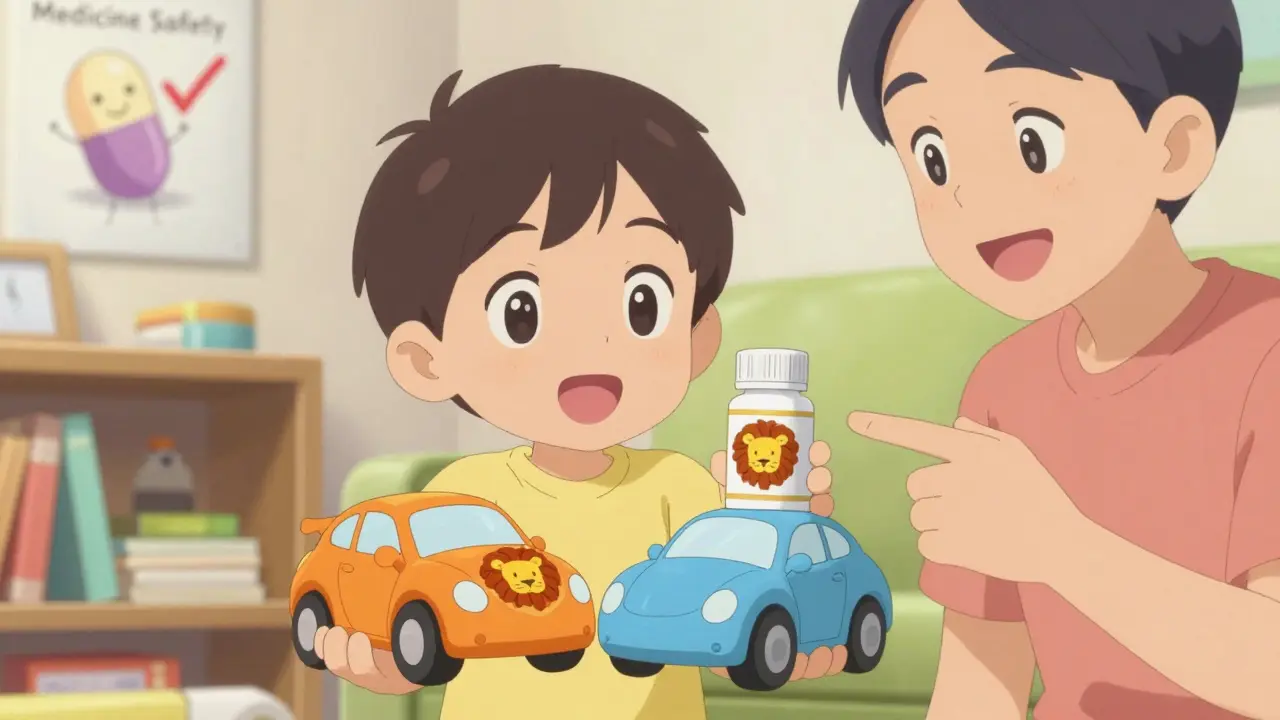
For little ones, keep it simple and visual. Use toys or drawings. Show them two identical toy cars-one with a flashy sticker, one plain. Say: “They both go the same speed. One just has a sticker.” Then show them two medicine bottles: one with a lion logo, one without. “They both have the same medicine inside. The plain one just costs less.”
Use play. Let them be the pharmacist. Give them pretend pills and let them choose which one to give to a stuffed animal. Say: “Which one do you think will help the bear feel better?” Then reveal they’re the same. This builds confidence that cheaper doesn’t mean worse.
Also, teach them never to take medicine without an adult. Whether it’s a brand or generic, medicine is not candy. A 2022 study in Melbourne found that 1 in 5 preschoolers had accidentally swallowed medicine they found at home. Teaching kids to ask first-no matter the label-is the most important safety lesson.
Talking to Older Kids (Ages 8-12) About How Generic Drugs Work
Older kids can handle a bit more detail. You can say: “The medicine inside is made by the same rules as the brand name. The company that made the brand name had a patent, which means only they could sell it for a while. Once that patent ended, other companies could make the same medicine-but without spending money on ads. So they sell it cheaper.”
Use real examples. Show them the box of generic paracetamol next to the brand. Point out the active ingredient: “See? Both say ‘paracetamol 500mg.’ That’s the part that helps you feel better. Everything else-the color, shape, flavor-is just extra.”
Ask them: “If two bikes go the same speed, one costs $200 and one costs $50, which would you pick?” Most kids will say the cheaper one. Then connect it: “Medicine is the same. You’re not losing anything by choosing the generic.”
Also, explain why some generics look different. “The shape or color isn’t the medicine-it’s just how the company made it. Like how some apples are red and some are green. They’re still apples.”
Why This Matters Beyond Saving Money
When kids learn about generic drugs, they’re not just learning about pills. They’re learning to think critically.
They start questioning ads. They notice how companies spend millions to make you believe one pill is better. They begin to understand marketing tricks-and that’s powerful. A 2023 study in the Journal of Pediatric Health found that children who understood generic drugs were 40% more likely to question misleading health claims online.
It also reduces stigma. Some kids feel embarrassed if their family uses generics. They think it means they’re “poor” or “not good enough.” But when schools and parents normalize it-when kids hear, “We use generics because they’re smart, not because we have to”-that shame disappears.
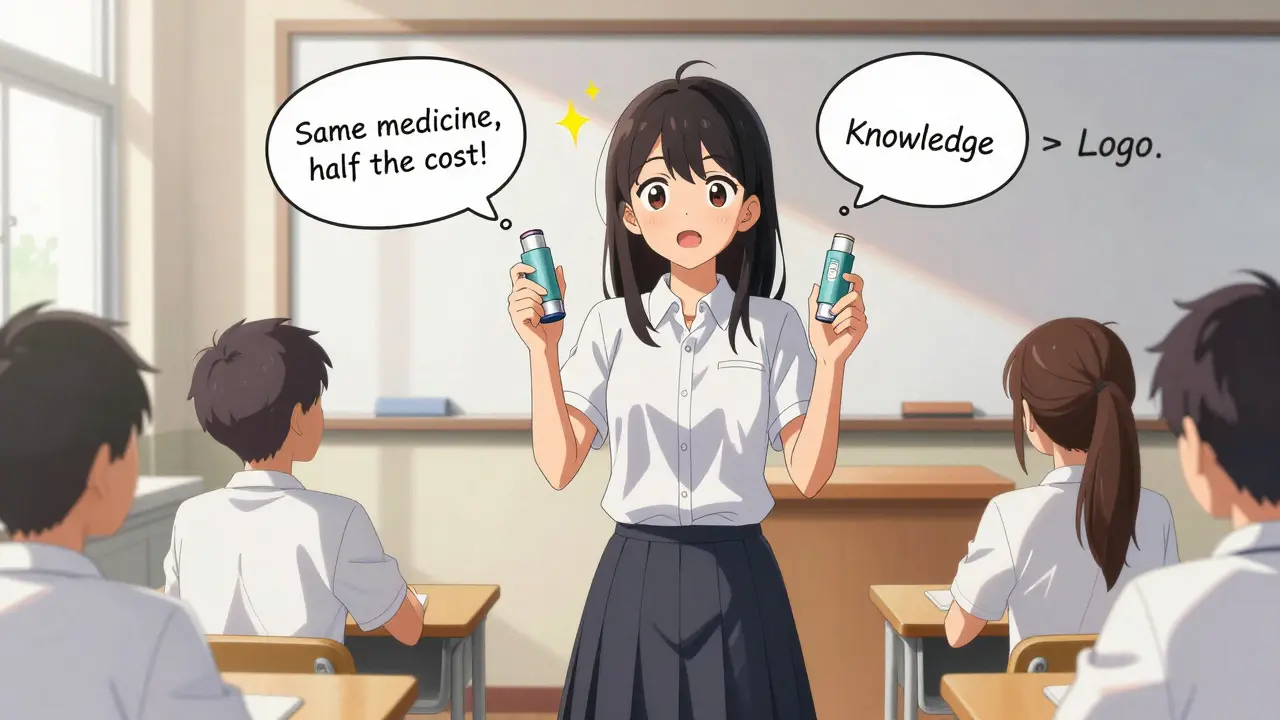
And in households where medication costs are tight, this knowledge can be life-changing. One mother in Adelaide told me her daughter asked why they switched from the brand-name asthma inhaler to the generic. The girl didn’t just accept it-she explained it to her teacher during a class project on money. That’s the kind of confidence we want kids to have.
What Schools Are Doing Right
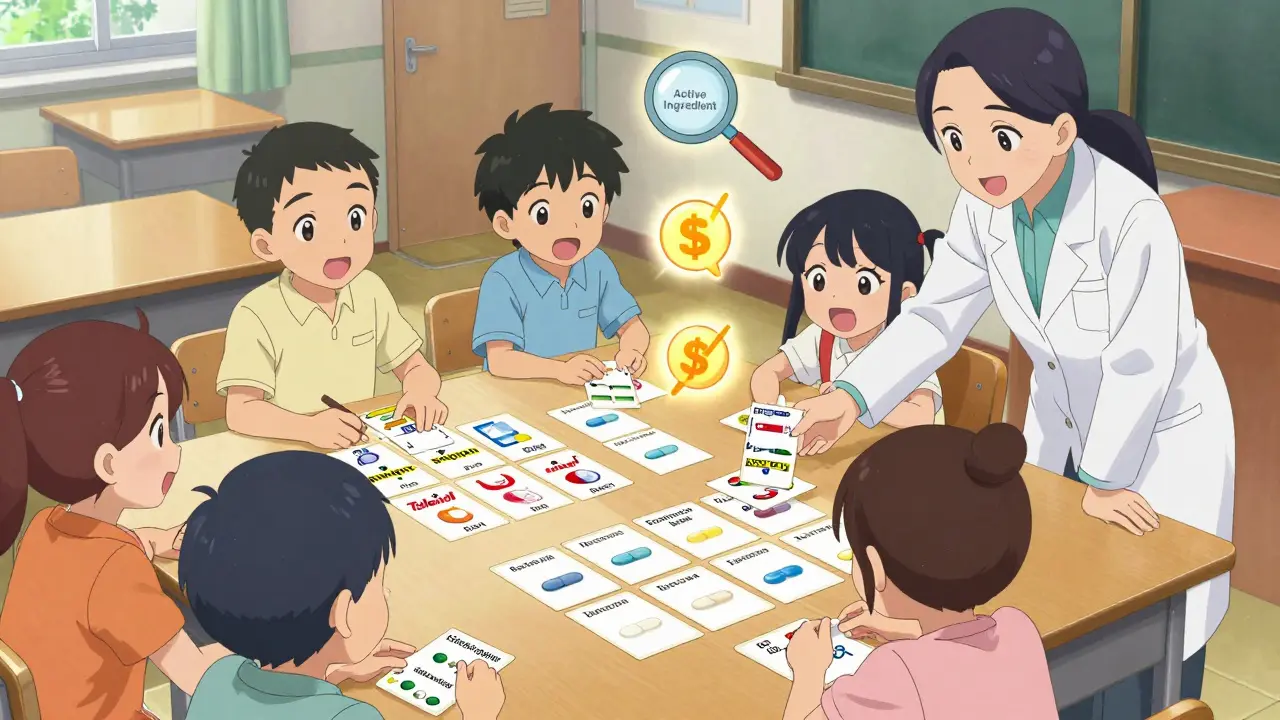
Some schools are already teaching this. Programs like Generation Rx, used in over 1,500 Australian schools, include simple lessons on medicine safety and cost. One activity asks kids to compare prices of identical medicines on fake pharmacy shelves. Another has them match generic names to brand names using cards.
These aren’t fancy tech tools. They’re paper cards, real pill bottles (empty, of course), and role-playing. Teachers say the biggest win? Kids start asking their parents, “Why are we buying this one?” And parents start listening.
It’s not about turning kids into pharmacists. It’s about giving them the tools to make smart, safe choices-and to speak up when something doesn’t make sense.
What to Avoid When Teaching Kids About Medicines
Don’t say, “Brand names are better.” That’s false and confusing.
Don’t scare them with stories about “bad generics.” There’s no evidence that FDA-approved generics are less safe. In fact, they’re tested just as hard.
Don’t skip the conversation because you think they’re too young. Kids notice everything. If you avoid the topic, they’ll get their answers from YouTube or friends-and those answers might be wrong.
And don’t assume they know the difference between prescription and over-the-counter medicine. Many kids think if it’s in a bottle, it’s okay to take. Teach them: “Only take what an adult gives you, no matter the label.”
Practical Tips for Parents and Teachers
- Keep medicine locked up-but also let kids see you take a generic pill and say, “This helps my headache, and it’s the same as the expensive one.”
- Use free resources like Generation Rx’s printable activities (available in English and Spanish) for classroom or home use.
- When picking up a prescription, say out loud: “This is the generic version. It’s just as good and saves us money.”
- Ask your pharmacist to explain the difference when you pick up a new medicine. Kids listen more than you think.
- Turn it into a game: “Can you find the generic version at the store?”
What Happens When Kids Don’t Learn This
Without this knowledge, kids grow up thinking medicine is about brands, not science. They might refuse to take a cheaper, equally effective drug because they believe it won’t work. They might pay more than they need to. Or worse-they might distrust all medicine because they think it’s just marketing.
One teenager I spoke with refused to take her generic ADHD medication because “it didn’t have the logo.” She switched back to the brand name, costing her family $400 extra a year. When she finally understood the science, she said, “I felt stupid for being so scared of a plain pill.”
That’s the gap we can close.
Final Thought: Knowledge Is the Best Medicine
Teaching children about generic drugs isn’t about pharmacy rules. It’s about empowering them to make smart choices, question misleading messages, and understand that value doesn’t come from a logo-it comes from what’s inside.
When kids learn this early, they don’t just save money. They become smarter, more confident, and less easily fooled by the noise around them. And that’s a lesson no brand can sell.
Are generic drugs safe for children?
Yes. Generic drugs for children are required by the FDA and TGA (Therapeutic Goods Administration in Australia) to contain the same active ingredient, in the same dose, and work the same way as brand-name drugs. They go through the same testing for safety and effectiveness. The only differences are in color, shape, flavor, or inactive ingredients-which don’t affect how the medicine works.
Why do generic pills look different from brand-name ones?
By law, generic drugs can’t look exactly like the brand name-that’s to avoid confusion. So they change the color, shape, or markings. But the medicine inside is identical. Think of it like two identical cars painted different colors. The engine is the same.
Can I switch my child from a brand-name drug to a generic?
Yes, as long as your doctor or pharmacist approves it. Most pediatric medications, like antibiotics, asthma inhalers, and pain relievers, have safe and effective generic versions. Always check with your healthcare provider before switching, but don’t assume the brand is better.
Do generic drugs take longer to work?
No. Generic drugs are required to be absorbed into the body at the same rate and to the same extent as the brand name. If a brand-name painkiller starts working in 20 minutes, the generic will too. There’s no delay.
How can I teach my child to recognize generic medicines?
Show them the label. The active ingredient is always listed first. For example, both “Panadol” and “Paracetamol” contain paracetamol. Point out the name under “Active Ingredient” and explain that even if the brand name changes, the medicine is the same. Use real examples from your medicine cabinet.
Generic drugs are a smart, safe, and affordable choice for families. Teaching children about them builds not just health literacy-but critical thinking that lasts a lifetime.


OMG I just showed my 5-year-old the difference between Tylenol and generic acetaminophen with toy cars 🚗💨 and she yelled, ‘THEY’RE THE SAME CAR, MOM!’ I cried. 😭 This is the kind of stuff that sticks. Thanks for this!!