
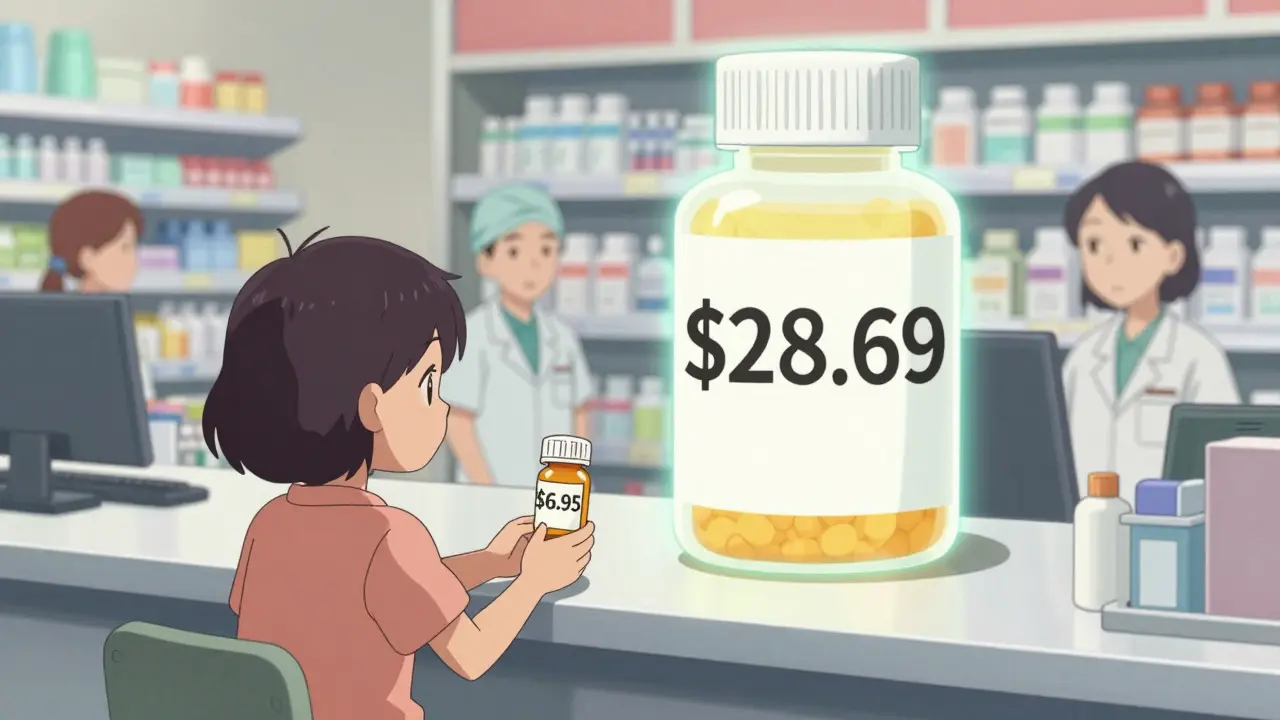
Every year, Americans fill over 3.9 billion prescriptions for generic drugs. That’s nearly nine out of every ten prescriptions written. Yet, these generics make up just 12% of total drug spending. Meanwhile, brand-name drugs, which account for only 10% of prescriptions, eat up 88% of the money spent on medicine. The math doesn’t lie: generic drugs are saving the U.S. healthcare system hundreds of billions of dollars every year.
How Much Do Generics Actually Save?
In 2023, generic and biosimilar drugs saved the U.S. healthcare system $445 billion. That’s more than the entire annual budget of the Department of Education. For the average patient, the difference is even more personal. In 2024, the out-of-pocket cost for a generic prescription was $6.95. For the same medicine in brand-name form? $28.69. That’s almost five times more.
For people without insurance, the gap is even wider. Since 2019, the cost of brand-name drugs jumped by 50%, hitting $130.18 per prescription on average. Meanwhile, generic prices dropped by 6%, now averaging under $7 per script. That’s not a coincidence. It’s the result of competition. When a brand-name drug loses its patent, multiple generic makers enter the market. Prices tumble. And patients win.
The 90/13 Paradox
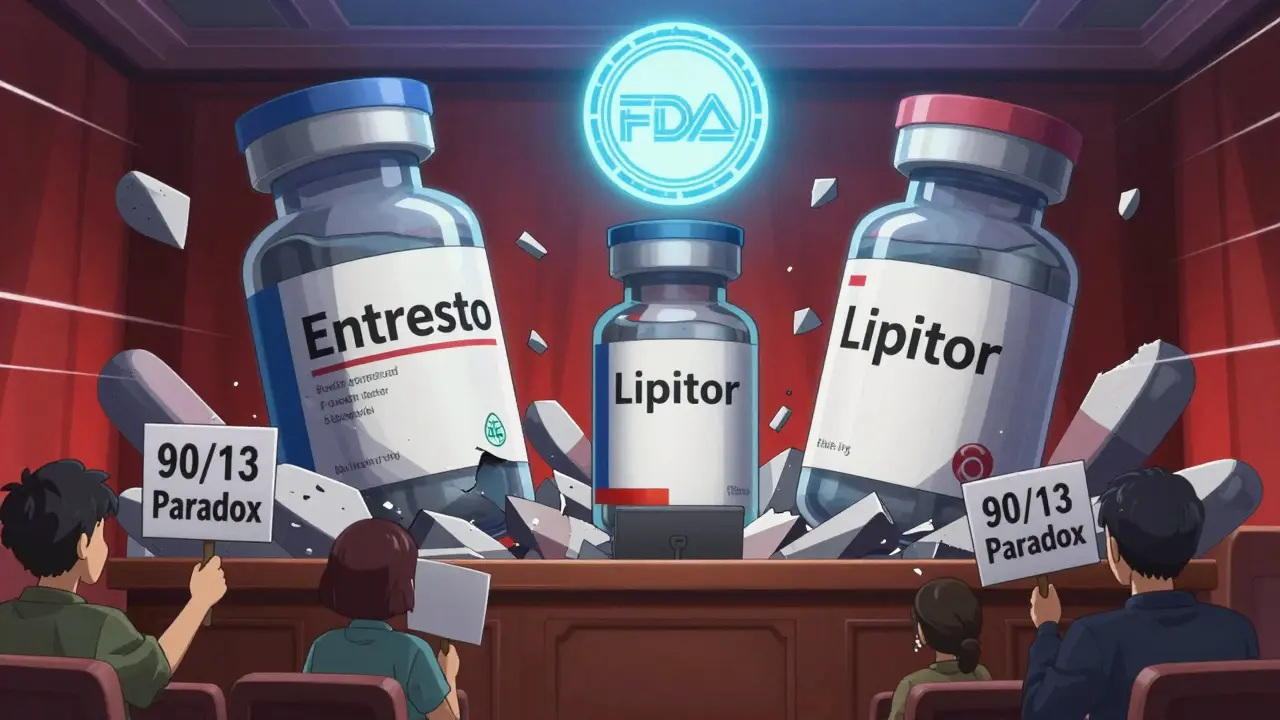
There’s a term experts use: the 90/13 paradox. It means 90% of prescriptions filled are generics, but they only account for 13% of total drug spending. That’s the core truth about how the system works - and how broken it still is. Brand-name drugs are priced as if they’re the only option. But they’re not. Generics are just as safe, just as effective, and approved by the FDA to work the same way.
Take Entresto, a heart failure drug. In 2023, it brought in $5.4 billion in sales. But its patent expires in late 2025. Once generics hit the market, the price could drop by 80% or more. That’s not speculation - it’s what happened with Lipitor, the cholesterol drug. After generics arrived, the price fell from over $100 a month to under $10. Millions of people could afford it for the first time.
Biosimilars: The Next Wave of Savings
Biosimilars are the generic version of complex biologic drugs - things like cancer treatments, autoimmune therapies, and insulin. They’re harder to make than regular pills, but they’re still far cheaper. Since they entered the market, biosimilars have saved $56.2 billion in the U.S. alone. In 2024, they saved $20.2 billion in just one year.
One powerful example is Stelara, used for psoriasis and Crohn’s disease. When nine biosimilar versions launched by mid-2025, the price dropped by up to 90%. That meant patients who were paying $10,000 a year for their treatment suddenly paid under $1,000. For many, that was the difference between staying on treatment or stopping it.
Yet, biosimilars still make up less than 30% of the market in most cases. That’s because doctors and pharmacists aren’t always encouraged to switch. Insurance plans don’t always push them. And patients are sometimes told, "This is the one your doctor prescribed," even when a cheaper, equally effective option exists.
Why Don’t More People Use Generics?
It’s not because they’re less effective. The FDA requires generics to be bioequivalent - meaning they deliver the same amount of active ingredient into the bloodstream at the same rate as the brand. In over 99% of cases, there’s no difference in how they work.
But there are barriers. One big one is patent manipulation. Big pharma companies file dozens, sometimes over 70, patents on a single drug - not to protect innovation, but to block generics. One drug had its monopoly extended from 2016 to 2034 through this tactic, called "patent thickets." Another trick is "product hopping" - making tiny changes to a drug just before the patent expires, then pushing doctors to switch patients to the new version. That delays generics for years.
These tactics cost consumers $12 billion a year. About $3 billion of that hits patients directly in their wallets. Meanwhile, the Congressional Budget Office estimates that cracking down on these practices could save $1.8 billion over ten years.
Who’s Getting Left Behind?
Medicare and Medicaid patients have seen huge benefits from generics. But not everyone has equal access. In 42 states, pharmacists can automatically substitute a generic for a brand-name drug - but only if the doctor doesn’t write "dispense as written." In the other eight states, even if the generic is cheaper and approved, the pharmacist can’t switch it without calling the doctor back.
That’s outdated. It adds time, cost, and confusion. A 2024 Kaiser Permanente study showed that when pharmacies were allowed to automatically substitute generics, pharmacy costs dropped 25-35% within 18 months. That’s money saved for insurers, employers, and patients.
And then there’s the lack of awareness. Many patients still believe generics are "inferior" - a myth that persists despite decades of data proving otherwise. A 2025 survey by the Association for Accessible Medicines found that nearly 40% of patients didn’t know generics are required to meet the same FDA standards as brand-name drugs.
What’s Changing in 2025?
The patent cliff of 2025 is the biggest opportunity for savings in a decade. Three major drugs - Entresto, Tradjenta, and Opsumit - are set to lose patent protection. Combined, they brought in $8.6 billion in sales last year. Once generics arrive, those numbers will collapse.
The FDA approved 745 generic drugs in 2024 - a 12% increase from 2023. That’s the fastest pace in over a decade. More competition means more savings. And with the Inflation Reduction Act now forcing brand-name drugmakers to cap price hikes, the pressure is on to lower costs before generics even arrive.
Meanwhile, bipartisan bills like the Affordable Prescriptions for Patients Act and the Drug Competition Enhancement Act are moving through Congress. They aim to ban patent thickets and product hopping. If passed, they could unlock billions more in savings.
What You Can Do
If you’re paying for prescriptions, ask your pharmacist: "Is there a generic version?" Don’t assume the doctor’s prescription is the only option. Most of the time, there is.
Check your insurance plan. Over 87% of commercial health plans now require generic substitution when available. If yours doesn’t, call your insurer and ask why.
Use tools like GoodRx or SingleCare. They show real-time prices at local pharmacies. Sometimes, a generic costs less than your copay. Pay cash instead.
And if you’re on a chronic medication - diabetes, high blood pressure, thyroid - ask your doctor if switching to a generic has ever been discussed. If not, bring it up. Your health won’t change. But your bill might.
Final Thought
Generic drugs aren’t a compromise. They’re the smartest, most proven cost-saving tool in modern medicine. They’ve saved Americans $3.4 trillion over the past decade. They’ve made life-saving treatments affordable for millions. And they’re still just getting started.
The real question isn’t whether generics work. It’s why we still let brand-name drugs charge so much when better, cheaper options exist - and why we don’t push harder to make them the default choice.
Are generic drugs as safe and effective as brand-name drugs?
Yes. The FDA requires generic drugs to have the same active ingredient, strength, dosage form, and route of administration as the brand-name version. They must also prove they work the same way in the body. Over 99% of generic drugs are considered therapeutically equivalent. Side effects and effectiveness are virtually identical. The only differences are in inactive ingredients like fillers or dyes - which rarely affect how the drug works.
Why are generic drugs so much cheaper?
Generic manufacturers don’t have to repeat expensive clinical trials. Thanks to the Hatch-Waxman Act of 1984, they only need to prove their drug is bioequivalent to the brand. That cuts development costs by 80-90%. With multiple companies competing to make the same drug, prices drop quickly. Brand-name companies, on the other hand, recover R&D costs and make profits during their patent monopoly - often at prices far beyond production cost.
Can I trust generic drugs from different manufacturers?
Yes. Every generic manufacturer must pass the same FDA inspections as brand-name makers. The FDA inspects over 3,500 manufacturing sites annually, including those in the U.S., India, and China. While some patients report minor differences in how a generic feels - like a slightly different pill shape or taste - these don’t affect how the drug works. Less than 1% of generic prescriptions report any real effectiveness issue, according to FDA adverse event reports.
Do generics cause more side effects?
No. The active ingredient is identical, so side effects are the same. Some people may react to inactive ingredients - like dyes or preservatives - but that’s rare and not unique to generics. If you’ve had a reaction to a brand-name drug, you might react to the generic too. But if you’ve never had issues, switching to a generic is safe. Always talk to your doctor or pharmacist if you’re unsure.
Why does my pharmacy sometimes switch my generic brand?
Pharmacies often switch between generic manufacturers based on cost and availability. Different companies produce the same generic drug, and prices vary. Your pharmacy chooses the cheapest option that’s in stock - which saves your insurer (and you) money. This is normal and safe. The active ingredient remains the same. If you notice a change in how the pill looks, don’t panic - just check with your pharmacist to confirm it’s the same medication.
Will my insurance cover generics?
Almost always. Most insurance plans have lower copays for generics - sometimes as low as $0 or $5. Some plans won’t cover the brand-name version unless you’ve tried and failed with the generic first. If your plan doesn’t cover a generic, call your insurer. You may be able to request an exception, or your doctor can file a prior authorization. In many cases, switching to the generic is the fastest way to get your medication at the lowest cost.


generic drugs are just as good as brand name lol who even cares