
When a medication triggers anaphylaxis, every second counts. This isn’t a slow-moving allergic rash-it’s a full-body crisis that can kill in minutes. Medications like penicillin, NSAIDs, chemotherapy drugs, and even common anesthetics can set off this reaction. And here’s the scary part: anaphylaxis from medication accounts for 20-30% of all hospital anaphylaxis cases. Half of those who die from it never got epinephrine in time. If you or someone you care about is on meds, you need to know exactly what to do-no guessing, no waiting, no hesitation.
Recognizing the Signs-Even When the Skin Looks Fine
Most people think anaphylaxis means hives or a red, itchy rash. But up to 20% of medication-induced cases show no skin symptoms at all. That’s why relying on visible signs can be deadly. The real warning signs are about airway, breathing, and circulation-ABC. Look for:
- Swelling of the tongue or throat-so tight you can’t swallow
- Wheezing, coughing, or noisy breathing that doesn’t go away
- Hoarse voice or trouble talking-like your throat is closing
- Dizziness, fainting, or sudden collapse
- Pale, clammy skin, especially in kids
If you see even one of these after a medication is given, assume it’s anaphylaxis. Don’t wait for more symptoms. Don’t check your phone. Don’t call a doctor first. Act now.
Step 1: Lay Them Flat-No Standing, No Sitting Up
This is one of the most misunderstood rules. If someone is having an anaphylactic reaction, don’t let them stand. Don’t let them sit up. Don’t even let them lean forward. Lying flat on their back is critical. Why? Because standing or sitting can cause a sudden drop in blood pressure, leading to cardiac arrest. Studies show 15-20% of deaths happen when patients are moved from lying to upright. If they’re unconscious or pregnant, roll them onto their left side to keep the airway open and protect blood flow to the baby. If they’re struggling to breathe, let them sit with legs stretched out-this helps lung expansion-but never let them stand. Kids should be held flat, not upright. Position matters as much as the treatment.
Step 2: Give Epinephrine-Now
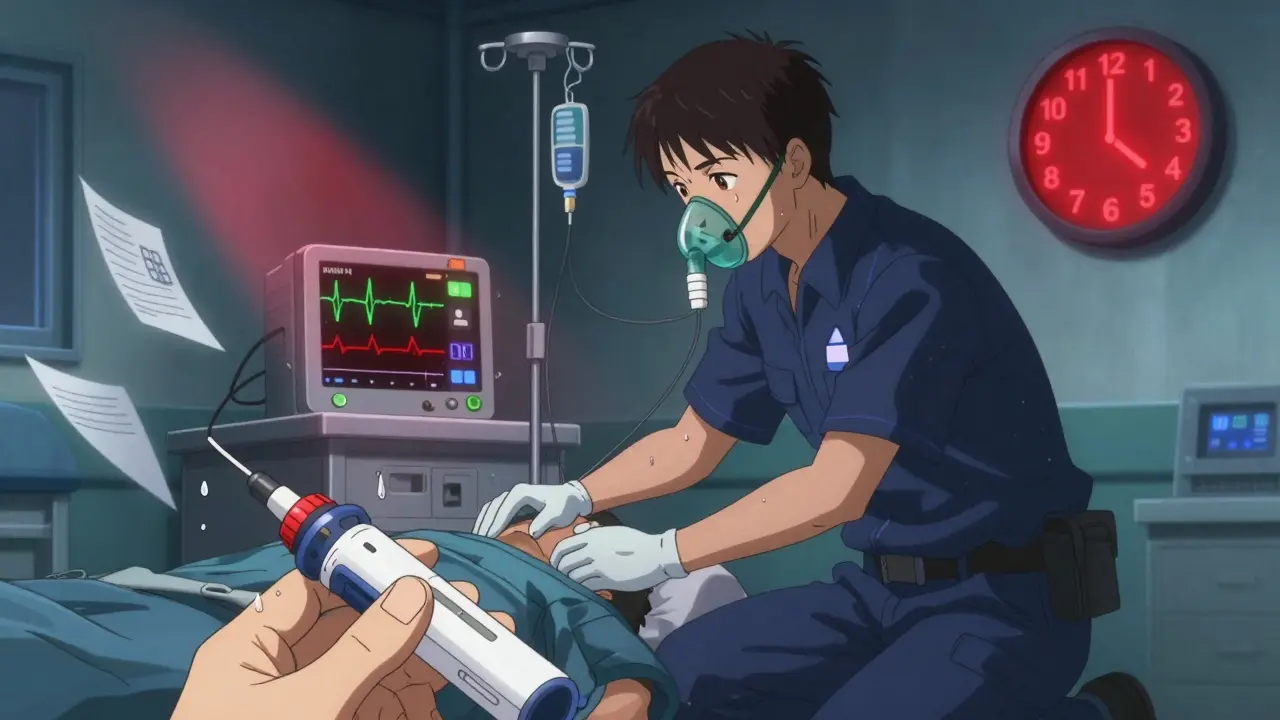
Epinephrine isn’t just the first treatment-it’s the only treatment that saves lives in anaphylaxis. Antihistamines like Benadryl? They do nothing for breathing or circulation. Steroids? They don’t help in the first 30 minutes. Only epinephrine reverses the life-threatening drop in blood pressure and airway swelling. Use an auto-injector: EpiPen, Auvi-Q, or Adrenaclick. Inject into the outer thigh, through clothing if needed. Hold it in place for 10 seconds. For adults and kids over 30 kg, use the 0.3 mg dose. For kids 15-30 kg, use 0.15 mg. If you’re unsure, give it anyway. The Australian Society of Clinical Immunology says: “IF IN DOUBT, GIVE ADRENALINE.” Between 2015 and 2020, 35% of preventable deaths in Australia happened because someone waited too long to inject.
Step 3: Call Emergency Services Immediately
Epinephrine works fast-within 1 to 5 minutes-but it doesn’t last. Its effects fade after 10 to 20 minutes. That’s why calling for help isn’t optional. Dial 911 (or your local emergency number) the moment you give the injection. Don’t wait to see if symptoms improve. Don’t try to drive them yourself. Paramedics bring oxygen, IV fluids, and advanced monitoring. In hospitals, 60-70% of medication-induced anaphylaxis cases are missed or delayed. You need professionals on the way before the first dose wears off.
Step 4: Prepare for a Second Dose
One dose isn’t always enough. If symptoms don’t improve after 5 minutes, give a second dose of epinephrine. Some protocols say you can repeat it every 10 minutes if needed. This isn’t rare-it happens in 5-10% of cases. A 2022 study from the Cleveland Clinic found that 65% of hospital cases had delays longer than 5 minutes before the first dose. That’s too long. If the person is still struggling to breathe, their blood pressure is still dropping, or they’re turning pale again-inject again. Epinephrine is safe. Out of 35,000 doses given in the last decade, only 0.03% caused serious heart problems. The risk of not giving it is far greater.
Step 5: Stay for Observation-Even If They Feel Better
Feeling better doesn’t mean you’re out of danger. A biphasic reaction can hit 1 to 72 hours later-no warning, no trigger. It’s when symptoms return after seeming to resolve. For medication-induced anaphylaxis, the risk is 20%. Some new data suggests it’s even higher-up to 25%-compared to food-triggered cases. That’s why hospitals require a minimum 4-hour observation. For high-risk patients, experts now recommend 6 to 8 hours. Don’t leave early. Don’t assume it’s over. This isn’t bureaucracy-it’s science.

Why People Delay-And How to Avoid It
Why do so many people wait too long? Fear. Misinformation. Confusion. Nurses in a 2021 survey admitted delaying epinephrine because they were scared of legal trouble. Patients said they didn’t feel confident using their own auto-injector. One in five injected into fat instead of muscle. Over a third didn’t hold the device long enough. The new Auvi-Q 4.0 with voice prompts helped raise correct use from 63% to 89% in trials. If you have a prescription, practice with a trainer device. Know where it’s stored. Teach family members. Keep one at home, one at work, one in your bag. And never, ever let someone else decide whether to use it. You don’t need permission to save a life.
Special Considerations for Medication-Induced Reactions
Medication reactions are different. People on beta-blockers (common for high blood pressure or heart conditions) may not respond well to standard epinephrine doses. In these cases, higher doses may be needed. Also, antibiotics cause nearly half of all fatal medication anaphylaxis cases. NSAIDs like ibuprofen are responsible for a quarter. If you’ve had a reaction before, you’re at higher risk for future ones. Always tell every doctor, dentist, and pharmacist. Carry an allergy card. Wear a medical alert bracelet. And keep your epinephrine auto-injector within reach at all times.
What’s Changing in 2026
New research is shifting guidelines. The NIH is testing epinephrine dosing based on body mass index-not just weight-especially for obese patients. Early results show 18% better blood levels when dosing is adjusted. The Resuscitation Council UK is preparing a 2025 update that will likely recommend longer observation times for medication-triggered cases. And with more voice-guided injectors hitting the market, user error is finally being addressed. These aren’t future ideas-they’re changes already in motion. Stay informed. Update your knowledge. Lives depend on it.


This is the kind of post that makes you stop scrolling and actually breathe. 🥹 I had no idea anaphylaxis could hit without a single rash. My cousin almost died because they thought it was just "a bad reaction" and waited 20 minutes to call 911. Don't wait. Don't hope. Just act. Epinephrine first, questions later. 💔