

Managing diabetes isn’t just about taking insulin-it’s about matching it to your life. Basal-bolus insulin therapy is the most physiologic way to replace insulin in people with type 1 diabetes and some with type 2 diabetes who need more precise control. It’s not magic. It’s math, timing, and practice. And when done right, it can drop your A1c by 1.5% or more while letting you eat when you want, not just when your insulin schedule allows.
What Basal-Bolus Insulin Actually Does
Think of your body’s natural insulin like a two-part system. One part keeps your blood sugar steady all day, even when you’re not eating-that’s basal insulin. The other part kicks in when you eat to handle the sugar from food-that’s bolus insulin. Basal-bolus therapy copies this exactly.
Basal insulin is long-acting. It works slowly, all day and night. Brands like glargine (Lantus), detemir (Levemir), and degludec (Tresiba) are common. Bolus insulin is fast-acting. It peaks within an hour and clears in 3-5 hours. These include lispro (Humalog), aspart (NovoLog), and glulisine (Apidra). Together, they give you control over both background glucose and meal spikes.
This isn’t just theory. The Diabetes Control and Complications Trial (DCCT) in 1993 proved that this approach cuts diabetes complications like nerve damage, kidney disease, and vision loss by up to 76%. Today, the American Diabetes Association (ADA) calls it the gold standard for type 1 diabetes-and recommends it for type 2 diabetes when other treatments fail.
How to Calculate Your Starting Dose
You don’t guess your insulin dose. You calculate it. The standard starting point is your weight. For most adults, total daily insulin requirement (TDIR) is 0.5 units per kilogram of body weight. That’s the same as dividing your weight in pounds by 4.
Example: A person weighing 160 pounds (72.6 kg) would start with:
- TDIR = 160 ÷ 4 = 40 units per day
Now split it. Half goes to basal, half to bolus. That’s 20 units basal, 20 units bolus. The ADA and EASD agree: 50% basal, 50% bolus is the baseline for type 1 diabetes. Some people need 40/60 or 60/40, but you start with 50/50.
Basal insulin is usually given once a day. Start with 10 units or 0.1-0.2 units per kg-whichever is higher. So if you weigh 72 kg, start with 7-14 units. Most people start at 10 units to be safe.
Bolus insulin is split across meals. Start with 4 units total per day, or 10% of your basal dose. That’s 2 units at breakfast, 1 at lunch, 1 at dinner. You’ll adjust later.
How to Adjust Bolus Doses for Meals and High Blood Sugar
Bolus insulin does two things: cover carbs and fix high blood sugar. You need two numbers to do this right.
Carb ratio: How many grams of carbs does 1 unit of insulin cover? Use the 500 Rule: 500 ÷ TDIR. If your TDIR is 40 units, 500 ÷ 40 = 12.5. So 1 unit covers about 12-13 grams of carbs. That means if you eat 50 grams of carbs, you need about 4 units of insulin.
Correction factor: How much does 1 unit of insulin lower your blood sugar? Use the 1700 Rule: 1700 ÷ TDIR. For a 40-unit TDIR, that’s 1700 ÷ 40 = 42.5. So 1 unit lowers your blood sugar by about 40-45 mg/dL.
Example: Your blood sugar is 220 mg/dL before lunch. Your target is 120 mg/dL. That’s 100 points high. Divide 100 by 40 (your correction factor). You need 2.5 units to correct it. If your meal has 50 grams of carbs, and your carb ratio is 1:12.5, you need 4 units for food. Total bolus: 2.5 + 4 = 6.5 units. Round to 6 or 7 units based on your comfort level.
Some people use simpler rules: 1 unit per 25 mg/dL above target. That’s close enough if you’re just starting out.
How to Adjust Basal Insulin for Fasting Blood Sugar
Your basal dose controls your fasting blood sugar-what you wake up with. If it’s consistently above 130 mg/dL, you need more basal insulin. If it’s below 70 mg/dL, you need less.
Here’s the step-by-step:
- Check your fasting glucose for 3-5 days in a row.
- If it’s above 130 mg/dL, increase basal insulin by 2 units.
- If it’s below 70 mg/dL, reduce basal insulin by 2 units.
- Wait 2-4 days before changing again.
Don’t change more than 8 units at once. And never adjust basal insulin based on post-meal highs-that’s bolus territory. Basal is for fasting. Bolus is for food and spikes.
Why Basal-Bolus Beats Other Regimens
Some people use premixed insulin-like 70/30-which combines long- and short-acting in one shot. It’s simpler, but less precise. The ORBIT study showed basal-bolus lowers A1c by 0.4% more than premixed insulin, but increases hypoglycemia risk slightly. That trade-off is worth it for most people.
Compared to basal-only insulin, basal-bolus adds 1.0-1.5% to A1c reduction in type 2 diabetes. That’s the difference between an A1c of 8.5% and 7.0%-a huge jump in long-term safety.
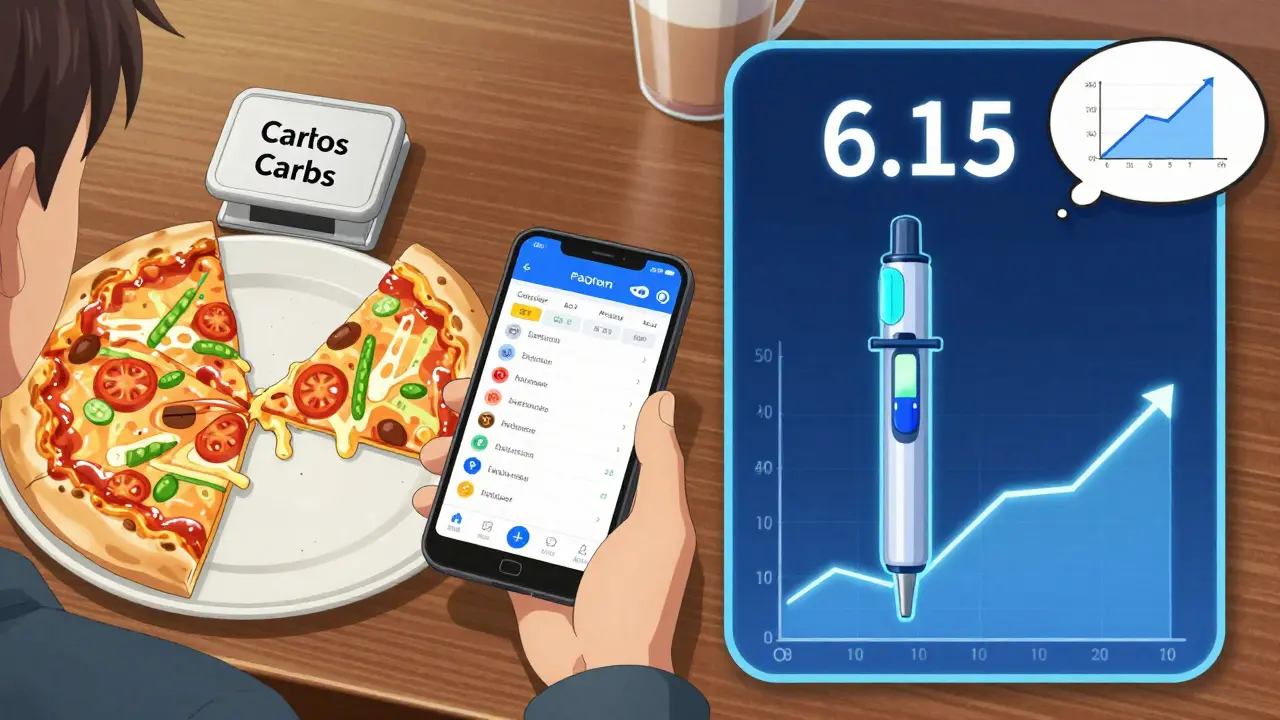
But here’s the real advantage: flexibility. You can skip a meal without crashing. You can eat pizza on Saturday and still manage it. You can adjust for exercise or stress. That’s not possible with fixed-dose regimens.
Who It Works For-and Who It Doesn’t
Basal-bolus works best for:
- People with type 1 diabetes
- People with type 2 diabetes who still have some insulin production but need tighter control
- Those with irregular schedules-shift workers, parents, travelers
- People who want to eat what they want, when they want
It’s harder for:
- People with cognitive decline or memory issues
- Those with poor vision or shaky hands (hard to draw up doses)
- Patients who refuse to count carbs or check blood sugar often
- Older adults over 65-only 35% use it compared to 82% under 45
A 2022 survey found 42% of new users needed extra education. That’s normal. This isn’t something you learn in one appointment.
What You Need to Master
Basal-bolus isn’t about memorizing rules. It’s about understanding patterns. You need three skills:
- Carb counting: Be accurate within 10-15 grams. Use food labels, apps, or a scale. Don’t guess.
- Pattern recognition: Is your blood sugar always high at lunch? Too much bolus? Not enough basal? Track for 5 days.
- Insulin timing: Rapid-acting insulin should be taken 10-15 minutes before meals. If you take it after eating, you’ll spike.
Studies show patients who work with a Certified Diabetes Care and Education Specialist (CDCES) have 37% better outcomes. If your clinic doesn’t offer this, ask for a referral.
The New Tech Making It Easier
Technology is changing basal-bolus. Hybrid closed-loop systems like Tandem’s Control-IQ and Medtronic’s MiniMed 780G now use continuous glucose monitors (CGMs) to automatically adjust basal insulin. Some even suggest bolus doses.
2023 data shows these systems add 2.1 hours per day to your time-in-range (70-180 mg/dL). That’s huge. You’re not doing the math-you’re just living.
Next up: insulin icodec from Novo Nordisk. It’s an ultra-long-acting basal insulin that lasts 30-40 hours. That means you might only need one injection per week. It’s expected to launch in 2025.
But here’s the catch: even with tech, you still need to count carbs and understand your body. The machine helps, but it doesn’t replace your judgment.
Real People, Real Results
On Reddit, someone wrote: “I was on premixed insulin. My A1c was 8.8%. I switched to basal-bolus. Six months later, it was 6.9%. But I cried the first time I had to calculate carbs before a restaurant meal.”
Another said: “I thought I’d never get it. Took me 3 months. Now I don’t think about it. I just do it.”
The T1D Exchange Registry found 78% of users report better control. But 45% say the burden is high. That’s the trade-off. Better control comes with more work.
Success stories all have one thing in common: they didn’t give up after the first week. They kept tracking, kept adjusting, kept learning.

Getting Started: Your First 30 Days
Don’t try to do everything at once. Here’s a simple plan:
- Week 1: Start basal insulin. Check fasting glucose daily. Don’t touch bolus yet.
- Week 2: Add one bolus dose-usually breakfast. Count carbs. Record blood sugar before and 2 hours after.
- Week 3: Add lunch bolus. Keep the same breakfast dose.
- Week 4: Add dinner bolus. Now you’re full basal-bolus.
Use a logbook or app. Write down: carbs eaten, insulin given, blood sugar before and after. Look for patterns. Did your blood sugar drop after lunch? Too much insulin? Did it spike after dinner? Too few carbs covered?
Follow up with your provider every 2 weeks. Don’t wait until your 3-month checkup. Adjustments happen fast.
Common Mistakes to Avoid
- Changing basal and bolus at the same time-confuses everything.
- Using the same bolus dose for every meal-your body doesn’t work that way.
- Ignoring nighttime lows-basal might be too high.
- Not correcting high blood sugar-just waiting for it to come down.
- Skipping carb counting because you’re “too busy”-it’s the core of bolus dosing.
One big myth: “I don’t need to count carbs if I’m on insulin.” Wrong. You need to know how much you’re eating to know how much insulin to give. Otherwise, you’re guessing-and guessing kills.
Cost and Accessibility
Insulin isn’t cheap. In the U.S., out-of-pocket costs average $550 per month for basal and bolus insulin. That’s a barrier for many. But options exist: biosimilars, patient assistance programs, and some states cap insulin costs at $35/month. Ask your pharmacist or provider.
Insurance usually covers basal-bolus if you have type 1 diabetes. For type 2, you may need to show you’ve tried other treatments first.
And yes-this therapy will be around for years. Even with closed-loop systems, the core principles won’t change. You’ll still need to count carbs. You’ll still need to understand your numbers. The tools will get better. The science won’t.
Can I use basal-bolus insulin if I have type 2 diabetes?
Yes-if your blood sugar stays high despite oral meds and basal insulin alone. Basal-bolus is recommended for type 2 diabetes when you need tighter control, especially if your post-meal sugars are high or your A1c is above 8%. It’s not for everyone, but it’s a proven option when simpler treatments don’t work.
How long does it take to get good at basal-bolus dosing?
Most people feel comfortable in 4-8 weeks with proper education. But mastery takes months. It’s like learning to drive-you’ll make mistakes at first. The key is tracking your numbers and adjusting slowly. Don’t rush. Focus on one meal at a time.
What if I forget to take my bolus before a meal?
If you realize within 15-20 minutes after eating, you can still take your full bolus. If it’s been longer, take half your dose now and monitor your blood sugar closely. Don’t skip it entirely-that’s how spikes happen. If you’re unsure, check your sugar in 2 hours and correct if needed.
Can I switch from premixed insulin to basal-bolus?
Yes, and many people do. Start by replacing one premixed shot with basal insulin. Then add bolus doses for meals. Your provider should help you calculate your starting doses based on your current insulin use. Don’t switch on your own-this requires careful planning to avoid lows.
Do I need a continuous glucose monitor (CGM) for basal-bolus?
No, but it helps a lot. You can manage with fingersticks, but CGMs show trends, not just numbers. You’ll see how your sugar moves after meals, at night, and during exercise. That makes adjusting doses faster and safer. If you can afford it or your insurance covers it, get one.
Why is my blood sugar high in the morning even though I didn’t eat?
That’s the dawn phenomenon-your liver releases glucose early in the morning. It’s normal. If your fasting sugar is consistently above 130 mg/dL, your basal insulin might be too low. Increase it by 1-2 units every few days until it’s in range. Don’t blame your breakfast-you didn’t eat it yet.
Can basal-bolus therapy help me lose weight?
Not directly. Insulin can cause weight gain because it helps your body store glucose as fat. But better control can reduce cravings and stabilize hunger. Pair basal-bolus with balanced meals and activity, and weight loss becomes possible. Many people lose weight once they stop overeating to avoid lows.
Final Thought: It’s a Skill, Not a Prescription
Basal-bolus insulin isn’t a magic pill. It’s a skill you build. It takes time. It takes mistakes. It takes patience. But it also gives you freedom-freedom to eat, travel, sleep late, skip a meal, or go out for dessert without fear.
Most people who stick with it say the same thing: “It was hard at first. Now I can’t imagine living any other way.”


Basal-bolus isn’t magic it’s math and discipline and if you’re not tracking every bite you’re just guessing your way to complications