

When you switch from an originator biologic to a biosimilar, you're not just changing a pill - you're changing the entire experience of managing a chronic condition. For patients with rheumatoid arthritis, psoriasis, Crohn’s disease, or other autoimmune disorders, biologics like adalimumab or infliximab have been life-changing. But as these drugs lose patent protection, healthcare systems are pushing switches to lower-cost biosimilars. So what really happens when you make the change? Do you lose control of your disease? Do side effects get worse? Or is it just a cost-saving move with no real impact?
What Is a Biosimilar, Really?
A biosimilar isn’t a generic. That’s the first thing to understand. Generics are exact chemical copies of small-molecule drugs like aspirin or metformin. Biosimilars are copies of biologic drugs - complex proteins made from living cells. Think of it like trying to copy a handmade sculpture. Even with the same clay and tools, two artists won’t produce identical pieces. That’s why biosimilars aren’t exact copies - they’re highly similar.
The U.S. Food and Drug Administration (FDA) and the European Medicines Agency (EMA) require biosimilars to match the originator in structure, function, and clinical performance. They must show no meaningful difference in safety, purity, or potency. That doesn’t mean they’re identical. Minor differences in sugar molecules or folding patterns are allowed - as long as they don’t affect how the drug works in your body.
The first biosimilar approved in the U.S. was Zarxio (filgrastim-sndz) in 2015. Since then, 37 biosimilars have been approved, mostly targeting TNF inhibitors like Humira and Remicade. These make up about 70% of all biosimilar use today.
What Happens When You Switch?
Over 80 clinical studies have looked at switching from originator biologics to biosimilars. The results? Most patients don’t notice a difference. A major study called NOR-Switch followed 481 patients with inflammatory diseases who switched from originator infliximab to its biosimilar CT-P13. After one year, 52.6% were still on the biosimilar - compared to 60% staying on the original. That 7.4% gap wasn’t statistically significant. In other words, the switch didn’t cause more people to stop treatment.
Real-world data from the U.S., Europe, and Australia show similar results. For patients with psoriasis, adalimumab biosimilars had a 79% retention rate after one year - almost identical to the 81% seen with the originator. In Crohn’s disease, switching from one biosimilar to another (like CT-P13 to SB2) didn’t change disease activity. Fecal calprotectin levels - a key marker of gut inflammation - stayed steady before and after the switch.
Even when patients switch multiple times - from originator to biosimilar, then to another biosimilar - the data stays consistent. A 2022 study tracked 140 patients through two switches. Immunogenicity (the body’s immune response to the drug) stayed low: only 3 cases per 100 patient-years. Trough levels (the amount of drug in your blood between doses) didn’t drop. No spikes in side effects.
Why Do Some People Stop Taking Biosimilars?
If the science says it’s safe, why do 4% to 18% of patients stop? The answer isn’t always medical.
Many patients report feeling worse after a switch - even when lab tests and doctor visits show no change. This is called the nocebo effect. It’s the opposite of placebo. If you believe the new drug won’t work as well, your brain can convince your body it’s not working. One study found that 32.7% of patients said they had new or worsening symptoms after switching - even though their disease activity scores were unchanged.
Other reasons are more practical. Some patients dislike the new injection device. Others notice a slight change in the color or smell of the liquid. A few report minor injection-site reactions - redness, itching, or swelling - that didn’t happen before. In one study, 7.8% of patients on adalimumab biosimilars had skin reactions, compared to 10.7% on the originator. That’s not worse - but it’s noticeable.
And then there’s the psychological weight of change. For someone who’s been on Humira for five years, being told, “Your insurance is switching you,” can feel like losing control. That’s why patient education matters so much.

When Is Switching Risky?
Switching works best when your disease is stable. If you’ve been in remission for months, with low inflammation markers and no flares, switching is low-risk. But if you’re actively flaring - high DAS28 scores in arthritis, active bleeding in Crohn’s, or severe skin plaques - switching isn’t recommended.
Another risk is switching too often. While one switch is well-studied, multiple switches between different biosimilars haven’t been tested as thoroughly. A 2022 Spanish study found a 15.3% discontinuation rate after switching from one biosimilar to another in IBD patients - higher than the 8.7% seen in those who stayed on the same product. Even though drug levels stayed stable, some patients still stopped. Why? Possibly because their bodies were already adjusting to one change, and another was too much.
Patients with complex medical histories - those who’ve failed multiple biologics, have allergies, or have had serious infections - should also proceed with caution. For them, consistency matters more than savings.
Cost and Access: The Real Driver
Biosimilars cost 15% to 35% less than originators. In 2023, Humira biosimilars launched at a 35% discount. That’s huge when you’re paying thousands a month. Health plans in the U.S. now require switches in 85% of cases. In Europe, where biosimilar use is higher, up to 67% of filgrastim prescriptions are for biosimilars.
This isn’t just about money - it’s about access. Many patients couldn’t afford biologics before biosimilars. Now, they can. In Australia, where public drug coverage is strong, biosimilar adoption has grown steadily since 2020. More people are getting treated. More people are staying in remission.
But there’s a catch. Some insurers only cover biosimilars - even if you’ve been on the originator for years. That’s called non-medical switching. It’s not driven by your doctor’s judgment. It’s driven by cost. And that’s where resistance builds.
What Should You Do Before Switching?
If your doctor suggests a switch, ask for a plan. Don’t just accept it. Here’s what a good process looks like:
- Get informed: Ask for a 20-minute counseling session. Understand why the switch is happening. Is it your doctor’s recommendation? Or your insurer’s?
- Check your status: Make sure your disease is stable. Ask for your last DAS28, PASI, or fecal calprotectin numbers.
- Set up monitoring: Schedule a follow-up in 4 to 6 weeks. Ask for a blood test to check drug levels. If you feel off, don’t wait - call your provider.
- Track your symptoms: Keep a simple journal. Note energy levels, joint pain, skin changes, fatigue. Don’t assume it’s the drug. Stress, sleep, diet - all play a role.
- Know your rights: In the U.S., if you’re switched without consent, you can appeal. Some states require prior authorization for switches. Ask your clinic.
Studies like PERFUSE show that with proper counseling, discontinuation rates drop from 18% to just 6.4%. Communication works.
The Future: Interchangeability and Beyond
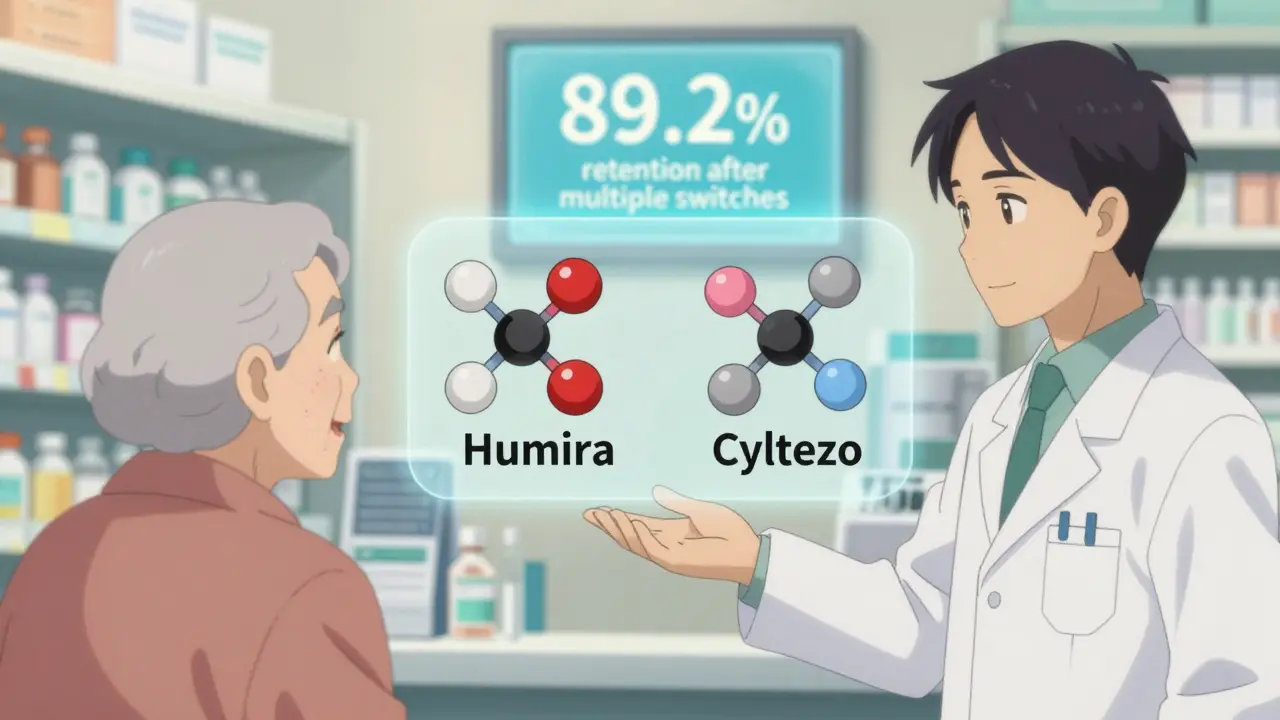
In 2024, the FDA approved the first interchangeable adalimumab biosimilar: Cyltezo. That means pharmacists can swap it for the originator without asking your doctor. It’s a big step toward broader use. But it also raises new questions. Are you comfortable with a pharmacy making the switch without your knowledge? Should patients have a say?
Regulatory differences matter too. The FDA requires switching studies for interchangeability. The EMA doesn’t. That’s why some European countries allow automatic switches, while the U.S. still leans toward doctor-led decisions.
Long-term data is growing. The NOR-SWITCH II study, tracking patients for two years after multiple switches, found 89.2% stayed on treatment. That’s promising. But we still need more data on patients with multiple chronic conditions, older adults, and pregnant women.
Bottom Line: Is Switching Safe?
Yes - for most people, in most situations. The science is clear: switching from originator to biosimilar, or between biosimilars, doesn’t increase risk of flare, infection, or serious side effects. Clinical data, real-world outcomes, and regulatory reviews all support this.
But safety isn’t just about lab results. It’s about trust. If you feel uneasy, speak up. If you’re stable, give it a chance. And if you’re unsure? Ask for time. Ask for data. Ask for your voice to be heard.
The goal isn’t to eliminate originators. It’s to make effective treatment available to more people - without sacrificing safety. And so far, biosimilar switching is doing just that.
Is biosimilar switching the same as switching to a generic drug?
No. Generics are chemically identical copies of small-molecule drugs, like ibuprofen or metformin. Biosimilars are copies of complex biologic drugs made from living cells, like Humira or Remicade. They’re highly similar, but not identical. Minor differences in structure are allowed, as long as they don’t affect how the drug works in your body.
Can switching to a biosimilar cause my disease to flare up?
For most patients, no. Large studies involving over 5,700 people show no increased risk of disease flare after switching from originator to biosimilar. However, a small percentage of patients - around 4% to 18% - report feeling worse. This is often due to psychological factors (the nocebo effect), not biological failure. If you notice new symptoms, talk to your doctor - but don’t assume it’s the drug. Monitoring lab values and disease scores is key.
Are biosimilars less effective than the original drug?
No. Regulatory agencies like the FDA and EMA require biosimilars to match the originator in efficacy, safety, and potency. Clinical trials and real-world data consistently show no meaningful difference in how well they work. For example, in patients with rheumatoid arthritis, disease activity scores (DAS28) stayed the same after switching. In Crohn’s disease, inflammation markers like fecal calprotectin didn’t change. The drug works the same way - it’s just cheaper.
Why do some doctors resist biosimilar switching?
Some doctors are cautious because biologics are complex, and they’ve seen patients do well on a specific product. Others worry about non-medical switching - where insurers force a change without clinical justification. A few also cite rare case reports of flares after switching, though these are not common in large studies. Most experts agree that switching is safe when done properly, but they want patient input and monitoring to be part of the process.
Can I switch back to the originator if I don’t feel well?
Yes. If you experience new or worsening symptoms after switching, your doctor can switch you back. Most insurance plans allow this if there’s a documented medical reason. Keep track of your symptoms and share them with your provider. In many cases, what feels like a reaction is actually stress, sleep changes, or unrelated illness - not the drug itself.
Is it safe to switch between different biosimilars?
Current evidence suggests it is. Studies have looked at switching from one biosimilar to another (e.g., CT-P13 to SB2) and found no increase in immunogenicity or loss of effectiveness. Drug levels stayed stable, and adverse events didn’t rise. However, most data comes from single switches. Multiple switches over time are still being studied. If you’re considering a second switch, discuss it with your doctor - especially if you’ve had prior issues with biologics.


Switching to biosimilars felt like swapping out my favorite coffee for a cheaper brand-same caffeine, different aroma. I didn’t lose control of my RA, but I noticed the injector clicked differently. Minor, sure. But when you’ve lived with this disease for a decade, even a click matters. I kept a journal. No flares. No new side effects. Just quieter mornings and a lighter wallet. Sometimes, progress isn’t loud-it’s just steady.
Also, props to the author for mentioning the nocebo effect. That’s the real villain here. Not the science. Not the pharma. Just fear wrapped in a white coat.