

When you have diarrhea, it’s not just about frequent bathroom trips-it’s about how long it lasts, what’s causing it, and whether you need to treat the symptom or the root problem. Many people reach for loperamide at the first sign of loose stools, but that’s not always the right move. The difference between acute and chronic diarrhea changes everything: what you do, what tests you need, and even whether drugs like Imodium are safe.
What Counts as Acute vs. Chronic Diarrhea?
Acute diarrhea hits fast and usually fades fast. It’s defined as three or more loose or watery stools in a day that last 14 days or less. Most cases start with a stomach bug-viral, bacterial, or parasitic-and clear up on their own within a few days. In the U.S., about 179 million people get acute diarrhea each year. Globally, it’s the second biggest killer of children under five, causing over 2,000 child deaths every day. Chronic diarrhea is different. It lasts longer than 30 days. It doesn’t come and go with a bad sandwich or a trip abroad. It’s persistent. About 5% of adults in developed countries deal with it. Unlike acute cases, chronic diarrhea rarely comes from an infection. More often, it’s tied to conditions like irritable bowel syndrome (IBS), inflammatory bowel disease (IBD), bile acid malabsorption, or even celiac disease. Some people suffer for months before getting a real diagnosis. One patient on a health forum said they visited seven doctors over 18 months before being told they had IBS-D.What Causes Each Type?
Acute diarrhea is mostly infectious. In developed countries, viruses cause 70-80% of cases. Rotavirus used to be the biggest culprit, but vaccines have cut hospitalizations by up to 94% in places with full immunization programs. Bacteria like Salmonella and Campylobacter make up 10-20% of cases, often from undercooked food or contaminated water. Parasites like Giardia are less common but still show up, especially after travel or swimming in lakes. Chronic diarrhea? Almost never infectious. Instead, it’s usually a sign of something deeper:- IBS-D (diarrhea-predominant): Affects 10-15% of people worldwide. No inflammation, no damage-just a miscommunication between gut and brain.
- IBD (Crohn’s or ulcerative colitis): Causes inflammation, bloody stools, weight loss. Affects 1.6 million Americans.
- Bile acid malabsorption: Happens in 25-30% of people after gallbladder removal. Bile irritates the colon, leading to watery stools.
- Celiac disease: Gluten triggers an immune reaction. 40% of cases are misdiagnosed as IBS at first.
- Medication side effects: Antibiotics, metformin, laxatives, and even some heart or cancer drugs can cause ongoing diarrhea.
How Do Symptoms Differ?
Acute diarrhea usually comes with a bang: sudden cramps, urgency, watery stools, maybe a low fever. You might feel nauseous or tired, but you generally recover quickly. Bloody stools or high fever? That’s a red flag-could be Shigella or E. coli, and you should see a doctor. Chronic diarrhea is subtler but more disruptive:- Stools are loose but not always explosive-often just frequent, nagging, and unpredictable.
- Nocturnal diarrhea (waking up at night to go) is a major clue. Infections don’t usually do this. Organic diseases like IBD or bile acid issues do.
- Weight loss, fatigue, bloating, or fatty, foul-smelling stools (steatorrhea) suggest malabsorption.
- Pain that improves after a bowel movement? Classic IBS.
- Pain that doesn’t go away? Could be IBD.

When Should You Use Antimotility Drugs?
Antimotility drugs like loperamide (Imodium) slow down your gut. They reduce stool frequency and urgency. But they’re not a cure-they just mask the symptom. For acute diarrhea, loperamide can help you get through a day at work or a flight. The standard dose is 4mg after the first loose stool, then 2mg after each subsequent loose stool-not more than 16mg total in 24 hours. It works for most people without infection complications. But here’s the catch: never use it if you have a fever, bloody stools, or suspect a bacterial infection like Shiga-toxin E. coli. Slowing your gut down lets toxins linger longer. That can lead to hemolytic uremic syndrome, a life-threatening condition that damages kidneys. The Mayo Clinic warns against loperamide in children under 2 and advises extreme caution in kids aged 2-5. For chronic diarrhea, loperamide is often a cornerstone of treatment-especially for IBS-D and bile acid malabsorption. Many patients report huge improvements: going from 10 bowel movements a day to 2-3. But long-term use has risks. One Reddit user said they started with 2mg daily, then needed 8mg just to feel normal. That’s tolerance-and it’s dangerous. Bismuth subsalicylate (Pepto-Bismol) is another option. It has mild antimicrobial properties and can help with both acute and chronic cases. But it can turn your stool black and your tongue gray-harmless, but startling.What About the BRAT Diet?
The old advice-bananas, rice, applesauce, toast-is outdated. Experts now say: eat normally as soon as you can. The gut needs nutrients to heal. Starving it doesn’t help. Start with bland, easy-to-digest foods if you’re nauseous, but don’t avoid protein, vegetables, or whole grains. The CDC and American College of Gastroenterology both recommend resuming regular meals within 24-48 hours. The real hero for acute diarrhea? Oral rehydration solution (ORS). WHO’s formula-2.6g sodium chloride, 2.9g trisodium citrate, 1.5g potassium chloride, and 13.5g glucose per liter of water-cuts death rates by 93% in low-resource settings. Even in wealthy countries, it’s the best way to prevent dehydration. You can buy pre-made packets or make your own: 1 liter water + 6 tsp sugar + 1/2 tsp salt.What Tests Are Needed for Chronic Diarrhea?
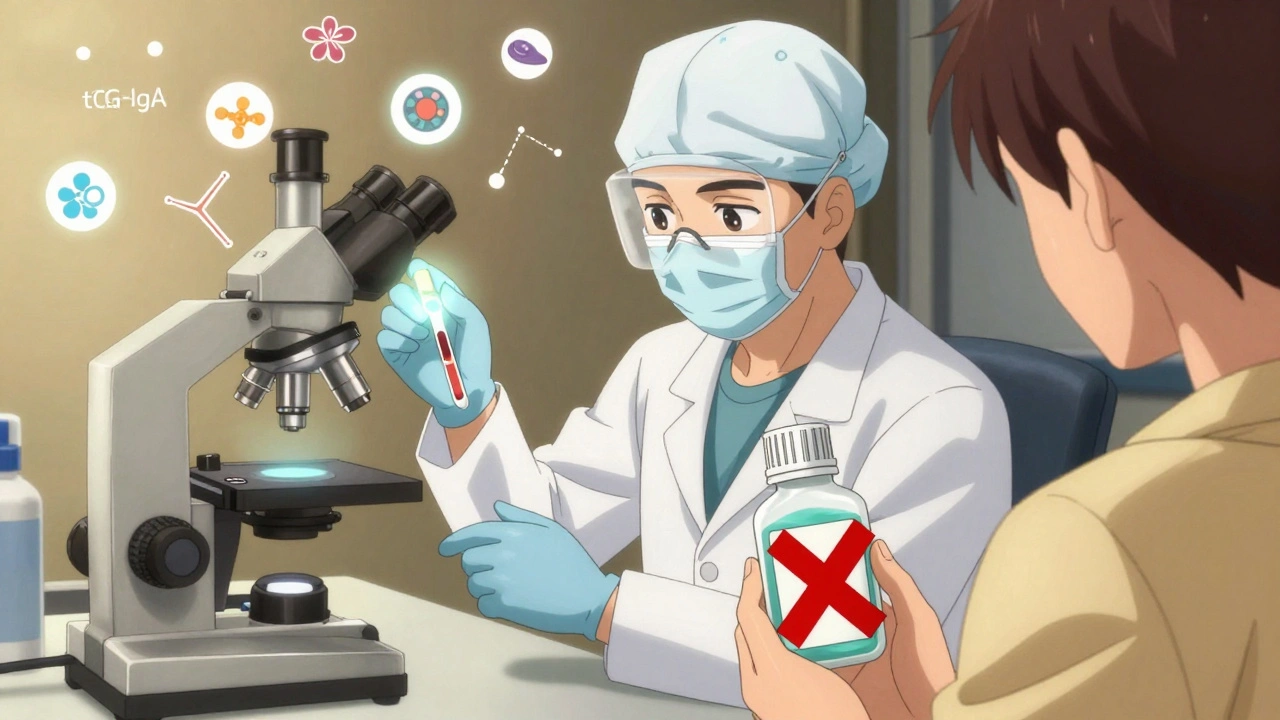
If diarrhea lasts more than 30 days, you need more than a quick fix. A doctor should order:- Complete blood count (CBC) - looks for anemia or infection
- C-reactive protein (CRP) and fecal calprotectin - markers of gut inflammation
- Thyroid function tests - hyperthyroidism can cause diarrhea
- Celiac panel (tTG-IgA) - simple blood test
- Stool tests for parasites, Clostridioides difficile, and fat content
- Colonoscopy - if inflammation or bleeding is suspected
Risks of Long-Term Loperamide Use
Loperamide is safe when used as directed. But misuse is rising. Between 2011 and 2021, the FDA recorded 1,247 cases of loperamide abuse, with 57 deaths. People take it to get high-sometimes in massive doses, like 100mg a day. That can cause heart rhythm problems, cardiac arrest, and sudden death. Even without abuse, long-term use can lead to:- Constipation
- Abdominal pain or bloating
- Tolerance (needing higher doses for the same effect)
- Masking serious conditions like colon cancer or Crohn’s
What Are the Alternatives?
If loperamide isn’t working-or you’re worried about side effects-there are other options:- Low-FODMAP diet: Proven to help 50-75% of IBS-D patients. Takes 6-8 weeks under a dietitian’s guidance.
- Bile acid sequestrants: Cholestyramine or colesevelam for bile acid malabsorption. Can cause bloating but are very effective.
- Eluxadoline: A newer drug for IBS-D that acts on gut receptors. Works well but has a black box warning for pancreatitis risk.
- Probiotics: Some strains like Bifidobacterium infantis (Align) show modest benefit for IBS, though results vary.
- Fecal microbiota transplantation: Used for recurrent C. difficile, with 85-90% success. Not yet standard for IBS, but research is growing.
What’s Next for Diarrhea Treatment?
The future is personalization. Researchers are developing biomarker panels to tell if your diarrhea is secretory, osmotic, or inflammatory-then match you to the right drug. Dr. Mark Pimentel at Cedars-Sinai predicts we’ll be using blood or stool tests to choose treatments within five years. Vaccines remain one of the biggest wins. Rotavirus vaccines have saved hundreds of thousands of children’s lives. New ones for other pathogens are in development. But for now, the most powerful tool is still knowledge: knowing when to treat symptoms and when to dig deeper. Don’t just reach for Imodium. Ask: Is this a bug that will pass? Or is it my body trying to tell me something serious is wrong?How do I know if my diarrhea is acute or chronic?
Acute diarrhea lasts 14 days or less and usually starts suddenly after eating something contaminated or catching a virus. Chronic diarrhea lasts more than 30 days and often comes with other symptoms like weight loss, nighttime bowel movements, or bloating. If it’s been going on longer than two weeks, it’s time to see a doctor-not just treat the symptom.
Is loperamide safe for long-term use?
Loperamide can be safe for long-term use in chronic conditions like IBS-D when taken as prescribed. But tolerance can develop, requiring higher doses. Never exceed 16mg per day without medical supervision. Misuse-taking large amounts to get high-can cause serious heart problems and even death. Always talk to your doctor before using it daily.
Can I take loperamide with antibiotics?
Avoid loperamide if you’re on antibiotics for diarrhea, especially if you have fever or bloody stools. Antibiotics can sometimes cause C. difficile infection, and loperamide can trap the toxin in your colon, making things worse. Only use it if your doctor confirms it’s safe and the diarrhea isn’t infectious.
What should I eat when I have diarrhea?
Forget the BRAT diet. Eat regular, easy-to-digest foods as soon as you can: lean meats, rice, potatoes, bananas, toast, and yogurt. Avoid greasy, spicy, or sugary foods. Stay hydrated with water and oral rehydration solution. The gut needs nutrients to heal-starving it won’t help.
When should I go to the doctor for diarrhea?
See a doctor if diarrhea lasts more than 14 days, if you have blood in your stool, high fever (over 38.5°C), severe dehydration (dizziness, dry mouth, no urine), unexplained weight loss, or if you’re over 65 or have a weakened immune system. Even if you feel fine, persistent diarrhea can signal something serious like IBD or celiac disease.
Can probiotics help with chronic diarrhea?
Some probiotics help, especially for IBS-D and antibiotic-associated diarrhea. Strains like Bifidobacterium infantis (found in Align) and Saccharomyces boulardii have shown modest benefits in clinical trials. But results vary. Probiotics aren’t a cure-they’re a support tool. Don’t expect miracles, but they’re worth trying under a doctor’s guidance.


i heard imodium is secretly a gateway drug for the shadow government to control our bowels... they put nanobots in it that sync with your phone. also my poop turned blue after i took 12 pills. ask my ex.