
Every household in Australia keeps medicines - painkillers, antibiotics, heart pills, insulin, even over-the-counter cough syrup. But how many of those bottles are actually safe? Storing medication wrong doesn’t just risk expired pills - it opens the door to counterfeit drugs, accidental poisonings, and teen misuse. And it’s happening right in your kitchen cabinet or bathroom drawer.
Why Your Medicine Cabinet Is a Danger Zone
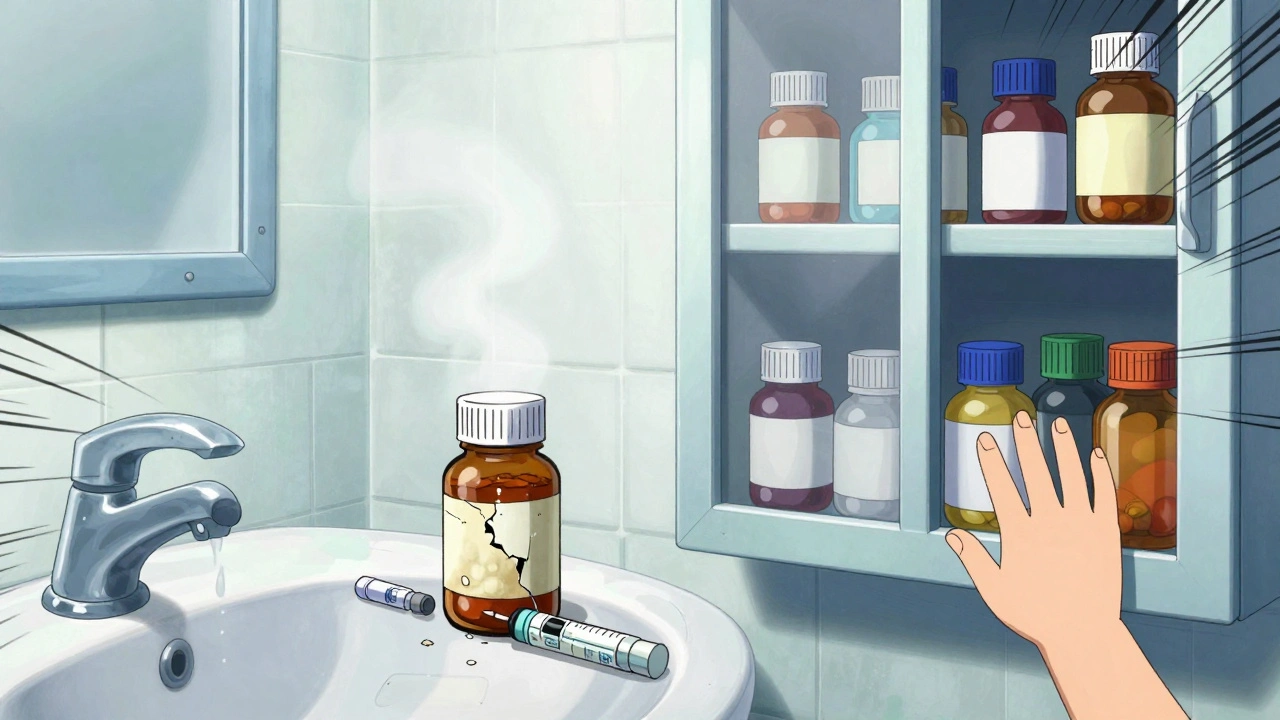
The bathroom is the most common place people store pills. It’s convenient. But humidity from showers can wreck your meds. Aspirin turns into vinegar and salicylic acid in as little as two weeks. Ampicillin loses 30% of its strength if humidity hits 75%. Insulin degrades 15% every hour at room temperature. These aren’t hypotheticals - they’re lab-tested facts from the FDA and MedlinePlus. And it’s not just about effectiveness. A 2023 study found that 70% of teens who misuse prescription drugs get them from their own home - often within 15 minutes of deciding to try them. Most of those pills come from unlocked cabinets, nightstands, or even mom’s purse. In Australia, poison control centers report that 68% of child ingestions happen because meds were left out during use - on the counter, on the bed, in a coat pocket.What Makes a Medication Authentic?
Counterfeit drugs are a growing problem. Fake painkillers might contain fentanyl. Fake antibiotics could have no active ingredient at all. In 2024, the Therapeutic Goods Administration (TGA) flagged over 200 batches of counterfeit medications imported online or sold through unlicensed pharmacies. Many look identical to the real thing - same packaging, same logo. But they’re not regulated. They’re not tested. They’re not safe. How do you know yours are real? Always buy from licensed pharmacies - either your local chemist or an online pharmacy with a verified Australian license (look for the AHPRA logo). Avoid websites that don’t require a prescription for controlled meds. Check the bottle: authentic packaging has consistent font, sharp printing, and a tamper-evident seal. If the cap feels loose or the label looks faded, don’t take it.Locked Storage: The Only Reliable Protection
Child-resistant caps help - but only if they’re used right. Studies show they reduce access by 45%. Add a locked box, and that jumps to 92%. The gold standard? A locked container, out of sight, out of reach. You don’t need a fancy safe. A gun safe, a fireproof document box, or even a $40 medication lockbox from a hardware store works - as long as it locks. The key is consistency. Store everything in one place. No more pills in the bedroom, the car, and the kitchen. Consolidate. Label the box clearly so you know what’s inside. For families with elderly members, a combination lock with large dials works better than keys. Arthritis can make small locks impossible to open. The Arthritis Foundation recommends locks you can turn with your palm, not your fingers. Install it at waist to shoulder height - easy for adults, unreachable for toddlers.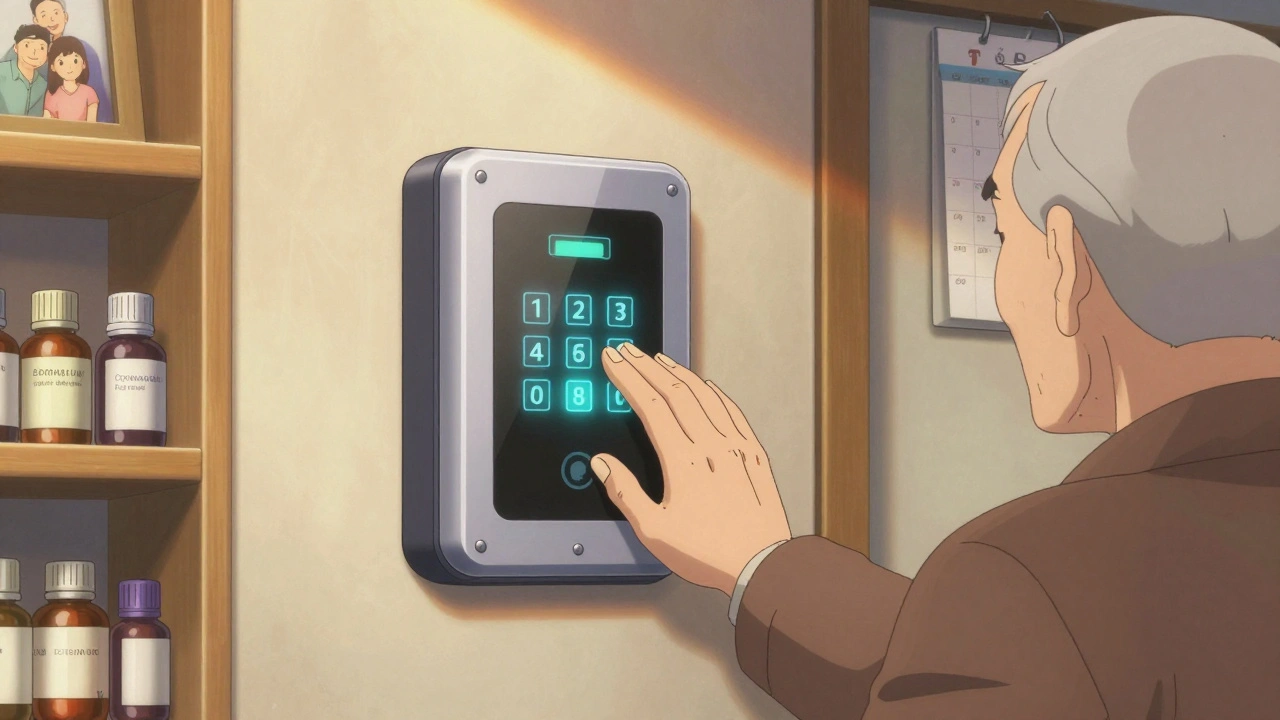
Temperature and Light: The Silent Killers
Heat and sunlight destroy meds faster than you think. Tetracycline loses 40% of its potency in direct sun. Liquid antibiotics spoil in hot cars. Even your drawer above the fridge can get too warm. The ideal spot? A cool, dry place - like a bedroom dresser or a closet shelf. Keep it between 20-25°C. Avoid windows. Avoid heat sources. Refrigerated meds like insulin, certain biologics, or eye drops need special care. Store them in a dedicated, lockable container inside the fridge - not on the door, where temperatures swing. Keep them away from food. Label it clearly: "MEDS ONLY. DO NOT TOUCH."How to Do a Home Medication Audit
Take 20 minutes. Right now. Walk through your home. Find every pill bottle. Check:- Are they in original containers?
- Are caps twisted until they click?
- Are they locked up?
- Are they in a cool, dry place?
- Are any expired or unused?
Dispose of Unused Meds the Right Way
Don’t flush them. Don’t toss them in the trash. Don’t pour them down the sink. These methods contaminate water and soil. Australia has over 1,200 free medication take-back drop-off points - at pharmacies, hospitals, and council sites. Find yours at the TGA’s National Take Back Program website. If no drop-off is nearby, mix unused pills with cat litter, coffee grounds, or dirt. Put them in a sealed bag. Throw it in the bin. This makes them unappealing and unusable to anyone who might dig through your trash.Real People, Real Solutions
One parent in Melbourne uses a small wall safe mounted at 1.8 meters high. Her 2-year-old can’t reach it. She can open it in 3 seconds. She says it cut her anxiety in half. A man with chronic pain keeps his opioids in a locked box on his nightstand. He uses a voice-activated lock - says, "Open meds," and it unlocks. He’s 72. He has arthritis. The lock lets him access his meds quickly without fumbling with keys. A nurse in Adelaide stores all her family’s meds in a locked drawer inside a bookshelf. No one knows it’s there. She checks it every three months. She says, "It’s not about being paranoid. It’s about being smart."What Happens If You Don’t Act?
Every year in Australia, hundreds of children are rushed to emergency rooms after swallowing pills they found. Teens overdose on painkillers they stole from home. Elderly patients take expired meds and get sicker. Medications degrade. Counterfeits slip through. The cost? Not just money - lives. The good news? You don’t need to spend thousands. You don’t need to be perfect. Just start. Lock one box. Move one bottle. Throw out one expired pill. Do it today. The next time you reach for your painkiller, ask yourself: Is this safe? Is this real? Is this where it belongs?Can I store all my medications in one place?
Yes - and you should. Keeping meds scattered across the house increases the risk of loss, misuse, or accidental ingestion. Consolidate everything into one locked container in a cool, dry spot. Only keep daily-use pills in a pill organizer, and refill it from the original bottle each week.
Are child-resistant caps enough?
No. While they help, studies show they only reduce accidental access by 45%. Children as young as two can open them in under a minute. Locking the container - whether it’s a cabinet, box, or safe - cuts access by 92%. Caps are a backup, not a solution.
How do I spot a counterfeit drug?
Buy only from licensed pharmacies - never from unverified websites or street vendors. Check the packaging: fonts should be sharp, colors consistent, and seals intact. Compare the pill shape and color to a known authentic version. If it looks off, smells strange, or doesn’t work as expected, stop using it and contact the TGA or your pharmacist.
What if I have elderly family members who need quick access?
Use a combination lock with large, easy-to-turn dials - not tiny keys. Mount it at waist-to-shoulder height. Consider voice-activated locks or biometric safes that open with a fingerprint. The goal is security without delay. The Arthritis Foundation and AAP are releasing new accessibility-certified storage standards in early 2026 to help families balance safety and access.
Can I store medications in the fridge?
Only if the label says to. Insulin, some antibiotics, and eye drops need refrigeration. Store them in a sealed, labeled container inside the fridge - not on the door. Keep them away from food to avoid contamination. Always check the expiry date - refrigeration doesn’t make expired meds safe.
How often should I check my medication supply?
Every three months. Look for expired pills, broken seals, discolored tablets, or damp packaging. Toss anything questionable. Use the National Take Back Program to dispose of them safely. This simple habit prevents accidental use of degraded or counterfeit meds.


Just locked my meds in a small safe above the fridge. No more panic when my niece visits. Small step, huge peace of mind