

Drug Desensitization Protocol Planner
Quick Guide
This tool visualizes the typical timeline for Rapid vs. Slow desensitization protocols based on your allergy type.
Rapid Desensitization (RDD)
Recommended for Immediate Reactions (IgE).
- Duration: 4-6 Hours
- Route: IV Infusion
- Frequency: Every 15-30 mins
- Success Rate: ~95-100%
Slow Desensitization (SDD)
Recommended for Delayed Reactions (T-cell).
- Duration: Days
- Route: Oral Tablets
- Frequency: Variable (Hours/Days)
- Success Rate: ~75%
Estimated Procedure Timeline
Simulated Process
Select a protocol above to see the simulation.
Patient Instructions
- Select protocol
- Monitor vital signs
- Administer pre-med
Imagine being prescribed a life-saving antibiotic or cancer treatment, only to be turned away because you reacted badly to it years ago. This scenario is more common than you might think. Medical science often leaves us with a choice between two bad options: take the drug and risk a severe reaction, or skip the drug and face untreated infection or disease.
This is where Drug Desensitization comes in. It is a specialized medical procedure that allows patients to receive medications they previously tolerated poorly. While it sounds risky, recent clinical data shows it succeeds over 95% of the time when performed by trained specialists. For those facing limited treatment options due to allergies, understanding this protocol can mean the difference between effective care and dangerous alternatives.
Understanding the Concept of Desensitization
Drug desensitization is the induction of temporary clinical unresponsiveness to drug antigens in patients who have had severe hypersensitivity reactions. Think of it as training your immune system to take a break while you get the medicine you need. Unlike tolerance, which is permanent, desensitization wears off once the doses stop. You would need to repeat the process if you needed the drug again months later.
This technique wasn't invented overnight. Early protocols emerged from institutions like the National Institutes of Health and Brigham and Women's Hospital in the 1960s. Today, standardized guidelines are largely based on work by Dr. Mariana Castells and colleagues at Harvard Medical School. Their protocols have become the gold standard, used globally to manage reactions ranging from hives to life-threatening anaphylaxis.
The core principle involves administering the allergenic drug in tiny, incremental doses that gradually increase until a therapeutic level is reached. By spacing out these small doses, the body adjusts slowly enough to avoid triggering a massive histamine release. It requires precise timing and monitoring, typically taking anywhere from four to six hours depending on the route of administration.
When Do Doctors Recommend Desensitization?
You won't see doctors suggesting this for every minor rash. Desensitization is reserved for specific scenarios where the benefits significantly outweigh the risks. Here are the primary situations where this protocol becomes the go-to solution:
- No Alternative Exists: If you need a specific chemotherapy drug or a potent antibiotic like penicillin, and you don't have other options that work as well, desensitization is often the safest path.
- Cross-Reactivity Issues: Many patients labeled allergic to penicillins also react to cephalosporins. Substitution fails here because of chemical similarities (cross-reactivity). Desensitization allows you to stick with the superior first-line therapy.
- Urgent Medical Needs: In severe infections like endocarditis or sepsis, there isn't time to wait for alternative treatments to work.
- Frequent Reactions to Premedication: Some patients tolerate pre-medication (like antihistamines or steroids) but still react. Desensitization is the next step.
However, there is one major contraindication. If your previous reaction involved serious skin conditions like Stevens-Johnson Syndrome or toxic epidermal necrolysis, doctors usually advise against it. These delayed reactions involve T-cell responses that differ from the IgE-mediated immediate reactions desensitization targets. Attempting desensitization in these cases carries a much higher mortality risk.
Rapid vs. Slow Protocols: Which One Applies?
Not all desensitizations look the same. The method depends entirely on how your body reacts to the drug. There are two main categories you will hear about:
| Feature | Rapid Desensitization (RDD) | Slow Desensitization (SDD) |
|---|---|---|
| Reaction Type | Immediate (Hives, Wheezing, Anaphylaxis) | Delayed (Rashes, Fever, Organ issues) |
| Dosing Interval | 15-30 minutes | Hours to Days |
| Common Route | Intravenous (IV) infusion | Oral tablets/capsules |
| Success Rate | 95-100% | Variable (approx. 75%) |
Rapid Drug Desensitization (RDD) is the most common type. It is used for immediate reactions mediated by IgE antibodies. The doctor starts with a dose that is incredibly small-often 1/10,000th of the full therapeutic amount. Then, they double the dose every 15 to 20 minutes. If you remain stable, you move to the next increment. A typical session involves 12 steps, finishing within four to six hours.
Slow Drug Desensitization (SDD) is trickier. It is used for delayed reactions where T cells are involved. Since we don't understand the exact biology of delayed reactions as well as immediate ones, there isn't a single universal rule for dosing intervals. Sometimes, you might take a pill, then wait hours before the next one. This can stretch the process over two or three days instead of just one afternoon.
What Happens During the Procedure?
Walking into a hospital for desensitization feels very different from a normal appointment. Because anaphylaxis is possible-even with perfect technique-you are closely monitored. You can expect the following experience:
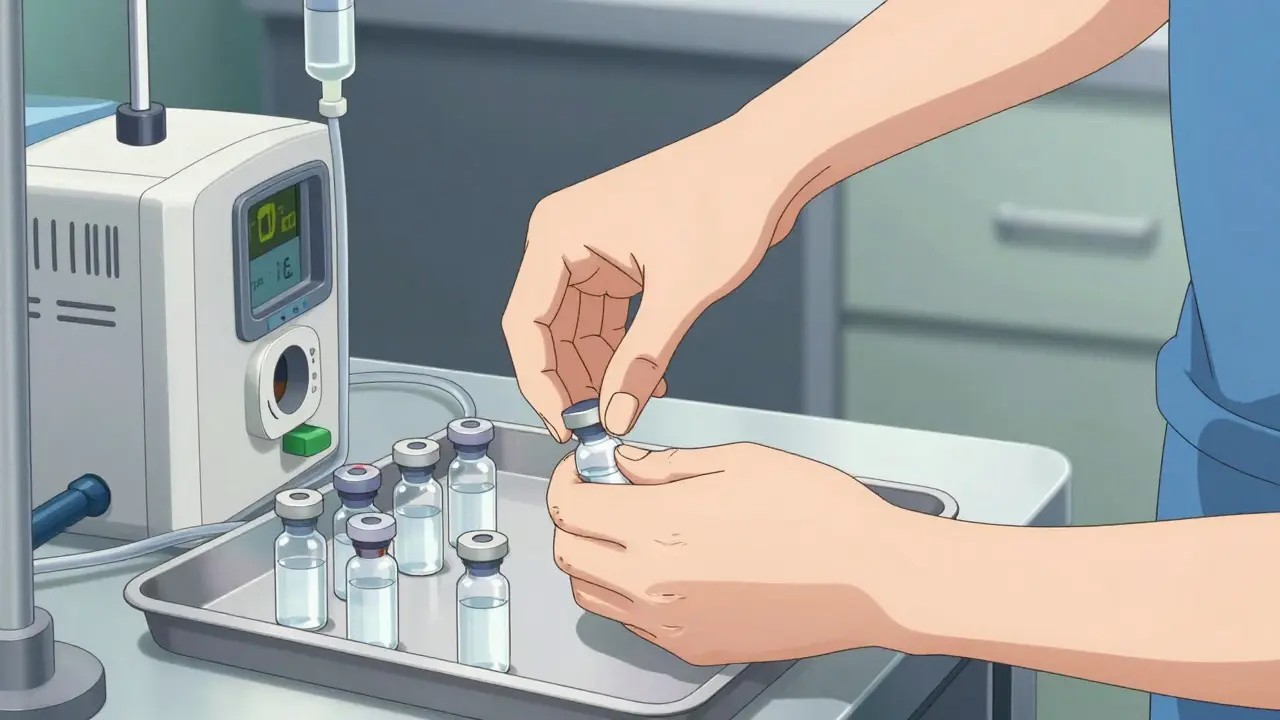
The team sets up an IV line first. They attach monitors to track your blood pressure, oxygen levels, and heart rate continuously. Before the infusion starts, you might receive pre-medications like antihistamines or corticosteroids, though protocols vary by institution. Then, the drips begin.
You will notice the drip bag changes frequently. Each change represents a concentration jump. You must report any itching, tightness in the throat, or dizziness immediately. If symptoms occur, the team stops the drip instantly and treats you, likely pausing until symptoms resolve before resuming at a lower dose. Most patients finish the session feeling fine after the final dose, though mild flushing or itching is common in about 8% of cases.
Post-procedure, you cannot simply go home and resume the drug on your own immediately. The "desensitized" state fades quickly. For antibiotics, you usually continue the infusions daily without interruption. If you miss a dose by even a few hours, your tolerance resets, and you would need to restart the protocol.

Safety and Success Statistics
Despite the risks, desensitization is remarkably safe when done right. Studies from Brigham and Women's Hospital analyzing dozens of cases found zero deaths and zero anaphylactic events when strict supervision was maintained. Instead, most adverse events were minor things like rashes or itching.
Compare this to alternative strategies. Using substitute antibiotics often fails because of cross-reactivity issues. Using premedication alone (taking Benadryl before the chemo) failed in 10% of cases studied by Dr. Castells. Desensitization beats those methods handily, allowing nearly 100% of successful patients to complete their necessary treatments. However, in community hospitals where resources are lower, complication rates rise threefold compared to academic centers.
Why does location matter? It takes significant expertise to calculate the dilution ratios accurately. Preparation errors happen in 8% of first-time implementations in smaller clinics. Standardized kits now reduce this error rate by 75%, making the procedure safer across different settings. Always ask if your facility uses standardized dilution kits to minimize these preparation risks.
Frequently Asked Questions
How long does the desensitization process last?
For rapid intravenous protocols, expect to spend approximately four to six hours in the clinic. Oral slow desensitization can take longer, potentially stretching over two to three days depending on the medication and your response.
Is desensitization permanent?
No, it is temporary. Your body returns to its baseline sensitivity once the regular medication course stops. If you need the same drug again in the future, you will likely require another desensitization session.
Can this be done at home?
Currently, home-based protocols are in early trial phases and are not yet standard practice due to the high-risk nature of potential anaphylaxis requiring immediate access to resuscitation equipment.
Who performs desensitization?
Only trained allergists or immunologists should oversee these procedures, ideally supported by nursing staff certified in anaphylaxis management within a hospital setting.
Are there costs covered by insurance?
Coverage varies widely. While some plans cover the physician's time, reimbursement for the extended nursing hours and facility fees often lags behind the actual cost of the procedure.


Great until you forget to take the next dose on schedule and everything resets because biology hates convenience.