
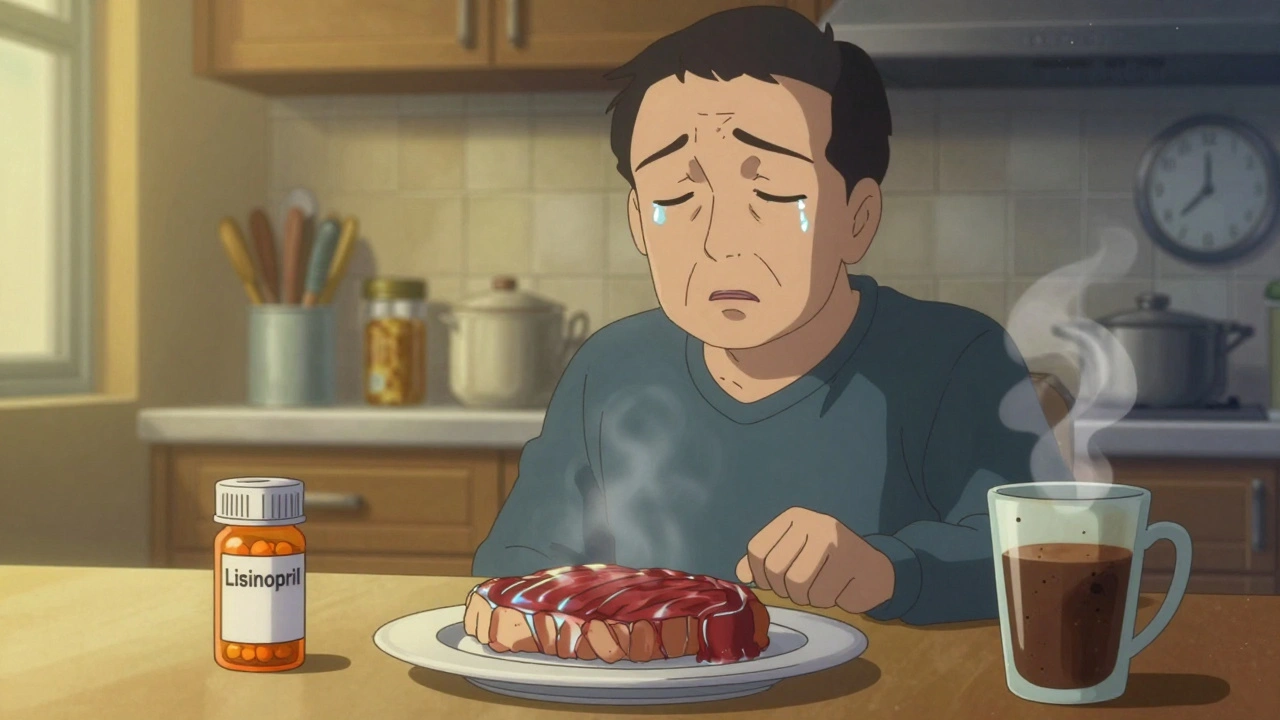
Ever taken a pill and suddenly everything tastes like licking a coin? You’re not alone. Metallic taste - or dysgeusia - is one of the most common and frustrating side effects of medications. It doesn’t just make your coffee taste like rust; it can make you lose your appetite, avoid nutritious foods, and even stop taking your medicine altogether. And it’s not just a minor annoyance. For many, especially older adults on multiple drugs, it’s a real threat to their health.
Why Do Medications Make Things Taste Metallic?
It’s not magic. It’s biology. When you swallow a pill, your body breaks it down, and some of those compounds end up in your saliva. From there, they interact with your taste buds in ways they weren’t designed for. Certain drugs - like antibiotics, antidepressants, blood pressure meds, and chemotherapy agents - either leak into your saliva directly or mess with the nerves that send taste signals to your brain.
Some medications, like metronidazole (Flagyl) or amoxicillin, lower zinc levels in your body. Zinc is critical for taste bud function. Without enough, your tongue can’t tell the difference between sweet and sour - or worse, it starts screaming "metal." Other drugs, like SSRIs (Prozac, Zoloft), dry out your mouth. Less saliva means less flavor transport, which distorts how you perceive taste. And then there are drugs like ACE inhibitors or lithium that directly bind to taste receptors, tricking them into sending a metallic signal even when there’s nothing metal in your mouth.
The timing gives it away. If you started a new medication and three days later, steak tastes like a battery, it’s probably the drug. Unlike taste changes from a cold or gum disease, this one sticks around as long as you’re taking the medicine - and sometimes even after you stop.
Which Medications Are Most Likely to Cause Metallic Taste?
Not all drugs do this - but some are notorious. Here are the usual suspects based on clinical reports and patient data:
- Antibiotics: Metronidazole, amoxicillin, clarithromycin, and cephalosporins like cephalexin.
- Psychiatric drugs: Lithium, fluoxetine (Prozac), sertraline (Zoloft), and other SSRIs.
- Heart medications: ACE inhibitors like lisinopril and enalapril.
- Chemotherapy drugs: Platinum-based agents like carboplatin and cisplatin - up to 80% of patients report severe taste changes.
- Antivirals: Paxlovid (nirmatrelvir/ritonavir) - nearly 60% of users report "Paxlovid mouth."
- Iron supplements: Especially older formulations that aren’t enteric-coated.
It’s not about the brand. It’s about the chemical structure. Even if you’ve taken the same drug before without issue, a change in dosage, a new combination, or even your age can trigger it.
How to Fight Back: Proven Coping Strategies
Stopping your meds isn’t the answer - unless your doctor says so. But you don’t have to suffer. Here’s what actually works, backed by research and patient experience.
1. Try Zinc Supplementation
Zinc deficiency is a hidden cause of metallic taste - and it’s easy to fix. For people on chemotherapy, studies from MD Anderson Cancer Center show that taking 50 mg of zinc gluconate daily during treatment improves taste in 65% of patients. For general medication-induced dysgeusia, try 25-50 mg per day for 2-4 weeks. Use zinc gluconate or zinc picolinate - they’re better absorbed than zinc oxide.
Don’t go overboard. Taking more than 100 mg daily for months can cause copper deficiency, which leads to nerve damage. Stick to the recommended dose and get your levels checked if symptoms don’t improve.
2. Switch Your Utensils
Plastic or wooden spoons aren’t just for kids. Metal utensils can react with the compounds in your saliva, making the metallic taste worse. Use glass or ceramic plates too. It sounds simple, but it’s a small change that makes a big difference for many.
3. Eat Tart and Sour Foods
When your taste buds are dull, you need a strong signal. Lemon wedges, pickles, vinegar-based dressings, or even sour candy can stimulate saliva and temporarily override the metallic flavor. Try sucking on a lemon slice 10 minutes before meals. It’s not glamorous, but it works.
4. Marinate Your Food
Strong flavors mask distortion. Marinate chicken or fish in teriyaki sauce, barbecue rub, garlic-herb blends, or even a splash of soy sauce and lime. The goal isn’t to eat bland food - it’s to overpower the bad taste with bold ones. Spices like cumin, coriander, and smoked paprika also help.
5. Take Medications With Food
For drugs like Paxlovid, taking them with a high-fat meal reduces metallic taste by 27%, according to FDA data. The fat slows absorption and reduces how much of the drug hits your saliva at once. Even if your pill doesn’t say to take it with food, try it. A small snack - a handful of nuts, some cheese, or avocado toast - can make a difference.
6. Brush With Baking Soda
Regular toothpaste can irritate sensitive taste buds. Switch to a baking soda-based toothpaste or make a paste with a teaspoon of baking soda and water. Brush twice a day. Baking soda neutralizes acids and helps clear residue from your tongue that might be worsening the taste. Don’t forget to gently brush your tongue too.
7. Get a Dental Checkup
Plaque buildup and gum disease can make taste problems worse. If you’re on long-term meds, schedule a cleaning every 3-4 months. Your dentist can rule out oral causes and recommend products designed for dry mouth or taste changes.

What Doesn’t Work (And Why)
Not every hack is worth your time. Here’s what to skip:
- Chewing gum: Most sugar-free gums contain artificial sweeteners like saccharin or aspartame - which can themselves cause metallic taste.
- Drinking lots of water: Hydration helps dry mouth, but it won’t fix drug-induced dysgeusia unless dehydration is the root cause.
- Waiting it out: If you wait too long, you might lose weight, skip meals, or stop your meds. Don’t assume it’ll go away on its own.
When to Talk to Your Doctor
If your metallic taste started after a new prescription, don’t ignore it. Tell your doctor - even if they brush it off. A 2022 survey found that 63% of patients felt their concerns were dismissed. But here’s the thing: your doctor can help.
They might:
- Switch you to a different drug in the same class (e.g., from lisinopril to a calcium channel blocker).
- Adjust your dose - sometimes lower amounts reduce side effects without losing effectiveness.
- Order a zinc level test - simple blood work can reveal if you’re deficient.
- Refer you to a specialist in taste disorders or a clinical pharmacist who knows which drugs cause which side effects.
And if you’re on chemotherapy? Ask about zinc supplementation upfront. It’s now part of standard care at major cancer centers.
The Bigger Picture: Why This Matters
Metals in your mouth might sound silly - until you realize it’s costing lives. A 2022 IQVIA study found that taste-related side effects cause 17% of older adults to quit their meds early. That leads to hospitalizations, worsening conditions, and billions in avoidable healthcare costs.
Pharma companies are finally listening. New formulations of lithium and iron supplements now use polymer coatings and lipid delivery systems to block metallic taste. In 2023, the FDA began requiring taste testing for all new oral drugs meant for long-term use in kids - because 42% of children refuse life-saving meds because they taste bad.
It’s not just about flavor. It’s about survival. If you can’t eat, you can’t heal. If you stop your meds, your disease wins.
What’s Next? Emerging Solutions
Science is catching up. Researchers at the NIH are studying how drugs interact with TRPM5 - a key taste-signaling protein. Early work suggests genetic differences (like variations in the TAS2R38 gene) might explain why some people get metallic taste and others don’t. In the future, a simple DNA test could help doctors pick the right drug for you - before you even taste the metal.
Low-level laser therapy (LLLT) is also showing promise. A small pilot study found that 10 sessions of 808nm laser on the tongue improved taste in over half of patients. It’s not widely available yet, but it’s being tested in clinics.
And then there’s Polaprezinc - a zinc-carnosine compound that’s 40% more effective than regular zinc in restoring taste. It’s already used in Japan for gastric ulcers and is now being tested globally for dysgeusia.
Change is coming. But until then, you’ve got tools. Use them.
How long does metallic taste from medication last?
It usually lasts as long as you’re taking the medication. For most people, it starts within 24-72 hours of starting the drug and fades within a few days after stopping. But in some cases - especially with chemotherapy or long-term antibiotics - it can linger for weeks. If it doesn’t improve after you finish the course, see your doctor to rule out other causes like zinc deficiency or oral health issues.
Can zinc supplements help with metallic taste from any medication?
Zinc helps most when the metallic taste is tied to low zinc levels - which happens with antibiotics, chemotherapy, and some blood pressure drugs. It’s less effective for drugs that directly alter taste receptors, like lithium or SSRIs. Still, a 2-4 week trial of 25-50 mg daily is safe for most adults and worth trying. Get your zinc level checked if you’re unsure.
Is metallic taste dangerous?
The metallic taste itself isn’t dangerous - but what it leads to can be. Many people stop eating because food tastes awful. That can lead to weight loss, malnutrition, and weakened immunity. For older adults or those with chronic illness, this can be serious. If you’re losing weight or avoiding protein-rich foods, talk to your doctor or a dietitian.
Can I use mint or cinnamon gum to mask the taste?
Avoid sugar-free gum. Many contain artificial sweeteners like saccharin or sucralose, which can make metallic taste worse. If you need fresh breath, try chewing on a piece of fresh ginger, sucking on a mint leaf, or rinsing with water mixed with a drop of lemon juice. Natural is better than chemical.
Why does my taste change only with some medications and not others?
It depends on how the drug is processed in your body and where it ends up. Some drugs are secreted directly into saliva. Others affect zinc levels or nerve signals. Your genetics also play a role - some people have taste receptors that are more sensitive to certain chemicals. That’s why two people on the same drug can have totally different experiences.
Final Thoughts: You’re Not Alone
Metallic taste is more common than you think - and more treatable than you’ve been told. You don’t have to live with it. Use the strategies above. Talk to your doctor. Ask about zinc. Switch your fork. Eat with flavor. Your body needs good nutrition - and your meds need to stay in your system. Don’t let a bad taste steal your health.


Man, I never thought a pill could make my steak taste like a battery. Took Zoloft for a year and thought I was just going crazy. Switched to plastic forks and started sucking on lemon slices before meals-suddenly food didn’t feel like a crime scene. Small tweaks, huge difference.