
When Patents Expire, Drug Prices Drop-But Not Everywhere
When a drug's patent expiration occurs, prices can drop dramatically-sometimes by over 80% in eight years. But this isn't the same everywhere. In the United States, for example, prices fell 32% in the first year and 82% over eight years after patent expiration, according to a 2023 JAMA Health Forum study. Switzerland saw a much smaller decline of 18% over the same period. Why such differences? The answer lies in how each country handles competition, regulations, and patent strategies.
The Hatch-Waxman Act Changed Everything
The process was formally established through Hatch-Waxman Act of 1984 (Drug Price Competition and Patent Term Restoration Act), which created the modern framework for generic drug approval and patent linkage in the United States. This law balances innovation incentives for drugmakers with faster access to affordable generics. Without it, many life-saving drugs would remain prohibitively expensive. For instance, when the patent for Lipitor (atorvastatin) expired in 2012, generic versions quickly cut prices by 90%, saving Americans $17 billion in the first year alone.
Why Countries See Different Price Drops
International differences in price drops stem from varying regulatory frameworks. Countries like the US and UK have competitive markets where multiple generic manufacturers enter quickly, driving prices down sharply. In contrast, Switzerland uses reference pricing systems that limit how much prices can fall. Australia saw a 64% price drop after eight years, while France and Germany saw 53% and 58% reductions. These differences highlight how policy choices directly impact patient costs.
How Many Generics Enter the Market?
The number of generic competitors plays a huge role. The first generic usually cuts prices by 15-20%, but each additional entrant pushes prices lower. A 2018 PMC review found drug prices dropped to as low as 6.6% of original costs within five years when many generics entered. For example, when Eliquis (apixaban) lost patent protection in 2020, the first generic reduced prices to $10 per month from $850 for the brand. By 2023, with multiple generics available, prices stabilized near $15. This pattern holds true for most small-molecule drugs-each new competitor adds pressure until prices hit rock bottom.
Patent Thickets Delay Savings
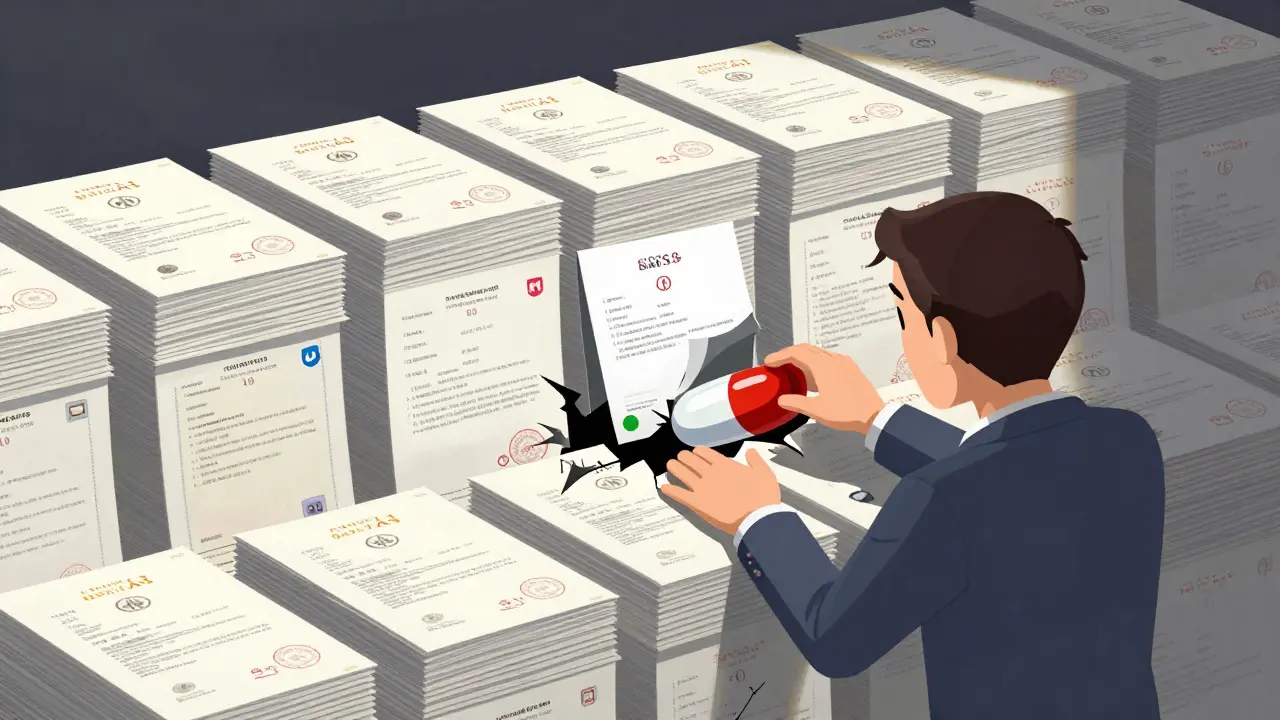
However, some drugs avoid price drops through "patent thickets." Companies like AbbVie filed over 130 secondary patents for Humira (adalimumab), delaying generic competition for seven years after the initial patent expired. Only when Amgen's Amjevita biosimilar launched in 2023 did prices begin to fall. But even then, rebates and formulary restrictions kept costs high for many patients. This strategy is common: the R Street Institute reported that 78% of new patents filed for existing drugs were extensions, not new treatments. The I-MAK 2025 report confirmed that blockbuster drugs like semaglutide (Ozempic) have accumulated 142 patents, potentially extending protection until 2036.
Biosimilars Face Unique Challenges
Biologics like Humira face different challenges than small-molecule drugs. Biosimilars (generic versions of biologics) take longer to develop and get approved due to complex manufacturing. The FDA approved 870 generic drugs in 2023, but complex biosimilars still face 24+ month approval times. This delays competition and keeps prices high. For instance, the first biosimilar for Humira launched in 2023, but many patients still pay near full price due to insurer rebates and contracts. A Kaiser Family Foundation survey found 22% of insured adults experienced delays accessing lower-cost alternatives after generics entered the market.
Regulators Are Fighting Back
Regulators are now fighting back. The USPTO is reforming patent review processes to block "patent thickets." The European Commission's 2024 Pharmaceutical Package aims to limit supplementary protection certificates. Meanwhile, the Inflation Reduction Act lets Medicare negotiate drug prices, which may push companies to time generic entries strategically. The Congressional Budget Office projects $1.7 trillion in savings from generics over the next decade, but I-MAK warns delays from patent strategies could cost patients $4.2 years in savings per drug.
Real Patient Experiences
Patients see these shifts firsthand. On Reddit, a February 2024 thread documented someone paying $10 for generic Eliquis versus $850 for the brand. Others, however, faced confusion when Humira biosimilars launched but stayed expensive due to rebates. Dr. Sarah Kim, a Chicago rheumatologist, noted that biosimilars for infliximab took off quickly after 2016, but Humira's transition has been slow because of AbbVie's contracts with insurers. "Payers and patients don't always see the savings right away," she said. The JAMA Health Forum study confirmed that 68% of insured adults reported lower out-of-pocket costs when generics became available, but 22% saw delays due to insurance formulary changes.
What's Next for Drug Pricing?
The global generic market is set to grow from $407.5 billion in 2023 to $700.1 billion by 2030. With $220 billion in annual drug sales set to lose patent protection by 2025, the pressure on drugmakers to innovate while keeping prices affordable will intensify. As Dr. Joseph Ross of Yale put it, "Patent expiration drives competition, but the system must adapt to ensure savings reach patients." For now, the evidence is clear: when patents expire, prices drop-but only if the system works as intended.
How quickly do drug prices drop after patent expiration?
Prices drop immediately when the first generic enters, typically reducing costs by 15-20%. Each additional generic competitor increases the pressure, with prices falling 80-90% when 10+ generics are available. The US saw an 82% drop over eight years, while Switzerland only dropped 18% in the same period.
Why do some drugs stay expensive after generics enter the market?
Rebates, formulary restrictions, and patent thickets can delay savings. For example, Humira biosimilars launched in 2023, but insurers often keep the original drug on preferred formularies due to rebates. Patients may see little change in out-of-pocket costs until insurers shift to generics.
What is a patent thicket?
A patent thicket is when a drugmaker files dozens of secondary patents on minor changes (like new dosages or delivery methods) to block generic competition. The I-MAK report found 78% of new patents for existing drugs are extensions, not new treatments. Humira's 130+ patents delayed competition for seven years after the initial patent expired.
Do biosimilars work the same as generic drugs?
No. Biosimilars are generic versions of biologic drugs (like Humira), which are more complex than small-molecule drugs. They take longer to develop and get approved-up to 24+ months versus 10 months for simple generics. This delays price drops and keeps costs higher than traditional generics.
How does the US compare to other countries?
The US has the steepest price drops (82% over eight years) but also the longest delays in generic entry (30 months post-patent expiry). Europe generally sees more moderate declines (53-58%) due to reference pricing systems, while Switzerland's prices fell just 18% over the same period.


Eliquis dropped to $10 per month after generics.