
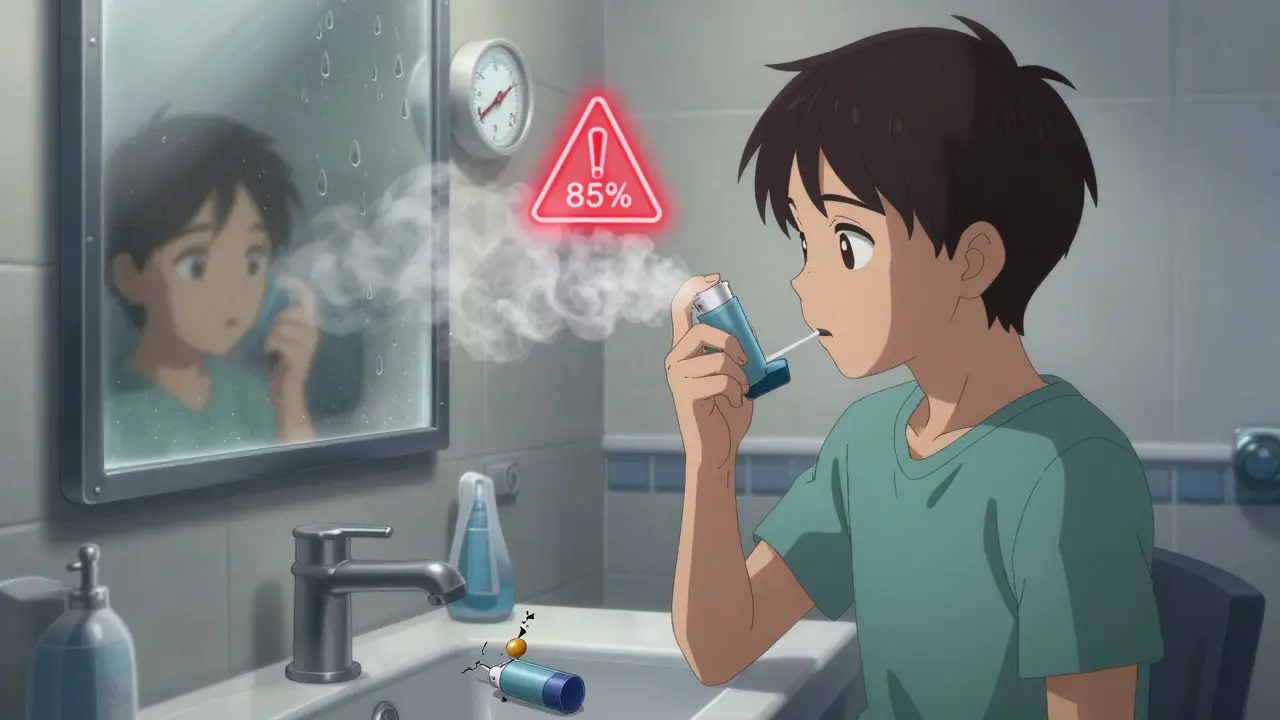
Every year, thousands of people with asthma or COPD experience a sudden worsening of symptoms - not because their condition got worse, but because their inhaler or nebulizer medicine stopped working. And in most cases, it’s not the device’s fault. It’s storage.
You wouldn’t leave insulin in a hot car. You wouldn’t store antibiotics in a steamy bathroom. But for some reason, many people treat inhalers and nebulizer solutions like ordinary items - tossing them in gym bags, leaving them on the windowsill, or keeping them in the medicine cabinet above the sink. That’s dangerous. And it’s more common than you think.
Why Storage Matters More Than You Realize
Inhalers and nebulizer medications aren’t just pills or liquids. They’re precision-engineered drug delivery systems. The medicine inside is suspended in a specific chemical mixture - pressurized gas in metered-dose inhalers, dry powder in DPIs, or liquid in ampules. These formulations are designed to deliver an exact dose every time. But they’re also fragile.
Heat, moisture, and even light can break down the active ingredients. A 2023 study from the University of North Carolina found that inhalers stored in a car at 95°F for just 24 hours delivered only 62% of the labeled dose - down from 95%. That’s not a small drop. That’s the difference between breathing normally and needing an emergency room visit.
The American Lung Association estimates that 12% of asthma treatment failures during acute attacks are directly tied to improperly stored medication. That’s not a guess. It’s based on patient data from emergency departments across the U.S. And it’s not just inhalers. Nebulizer solutions like albuterol and Pulmicort degrade even faster. One 2022 study showed they can lose effectiveness within 30 minutes if exposed to temperatures above 104°F.
What’s the Right Temperature?
There’s no one-size-fits-all answer, but most inhalers and nebulizer meds need to stay between 68°F and 77°F (20°C to 25°C). That’s room temperature - not too hot, not too cold.
Here’s what different types need:
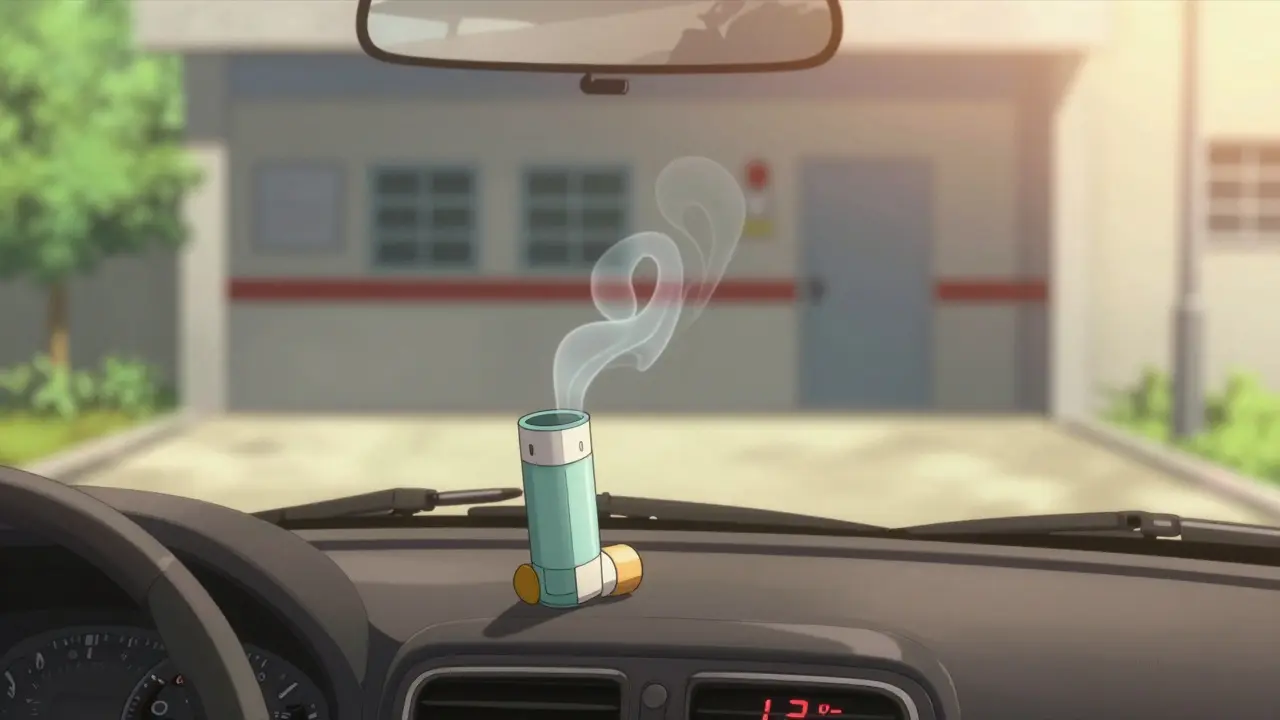
- Pressurized metered-dose inhalers (pMDIs) like ProAir HFA or Ventolin HFA: Keep between 59°F and 86°F (15°C to 30°C). Never freeze them. Never leave them in a car on a summer day - temperatures inside a parked car can hit 158°F in under 30 minutes.
- Dry powder inhalers (DPIs) like Spiriva HandiHaler or Advair Diskus: These are extra sensitive to moisture. Keep them dry. Humidity above 60% can make the powder clump or the capsules brittle. Store them away from bathrooms or kitchens.
- Neublizer solutions like albuterol ampules or Pulmicort Respules: Most are stable at room temperature after opening, but before opening, many need refrigeration (36°F to 46°F). Check the label. Once opened, use within 7 days. Don’t keep them in the fridge after opening - condensation can contaminate the solution.
- Breath-actuated inhalers like Proventil RespiClick: These are even more temperature-sensitive than standard MDIs. Stick to 68°F-77°F. Don’t risk it.
Forget the old myth that “all meds should be refrigerated.” That’s wrong for most inhalers. Refrigeration can cause moisture buildup inside the device, which ruins the mechanism. Only refrigerate if the manufacturer says so - and only before opening.
Moisture Is the Silent Killer
The bathroom is the worst place to store your inhaler. Not because it’s dirty - but because it’s humid. Every time you shower or run the sink, steam fills the air. That moisture doesn’t just linger. It gets inside your inhaler.
St. Jude Children’s Research Hospital tested this. They found that storing an albuterol inhaler in a bathroom reduced its concentration by 35% in just 14 days. That’s not a typo. 35%. That means you’re getting less medicine with every puff - and you won’t know until you’re gasping for air.
Dry powder inhalers are especially vulnerable. The capsules inside are made of gelatin. Too much moisture? They turn brittle and crack. The powder spills out. You think you’re getting a full dose - but you’re not. GlaxoSmithKline’s 2020 report confirmed that humidity above 65% causes immediate capsule failure in DPIs like Ellipta.
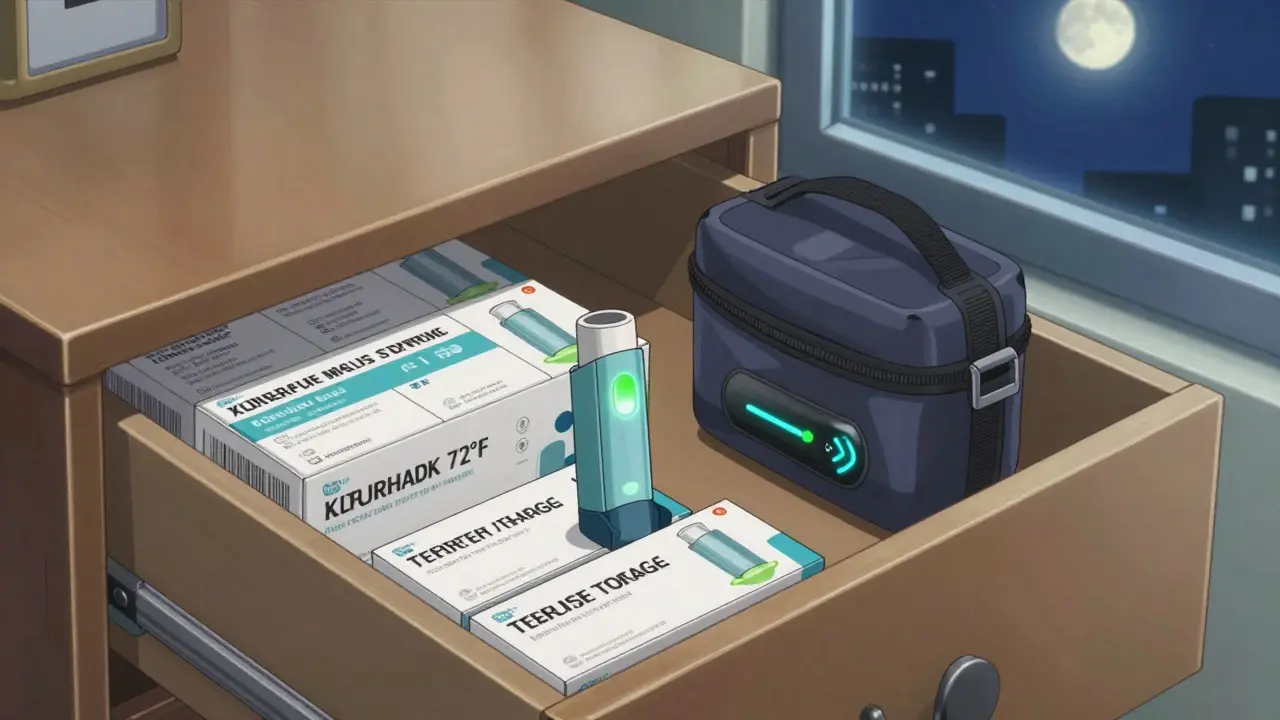
Here’s how to fix it: Store your inhaler in a cool, dry drawer or cabinet - preferably in its original box. The box blocks light and keeps humidity out. If you’re traveling, use a small, opaque plastic container with a tight seal. Don’t just toss it in your purse or pocket.
What About Travel?
Traveling with respiratory meds is tricky. You’re moving between environments - hot airports, cold airplanes, humid hotels. The American College of Physicians recommends the “Rule of 15”: Don’t leave your inhaler outside a temperature-controlled space for more than 15 minutes.
That means:
- Don’t leave it in the car while you grab coffee.
- Don’t put it in your checked luggage - baggage holds can get extremely hot or cold.
- Keep it in your carry-on, right next to you.
For longer trips or hot climates, consider an insulated case. The MediSafe case, for example, has been tested to keep inhalers at safe temperatures for up to 15 hours - even in Florida summer heat. These aren’t luxury items. They’re medical tools. And they cost less than $20.
There’s also new tech: the SmartInhale case, FDA-cleared in May 2023, has a Bluetooth sensor that alerts your phone if the temperature goes out of range. It’s not necessary for everyone - but if you live in a place with extreme heat or travel often, it’s worth it.
Common Mistakes (And How to Avoid Them)
People make the same mistakes over and over. Here are the top five:
- Storing inhalers in the bathroom. Solution: Move it to a bedroom drawer or kitchen cabinet away from the sink.
- Leaving it in the car. Solution: Always bring it inside with you. Even if you’re only gone for 10 minutes.
- Keeping multiple inhalers together. Solution: Store DPIs separately from MDIs. Moisture from an MDI’s propellant can leak and ruin a dry powder inhaler.
- Assuming it’s still good because the expiration date hasn’t passed. Solution: If it’s been exposed to heat or moisture, replace it - even if it’s “not expired.”
- Not checking the label. Solution: Every inhaler is different. Read the manufacturer’s instructions. If you can’t find them, call your pharmacist.
A 2023 Johns Hopkins study found that 22% of DPI users had their devices damaged because they stored them next to MDIs. That’s preventable. Keep them apart.
What About Nebulizer Machines?
The machine itself doesn’t need special storage - but the meds do. And the machine can be affected too.
Philips Respironics warns in their 2021 manual that nebulizer compressors should be kept at least 12 inches away from Wi-Fi routers, microwaves, or other devices that emit electromagnetic fields. These can interfere with the machine’s electronics and cause inconsistent performance.
Also, clean the nebulizer cup and tubing after every use. Moisture left inside breeds mold. That’s not just dirty - it’s dangerous. Mold spores inhaled through a nebulizer can trigger severe asthma attacks.
What to Do If Your Inhaler Stops Working
If you use your inhaler and feel like it’s not working - even if you’ve used it recently - don’t assume it’s your asthma getting worse. It might be the medicine.
Here’s what to do:
- Check the temperature history. Was it left in a hot car? In the sun?
- Check for moisture. Did it get wet? Was it in a humid place?
- Check the expiration date - but don’t rely on it alone.
- Use a backup inhaler if you have one.
- If you’re still struggling, seek medical help immediately.
Don’t wait. Don’t try to “tough it out.” A failed inhaler can be life-threatening.
What’s Changing in 2026?
Regulations are catching up. The FDA’s 2023 draft guidance says all rescue inhalers will need built-in temperature sensors by 2026. That’s not science fiction - it’s coming. GlaxoSmithKline already rolled out humidity-indicating packaging for Ellipta inhalers in late 2023. The packaging changes color if moisture levels are too high.
And hospitals are taking action. St. Jude Children’s Research Hospital installed “Cool Cubby” storage units in classrooms - temperature-monitored boxes that keep inhalers at exactly 72°F. Their pilot program cut medication failures by 89%.
But you don’t need a hospital-grade system. You just need awareness.
Final Checklist: Safe Storage in 3 Steps
Follow this every day:
- Check the temp. Keep it between 68°F and 77°F. If it’s hotter than 86°F, move it.
- Keep it dry. Never store in bathrooms, kitchens, or near windows. Use the original box.
- Protect it on the go. Carry it with you. Use an insulated case if it’s hot or cold outside.
That’s it. Simple. But life-saving.
Can I store my inhaler in the fridge?
Only if the manufacturer specifically says so - and only before opening. Most inhalers should never be refrigerated. Cold temperatures can cause moisture to form inside the device, which damages the mechanism. Nebulizer solutions like Pulmicort Respules need refrigeration before first use, but once opened, they’re stable at room temperature for up to 7 days. Always check the label.
What if my inhaler was left in a hot car?
Replace it. Even if it’s not expired, heat above 86°F can permanently damage the medication. A 2023 study showed that after just 24 hours in a 95°F car, inhalers delivered only 62% of the labeled dose. That’s not safe. Don’t risk it. Use a backup inhaler and get a new one as soon as possible.
Can I keep my inhaler in my purse or pocket?
Yes - but only if you’re carrying it with you. Don’t leave it in a hot car, on a sunny windowsill, or in a gym bag that sits in direct sunlight. If you’re out for the day, keeping it in your purse or shirt pocket is fine. Just avoid extreme heat or moisture. For longer trips or hot weather, use an insulated case.
How do I know if my inhaler has gone bad?
Signs include: a weaker spray, no mist when you press it, or feeling like the medicine isn’t helping during an attack. If you’ve exposed it to heat, moisture, or left it in a car, assume it’s compromised - even if the expiration date hasn’t passed. When in doubt, replace it. Your breathing isn’t worth the risk.
Should I clean my nebulizer after every use?
Yes. Always rinse the nebulizer cup and tubing with warm water after each use, then air-dry completely. Moisture left inside can grow mold or bacteria - which, when inhaled, can cause serious lung infections. Don’t skip this step. It’s not optional. Follow the manufacturer’s cleaning instructions exactly.


OMG I had no idea my inhaler was basically a time bomb in my bathroom cabinet 😱 I moved it to my bedroom drawer last night and already feel safer. Thanks for this! 🙌