
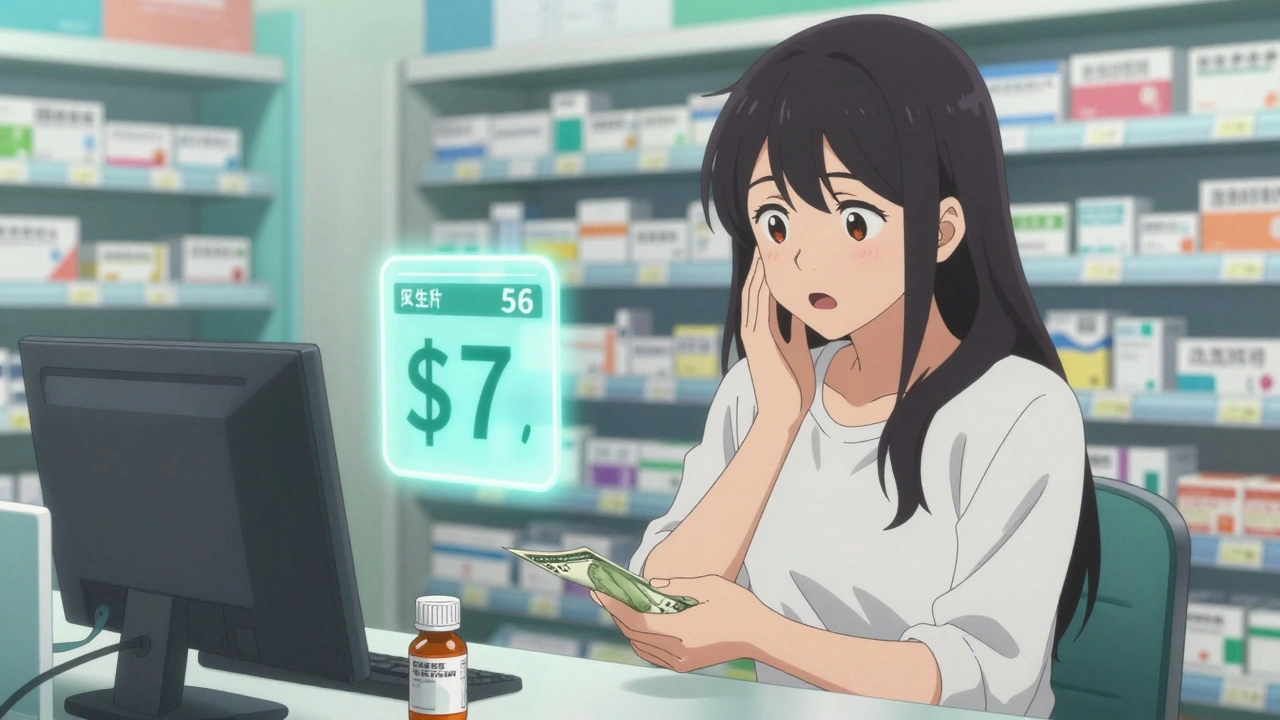
Imagine filling a prescription for a common medication like high blood pressure pills or cholesterol medicine. You hand over your insurance card, wait a few minutes, and the pharmacist hands you a small bottle. The total? $56. You’re stunned. You thought generics were cheap. You ask why it’s so high. The answer? You’re not getting the real generic price-you’re paying what the system lets them charge you.
Here’s the truth: generics are the single biggest reason prescription drug costs haven’t exploded even more. In the U.S., 9 out of 10 prescriptions are filled with generics. They’re not knockoffs. They’re identical in active ingredients, safety, and effectiveness to brand-name drugs. But they cost a fraction. In 2023, the average out-of-pocket cost for a generic was $7.05. For the same drug as a brand, it was $27.10. That’s nearly four times more.
But here’s the twist: even though generics are everywhere, you’re still paying way more than you should. Why? Because the system isn’t built to save you money-it’s built to profit middlemen.
How Much Do Generics Actually Save You?
Let’s look at real numbers. Take the HIV medication efavirenz, emtricitabine, and tenofovir. Before generics, a 30-day supply cost about $1,000. After generics hit the market, the same pills dropped to $65. That’s a 94% drop. Sildenafil (the generic for Viagra) fell from $49.90 to $3.07. Emtricitabine/tenofovir went from $20.46 to $2.13. These aren’t outliers. These are standard.
And the savings aren’t just for the wealthy. According to a 2021 analysis of over 1.4 billion Medicare Part D claims, 93% of all generic prescriptions cost $20 or less out-of-pocket. Eighty-two percent cost under $20. Nearly all-98.8%-were under $50. That’s not luck. That’s the power of competition after patents expire.
But here’s where it gets messy. Even though generics dominate the market, the total share of drug spending they represent has shrunk. In 2016, generics made up 26% of total drug spending. By 2023, that dropped to 13.1%. Why? Because brand-name drugs are getting more expensive, and insurance plans are shifting costs onto patients. Generics are filling most prescriptions, but the ones that still carry high prices are dragging the average up.
Why You’re Still Paying Too Much
Here’s the real problem: your pharmacy isn’t charging you the real price. It’s charging you what your insurance plan allows-or what it’s forced to accept because of how rebates and contracts work.
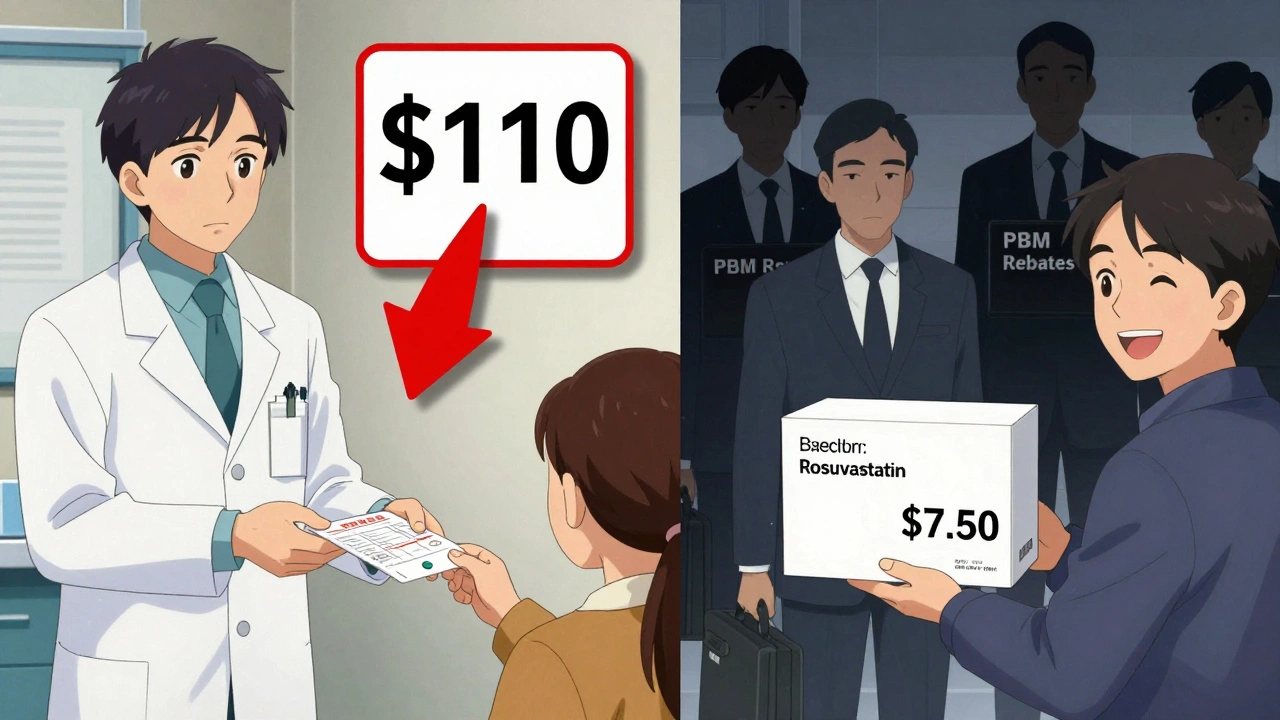
Take Pantoprazole, a common heartburn drug. At a direct-to-consumer pharmacy like Health Warehouse, you can get 30 tablets for $9.20. At Albertsons? $44. That’s a 79% difference. Rosuvastatin (a statin) costs $7.50 at Health Warehouse. At Walgreens? $110. Ninety-three percent cheaper. Same pills. Same manufacturer. Same FDA approval.
That’s not a glitch. That’s the system. Retail pharmacies often charge inflated prices because they’re tied to insurance networks that pay them based on a list price-not the actual cost. The pharmacy gets a rebate from the drugmaker, but you never see that discount. You’re stuck with the sticker price.
Even worse, Medicare Part D, the federal program for seniors, often pays more than Costco. In 2018, Medicare overspent by $2.6 billion across 1.4 billion claims. Why? Because many 90-day fills cost more than what Costco charges members-even when those members have no insurance. One study found that 53% of 90-day generic fills under Medicare cost more than Costco’s cash price.
And here’s the kicker: even when generic prices fall, your out-of-pocket costs don’t always follow. Insurance companies sometimes move generics to higher tiers. A drug that used to cost $5 might suddenly be a $20 copay because it’s now labeled as a "preferred brand" or "non-preferred generic." That shift alone raised patient spending by 135% between 2011 and 2019-even as overall drug prices dropped.
Who’s Getting Rich While You Pay More?
It’s not the drugmakers. Generic manufacturers are competing fiercely. Prices have been falling for years. In fact, the total value of U.S. generic sales has dropped by $6.4 billion since 2019-even as more people are using them. That’s called "severe deflation." It means competition is working.
The real winners? Pharmacy benefit managers (PBMs). These are the middlemen between insurers, pharmacies, and drugmakers. They negotiate rebates, set formularies, and decide which drugs get covered and at what price. But they don’t pass savings to you. They keep a cut.
A 2022 analysis from the USC Schaeffer Center found that while your out-of-pocket cost for generics dropped by about half, the total cost (what you pay + what your insurer pays) dropped by nearly 80%. That means the difference-13% to 20% of the total cost-is being absorbed by intermediaries. You’re paying more because the system hides the real price.
And it’s not just PBMs. Some retail pharmacies charge higher prices because they’re paid based on a formula that rewards higher list prices. The more they charge, the more they get paid-even if the drug costs $2 to make.
What You Can Do Right Now
You don’t have to accept this. Here’s how to save money today:
- Ask for the cash price. Always. Even if you have insurance. Many generics cost less out-of-pocket than your copay. Walmart, Costco, and Sam’s Club often have $4 or $10 lists for common generics.
- Use mail-order or direct-to-consumer pharmacies. Sites like HealthWarehouse, Blink Health, or GoodRx offer prices that are 75% lower than retail. You pay upfront, they ship it. No insurance needed.
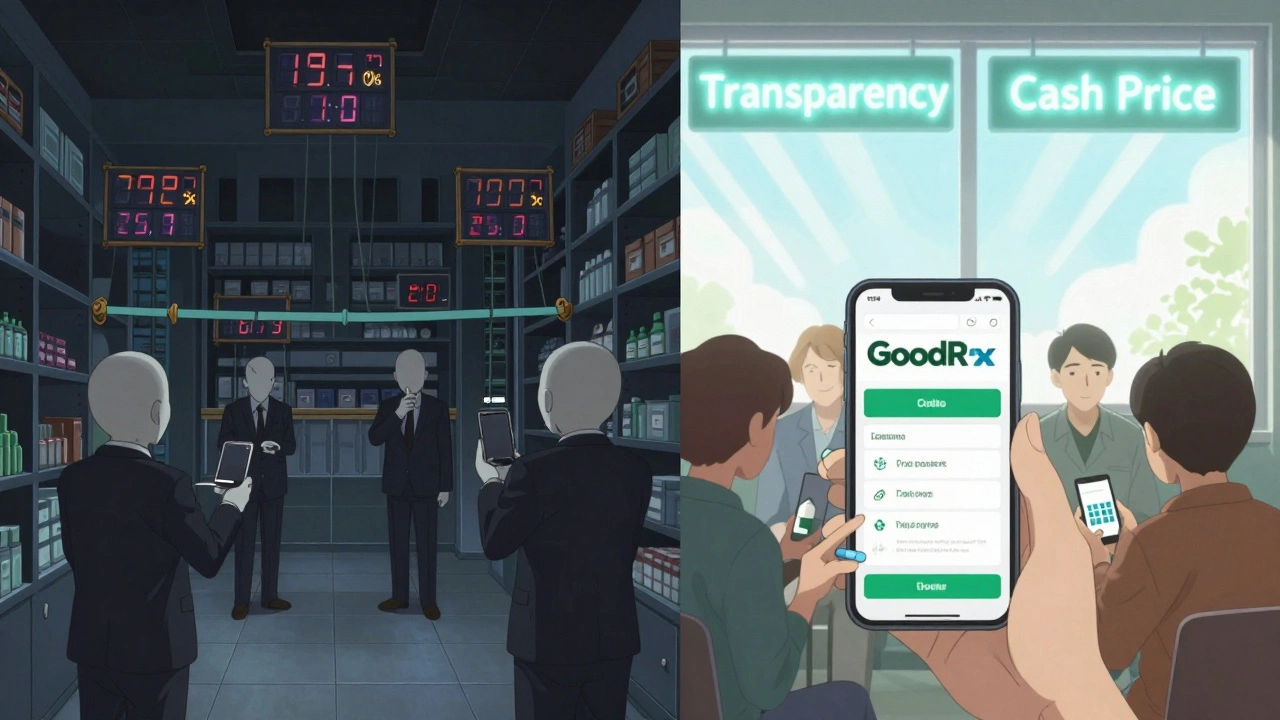
- Check GoodRx or SingleCare. These apps show real-time prices at nearby pharmacies. You can print or show a coupon at the counter. It’s free.
- Ask your doctor for alternatives. Sometimes there’s another generic version that’s cheaper. Or a different drug in the same class that’s been generic longer.
- Call your insurer. Ask: "Is this generic on my formulary? What tier is it on? Can I get it for less if I use a different pharmacy?" They’re required to tell you.
One woman in Arizona was paying $87 for her generic metformin at her local CVS. She used GoodRx and found the same pill at a nearby pharmacy for $7. She saved $80 a month. That’s $960 a year. For a pill that costs less than 10 cents to make.
Why This Isn’t Getting Fixed
The system isn’t broken. It’s working exactly as designed-for the middlemen. PBMs and insurers benefit from opaque pricing. The more they can hide the real cost, the more they can charge and pocket.
Politicians talk about lowering drug prices, but most proposals focus on brand-name drugs. Generics are ignored because they’re "already cheap." But that’s a myth. They’re cheap to make. Not cheap to buy.
Real reform would require forcing transparency. Imagine if every pharmacy had to post the actual cost of every generic drug-like a restaurant menu. You’d know what it costs to buy, not what they charge you. That’s not radical. It’s basic.
Some states are trying. California passed a law requiring PBMs to disclose rebates. Other states are banning gag clauses that prevent pharmacists from telling you about cheaper cash prices. But it’s slow. And patchy.
Meanwhile, the savings keep piling up. In the last decade, generics and biosimilars saved the U.S. healthcare system $445 billion. That’s more than the GDP of most countries. But you don’t see that money in your wallet. You see the $56 bill.
Generics are the solution. But the system is the problem. Until the middlemen stop profiting off your confusion, you’ll keep overpaying-even when you’re doing everything "right."
Are generic drugs really the same as brand-name drugs?
Yes. The FDA requires generics to have the same active ingredients, strength, dosage form, and route of administration as the brand-name version. They must also meet the same strict standards for purity, stability, and effectiveness. The only differences are in inactive ingredients like fillers or dyes-which don’t affect how the drug works. Over 90% of prescriptions in the U.S. are filled with generics because doctors and pharmacists trust them.
Why is my generic drug so expensive if it’s supposed to be cheap?
Your pharmacy is likely charging you the insurance-listed price, not the true market price. Many retail pharmacies get paid based on a formula tied to the drug’s list price, not its actual cost. Even if the generic costs $5 to produce, your copay might be $30 because your insurance plan negotiated a higher rate. Always ask for the cash price-it’s often much lower.
Can I save money by buying generics from online pharmacies?
Yes, and many people do. Direct-to-consumer pharmacies like HealthWarehouse, Blink Health, and GoodRx partner with licensed U.S. pharmacies to offer generics at 75% off retail prices. These services don’t require insurance. You pay upfront, and they ship the medication. Just make sure the site is verified by the National Association of Boards of Pharmacy (NABP) to avoid counterfeit drugs.
Why does Medicare sometimes cost more than paying cash?
Medicare Part D plans often use complex pricing structures that don’t reflect the lowest available price. In 2018, Medicare overspent by $2.6 billion because many 90-day fills cost more than what Costco charged members-even those without insurance. This happens because PBMs negotiate rebates with drugmakers, but those savings aren’t passed to patients. Instead, they’re used to lower premiums or boost profits.
What should I do if my insurance won’t cover my generic?
First, ask your doctor if there’s another generic alternative. Sometimes there are multiple versions of the same drug, and one might be covered. Second, request a formulary exception from your insurer-they must review it. Third, pay cash using a discount app like GoodRx. Many generics cost less than your deductible or copay. Finally, consider switching plans during open enrollment if your current one consistently excludes affordable generics.
What’s Next for Generic Drug Prices?
The future looks promising-but only if patients push for change. More blockbuster drugs are coming off patent every year. In 2025 alone, drugs for diabetes, depression, and heart disease will become available as generics. That could mean billions more in savings.
But unless we fix the pricing system, those savings won’t reach you. The real battle isn’t against big pharma. It’s against the hidden layers of middlemen who profit from confusion. You have more power than you think. Ask questions. Compare prices. Demand transparency. The money’s there. You just need to know where to look.


OMG I just used GoodRx for my metformin and paid $5 instead of $42 at CVS 🤯 I feel like I hacked the system. Why does anyone still pay retail???