
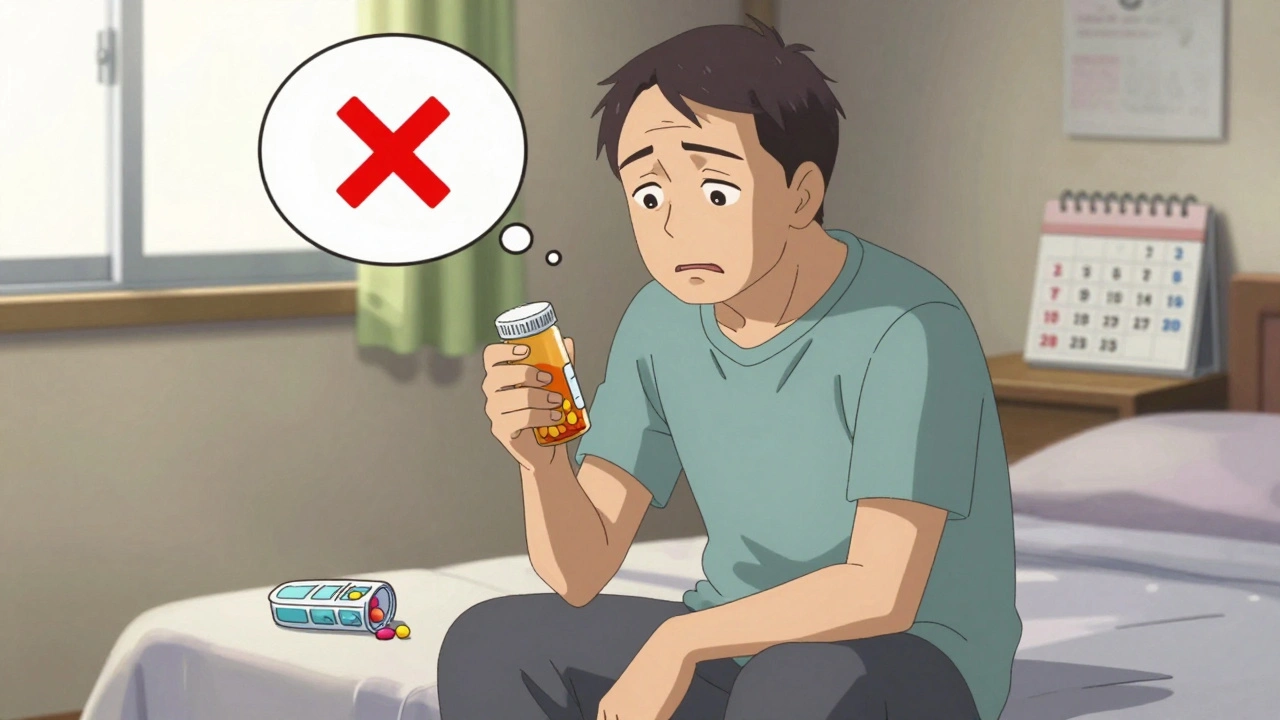
You’ve been told to take your medication every day. You know it’s important. But then the side effects hit - the dizziness, the nausea, the fatigue, or worse, the anxiety that makes you wonder if the pill is doing more harm than good. So you skip a dose. Then another. Soon, you’re not taking it at all. You’re not lazy. You’re not irresponsible. You’re just human.
Why Side Effects Kill Adherence - Even When You Care
Medication adherence means taking your drugs exactly as prescribed: the right dose, at the right time, for as long as needed. It sounds simple. But according to the National Library of Medicine, between 30% and 50% of people with chronic conditions don’t stick to their regimens. And side effects are one of the top reasons why.
It’s not just about discomfort. It’s about fear. A 2025 study found that patients with depression were twice as likely to skip their meds because they were worried about how the drugs made them feel. That fear doesn’t disappear after a few days - it grows. One in five people never even fill their first prescription because they’re scared of side effects. Of those who do start, nearly half stop within the first few months.
And it’s not just mental health. For high blood pressure, diabetes, or cholesterol meds, side effects like dry mouth, frequent urination, or muscle pain can feel like a worse deal than the disease. Patients often think, “If I feel worse on the medicine, maybe I’m better off without it.” But skipping doses doesn’t make you feel better - it just makes your condition worse.
The Real Cost of Skipping Pills
When people stop taking their meds, the consequences aren’t just personal - they’re systemic. In the U.S., medication nonadherence causes about 125,000 preventable deaths every year. That’s more than traffic accidents. It also leads to up to 25% of hospitalizations and 69% of medication-related ER visits.
And the money adds up fast. Each person who doesn’t take their meds as prescribed costs the system between $950 and $44,000 a year. For someone with high blood pressure, missing doses can lead to a stroke. For someone with diabetes, it can mean kidney failure. For someone on statins, it can mean a heart attack. These aren’t hypothetical risks - they’re real outcomes tied directly to skipping pills.
Worse, many doctors don’t even know patients are stopping. Pharmacists document nonadherence only 52% of the time, compared to 85% for nurses. If no one’s asking, patients won’t say anything. They assume it’s normal to feel bad on meds. It’s not.
What Works: Real Solutions That Help People Stay on Track
There’s a myth that people just need to be reminded to take their pills. Pill organizers, phone alarms, and text reminders help - but only a little. The biggest wins come from addressing the root cause: side effects.
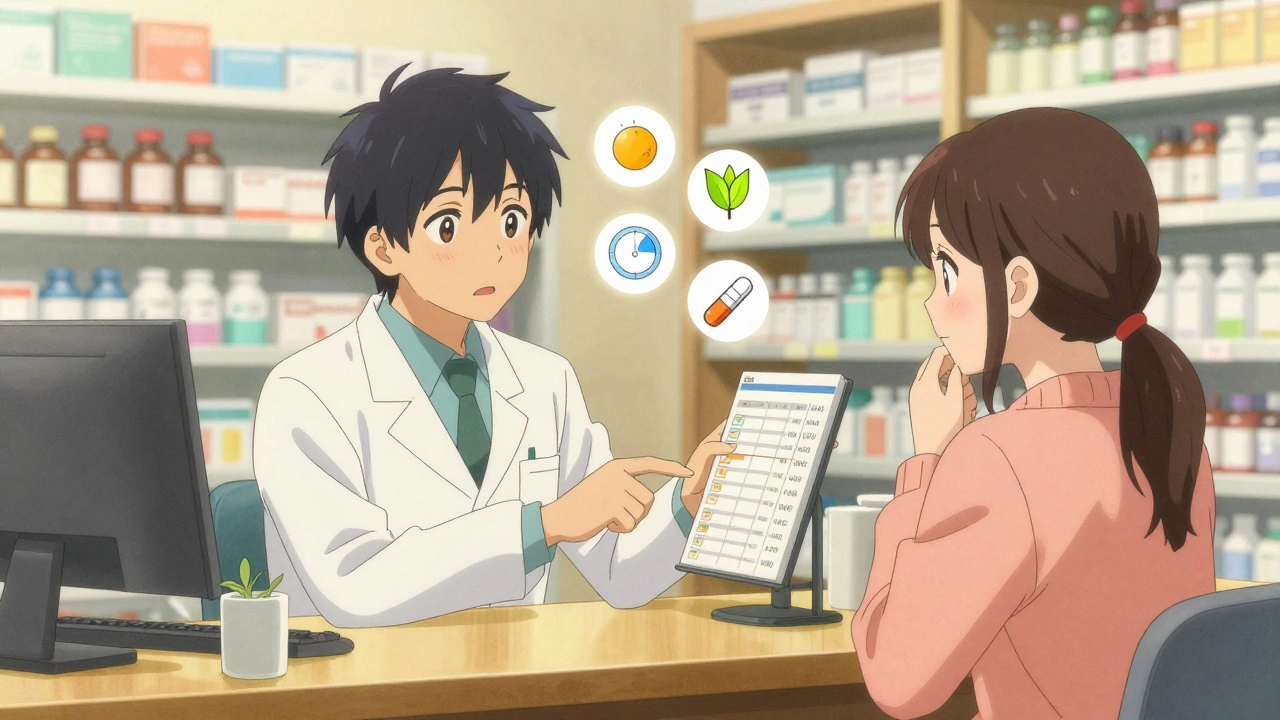
One study showed that when pharmacists worked directly with patients to manage side effects, adherence jumped from 73.9% to 89.3%. That’s not a small gain - that’s life-changing. How? They didn’t just hand out flyers. They listened.
Here’s what actually works:
- Face-to-face check-ins - Patients who met with a pharmacist in person had an 83% success rate in sticking to their meds. That’s higher than any other method.
- Adjusting the dose or timing - If a drug causes drowsiness, taking it at night instead of morning can make all the difference.
- Switching medications - Not every statin causes muscle pain. Not every antidepressant causes weight gain. There are often alternatives.
- Reducing pill burden - If you’re taking eight pills a day, you’re more likely to mess up. Combining meds into one pill or reducing frequency helps.
- Cost transparency - If you can’t afford your meds, you won’t take them. Pharmacists can find generic options, coupons, or patient assistance programs.
One patient, 68, was taking five different pills for heart disease and diabetes. He kept skipping his blood pressure med because it made him dizzy. His pharmacist found he was taking it on an empty stomach. Switching to after breakfast, adding a small snack, and lowering the dose by 25% eliminated the dizziness. He’s been on track for 14 months.
Why Your Doctor Might Not Know You’re Struggling
Doctors have 15-minute appointments. They’re focused on lab results, not how you felt after taking your pill yesterday. They rarely ask, “How are you feeling on this med?” or “Are you having any side effects you didn’t mention?”
Patients don’t bring it up because they think it’s expected. “Everyone feels weird at first,” they tell themselves. Or they worry their doctor will think they’re noncompliant. Or they’re ashamed.
But here’s the truth: side effects are not a sign of failure. They’re a signal. And if you’re not telling your care team, you’re not getting the help you need.
Next time you see your doctor, say this: “I’ve been having [specific side effect] since I started [medication]. I’m worried it’s making things worse. Can we talk about options?” That’s not complaining - that’s being an active partner in your care.
What You Can Do Right Now
You don’t have to wait for a doctor’s appointment to take control. Here’s what to do today:
- Write down every side effect - Even small ones. Nausea after lunch? Headache at 3 p.m.? Write it down. Date it. Note the time and what you ate.
- Don’t stop cold - Stopping suddenly can be dangerous. Talk to your pharmacist or doctor first.
- Ask your pharmacist - They’re the medication experts. They know alternatives, interactions, and timing tricks. Go to the counter and say, “I’m having trouble with this pill. Can we talk?”
- Check if you can combine pills - Some meds come in combo packs. One pill instead of three makes adherence easier.
- Use a free app - Apps like Medisafe or MyTherapy track doses and side effects and can send summaries to your care team.
And if you’re on Medicare, know this: plans with higher adherence scores get better Star Ratings. That means better coverage, lower costs, and more support. Your adherence isn’t just about you - it’s about the system working better for everyone.

It’s Not About Willpower - It’s About Design
Healthcare systems are still built around the idea that patients should just follow orders. But human beings aren’t robots. We forget. We feel bad. We get scared. We’re overwhelmed.
The solution isn’t to shame people into compliance. It’s to design care that works with human behavior. That means:
- Pharmacists being part of the care team - not just dispensers.
- Doctors asking about side effects every visit - not just when labs look bad.
- Insurance companies rewarding adherence, not just prescribing.
- Patient education that says: “Side effects are normal, but they’re not permanent. Let’s fix them.”
The goal isn’t perfection. It’s progress. One day at a time. One side effect managed. One pill taken. You don’t have to love your meds. You just need to know you’re not alone in struggling with them - and that help is available.
Why do people stop taking their medications even when they know it’s important?
Many stop because of side effects - dizziness, nausea, fatigue, or anxiety - that make them feel worse than before. They assume the medicine is causing the problem, not helping. Fear, lack of communication with providers, and not knowing there are alternatives also play big roles. It’s not laziness - it’s a response to real, uncomfortable experiences.
Can side effects be managed without stopping the medication?
Yes, often. Many side effects can be reduced by changing the time of day you take the pill, adjusting the dose, taking it with food, or switching to a similar but better-tolerated drug. For example, a statin causing muscle pain might be replaced with another statin or a non-statin cholesterol drug. A pharmacist can help find these options.
How do I know if my side effects are serious enough to call my doctor?
Call your doctor if you have chest pain, trouble breathing, swelling in your face or throat, severe rash, confusion, or sudden weakness. For milder side effects - like mild nausea or fatigue - track them for a week. If they don’t improve, or if they’re affecting your daily life, talk to your pharmacist or doctor. Don’t wait until it’s an emergency.
Are there free or low-cost ways to get help with medication adherence?
Yes. Many pharmacies offer free medication therapy management (MTM) services, especially for Medicare beneficiaries. Pharmacists can review all your meds, check for interactions, and help manage side effects at no extra cost. Apps like Medisafe and MyTherapy are free and can track doses and side effects. Patient assistance programs from drug manufacturers can also lower costs.
Why do pharmacists play such a big role in improving adherence?
Pharmacists see your full medication list, know how drugs interact, and are trained to spot side effects. They’re more accessible than doctors and spend more time with patients. Studies show pharmacist-led interventions - especially face-to-face - boost adherence by up to 40%. They don’t just hand out pills; they help you live with them.
What Comes Next: The Future of Adherence
The future isn’t about more reminders. It’s about smarter care. AI tools are starting to predict who’s at risk of stopping based on their side effect reports, refill patterns, and even social factors. Some systems now flag patients who haven’t refilled a prescription in 30 days and automatically connect them with a pharmacist.
More insurers are paying providers based on how well patients stick to their meds - not just how many prescriptions are written. That’s changing the game. It’s no longer enough to prescribe. You have to support.
And patients? They’re demanding it. More people are asking: “Can we make this easier?” “Can we try something else?” “Why does this have to be so hard?”
The answer is: it doesn’t have to be. You don’t have to suffer through side effects to stay healthy. You just need to speak up - and know that help is waiting.


bro i just skip my meds when i feel like crap lol who has time for this? 🤷♂️