
Every time you pick up a prescription, you’re holding a piece of your health in your hands. But how much of it do you really understand? Prescription labels aren’t just stickers with a name and number-they’re your safety net. And if you don’t ask the right questions, you could be taking your medicine wrong, storing it incorrectly, or missing critical warnings that could lead to serious side effects or even hospitalization.
In 2023, over 1.3 million medication errors happened in the U.S. alone. Nearly 22% of those were directly tied to confusion over prescription labels. That’s not a small number. That’s someone’s parent, sibling, or neighbor getting sick because they didn’t know their pill needed to be kept cold, or that it shouldn’t be taken with grapefruit juice. The good news? You can stop this before it starts. All it takes is asking a few simple questions at the pharmacy counter.
What’s the exact name of this medicine?
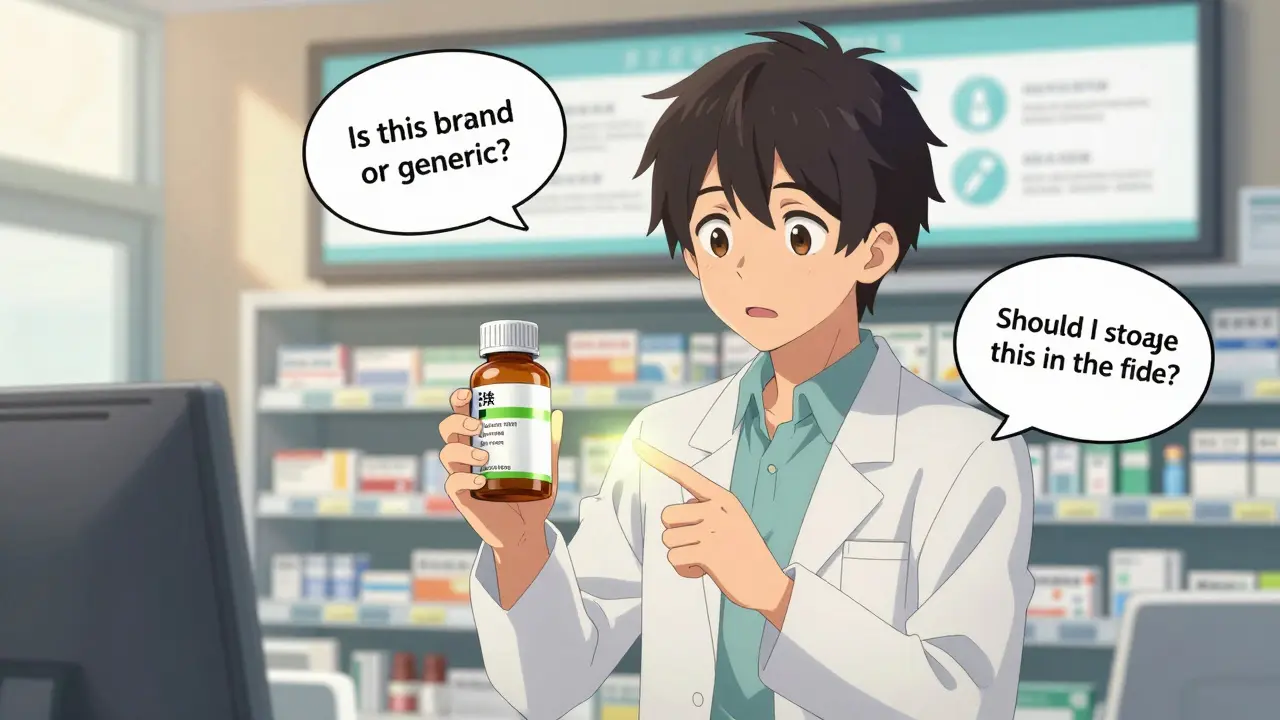
Pharmacies often list both the brand name and the generic name on the label. But here’s the catch: they might not always make it obvious. You might think you’re getting "Lipitor," but the label says "atorvastatin." If you’ve been told before that a brand name works better for you-or you had a bad reaction to a generic before-you need to know what you’re actually getting.
Ask: "Is this the brand or generic version?" and "Does it look the same as my last refill?" If the color, shape, or markings are different, don’t assume it’s a mistake. Ask for confirmation. Some patients have ended up on the wrong drug because they didn’t notice the change.
How and when should I take this?
Directions like "take one by mouth daily" sound simple. But what does "daily" mean? Morning? Night? With food? On an empty stomach? The difference matters. Some antibiotics can’t be taken with dairy. Blood pressure pills work best when taken at the same time every day. And certain medications, like thyroid drugs, need to be taken 30 minutes before eating.
Ask: "Should I take this with food or without?" and "Is there a specific time of day that’s best?" If the label says "take as directed," press for details. Your pharmacist has seen this drug used in thousands of cases. They can tell you what works best in real life-not just what’s written in the manual.
What are the side effects I should watch for?
Most labels list side effects in tiny print. You might see "dizziness, nausea, headache" and think, "Eh, I’ll be fine." But some side effects are red flags. For example, if you’re on an opioid and start feeling unusually sleepy or confused, that’s not normal fatigue-it could be a sign of overdose. If you’re on blood thinners and notice unusual bruising or bleeding, that’s urgent.
Ask: "What are the warning signs I should call my doctor about?" and "Are there any side effects that mean I should stop taking this immediately?" The FDA requires Medication Guides for 107 high-risk drugs-including opioids, blood thinners, and certain diabetes meds. If you weren’t given one, ask for it. These guides are written in plain language and explain exactly what to watch for.
Does this interact with anything I’m already taking?
You might not think your daily vitamin or herbal tea matters. But that’s not true. St. John’s Wort can make birth control fail. Grapefruit can turn a cholesterol pill into a dangerous overdose. Even common painkillers like ibuprofen can raise your blood pressure if you’re on certain heart meds.
Ask: "Will this interact with my other medicines, supplements, or even alcohol?" Bring a list of everything you take-including over-the-counter pills, vitamins, and herbal products. Pharmacists are trained to catch these interactions. In fact, pharmacies in Australia and parts of Europe now use automated systems that flag potential conflicts before the prescription is even filled. In the U.S., many independent pharmacies do this manually. Don’t assume they already know what you’re on. Tell them.
How should I store this medicine?
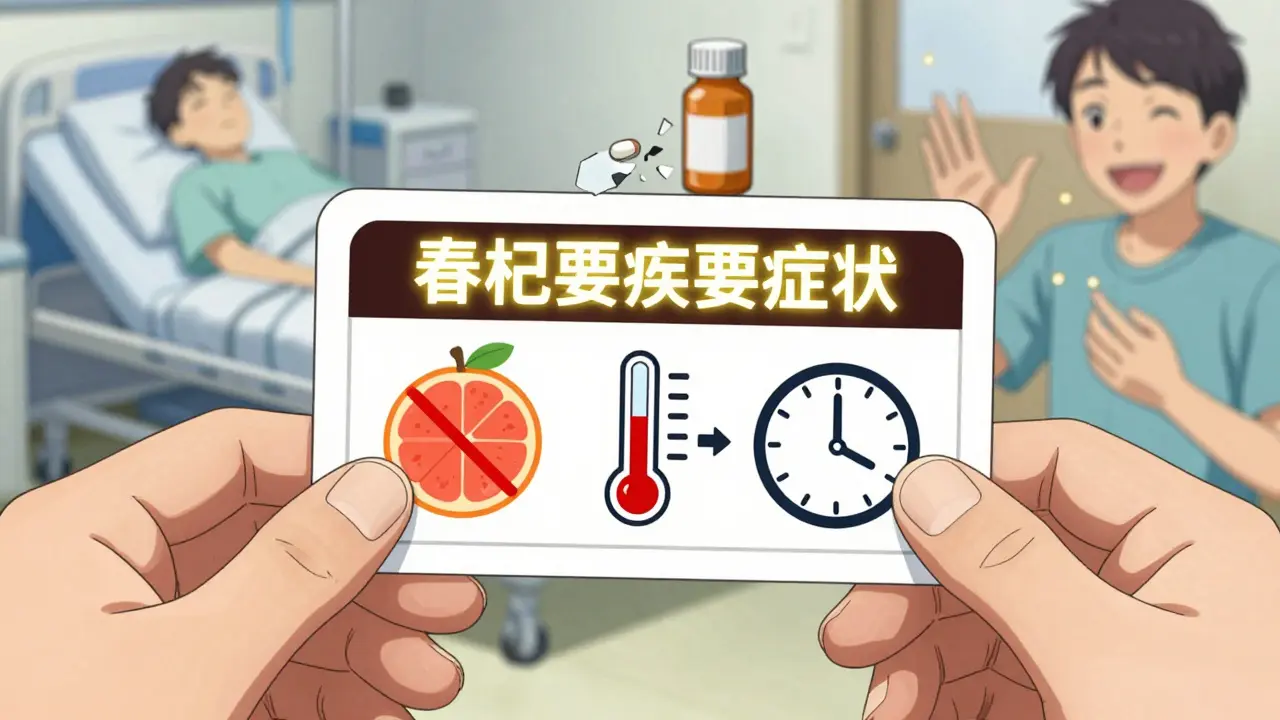
Most people keep all their pills in a bathroom cabinet. That’s fine for aspirin. But not for insulin, some antibiotics, or even certain asthma inhalers. The FDA says 15% of prescription drugs need refrigeration. If you store them at room temperature, they can lose potency-or even become harmful.
Ask: "Does this need to be kept cold?" and "What happens if it gets too hot or too cold?" One patient in Melbourne told her story on Reddit: she kept her insulin at room temperature for two weeks because the tiny print on the label said "store below 77°F" and she assumed that meant "room temperature." Her blood sugar spiked. She ended up in the ER. That’s preventable. Always ask.
How many refills do I have left?
It sounds basic, but pharmacies sometimes mess this up. A refill might say "4" on the label, but your doctor only approved three. Or worse-they might say "no refills" when you were expecting one. If you run out early, you might skip doses. If you think you have refills but don’t, you might try to stretch your pills.
Ask: "How many refills are left?" and "When do I need to get a new prescription?" If you’re on a long-term medication like a blood pressure pill, ask if your doctor can send a new prescription ahead of time. That way, you won’t be caught off guard.
What if I miss a dose?
Life happens. You oversleep. You forget. You travel and leave your pills behind. What should you do? Take it right away? Wait until tomorrow? Double up? The answer depends on the drug. Some medications, like birth control pills, require you to take the missed dose within 12 hours. Others, like blood pressure meds, are safer if you skip the missed dose entirely.
Ask: "What should I do if I miss a dose?" This is one of the most common questions pharmacists hear-and they appreciate you asking. It shows you care about doing it right.
Can I get a larger-print label or audio instructions?
One in four Americans over 65 has trouble reading small print. Nearly 1 in 3 adults in the U.S. struggle with basic health literacy. If the label is too small to read, you’re not alone. But you don’t have to guess.
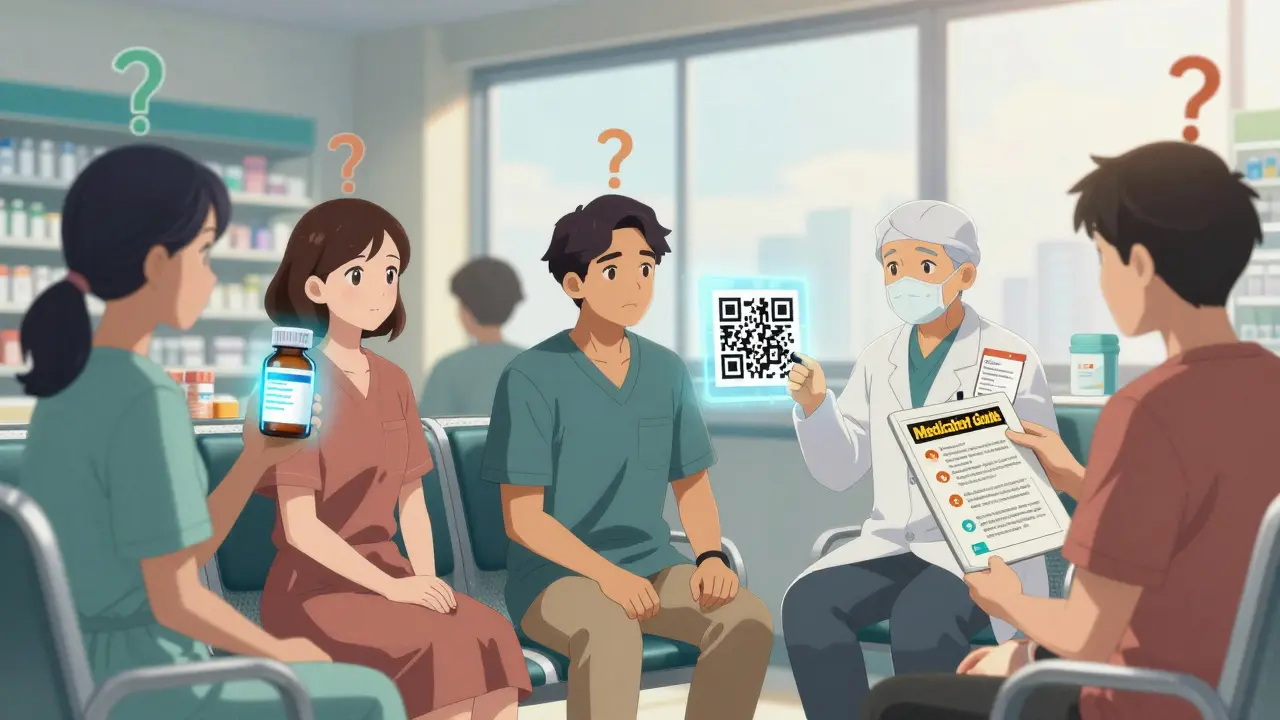
Ask: "Can I get a large-print version?" or "Do you have audio instructions or a QR code I can scan?" More than 90% of U.S. pharmacies now offer large-print labels. Some even have QR codes that link to video instructions in plain language. In 2023, Walgreens and CVS began rolling out augmented reality labels that show dosage instructions on your phone screen when you point the camera at the bottle. You can request these features even if you’re not elderly. If you’re dyslexic, have low vision, or just find medical jargon confusing, ask for help. It’s your right.
Is there a cheaper way to get this?
Prescription costs are rising. In 2023, the average cost of a 30-day supply of a brand-name drug was over $150. But many generics cost less than $10. Some pharmacies offer discount programs. Medicare Part D has coverage gaps. And sometimes, your insurance won’t cover a certain brand-but will cover the generic.
Ask: "Is there a generic version available?" and "Do you have a discount program for this?" Some pharmacies offer $4 generic lists. Others partner with nonprofits to help people pay for high-cost drugs. If you’re on a fixed income or struggling to afford your meds, say so. Pharmacists aren’t just dispensers-they’re advocates.
What happens if I don’t take this as directed?
This is the question no one asks. But it’s the most important. If you skip doses, take too much, or stop early, what are the consequences? For antibiotics, stopping early can lead to drug-resistant infections. For antidepressants, quitting suddenly can cause withdrawal symptoms. For diabetes meds, missing doses can cause long-term nerve or kidney damage.
Ask: "What happens if I don’t take this exactly as prescribed?" This isn’t about guilt. It’s about awareness. Understanding the risk helps you stick with the plan. And if you’re having trouble taking your medicine-because it’s too expensive, too complicated, or makes you feel bad-say so. Your pharmacist can help you find a better solution.
Why does this label look different from last time?
Every pharmacy has its own label format. One might put the drug name in bold. Another might bury the refill info on the back. One might use "QD" for daily. Another spells it out as "once daily." This inconsistency is a major problem. A 2021 study found U.S. patients understood only 42% of their labels. In Germany, where labels are standardized, it was 63%.
Ask: "Why does this label look different from my last refill?" If you notice changes in font, layout, or wording, don’t assume it’s just branding. Ask if anything about the drug or instructions changed. Sometimes, the dosage changed. Sometimes, the manufacturer switched. You need to know.
Final tip: Say it back
The best way to make sure you understood? Repeat it. Say: "So, I take one pill every morning with food, don’t drink grapefruit juice, store it in the fridge, and call if I get dizzy or notice bruising. Is that right?"
Studies show patients who repeat instructions back to their pharmacist reduce medication errors by up to 58%. That’s not magic. That’s clarity. You’re not being annoying. You’re being smart.
Pharmacists don’t expect you to know everything. They expect you to ask. And the more you ask, the safer you stay.
What are the nine mandatory parts of a prescription label?
Every prescription label in the U.S. must include: patient name, prescriber name, drug name (brand and generic), strength, dosage form, quantity, directions for use, number of refills, and pharmacy contact information. These are required by the National Association of Boards of Pharmacy to ensure safety and consistency.
Can I ask for a printed Medication Guide?
Yes. The FDA requires pharmacies to provide a Medication Guide for 107 high-risk drugs, including opioids, blood thinners, and certain diabetes medications. These guides explain risks, side effects, and what to do in emergencies in plain language. If you weren’t given one, ask for it. You have the right to receive it.
Why do some labels use abbreviations like "QD" or "BID"?
Abbreviations like QD (once daily) or BID (twice daily) come from Latin terms used in medical practice. But they’re confusing to patients. Many pharmacies now spell them out. If you see an abbreviation you don’t understand, ask what it means. You shouldn’t have to guess.
What should I do if I think my label is wrong?
Don’t take the medicine. Call the pharmacy immediately. Ask them to double-check the prescription with your doctor. Most errors happen because of miscommunication between doctor and pharmacy-not because the pharmacist made a mistake. If you’re unsure, ask to speak with the pharmacist on duty. They’re trained to catch these issues.
Do I need to ask these questions every time I refill?
Yes. Even if you’ve taken the same drug for years, the label might change. The manufacturer might switch. The dosage might be adjusted. The storage instructions might update. Always verify. It takes two minutes. That’s less time than it takes to check your phone.


I legit thought my pharmacist knew what I was on until I forgot to mention my turmeric supplement. Bro, that stuff interferes with blood thinners. I almost ended up in the ER. Now I bring a list. Like, a physical list. On paper. With highlighters. And I ask the same questions every time. Even if it’s the same pill. Always. Always. Always.