
Blocked Heart Arteries: Causes, Risks, and What You Can Do
When blocked heart arteries, a condition where fatty deposits narrow or clog the vessels that supply blood to the heart. Also known as coronary artery disease, it happens slowly over years and often shows no warning signs until it’s too late. This isn’t just about high cholesterol—it’s about inflammation, lifestyle, and how your body handles fat, sugar, and stress over time.
Behind every case of blocked heart arteries is atherosclerosis, the process where plaque—made of cholesterol, calcium, and immune cells—builds up inside artery walls. That plaque doesn’t just sit there. It can crack, trigger blood clots, and suddenly cut off blood flow to your heart. That’s when you get a heart attack. People with high blood pressure, diabetes, or who smoke are at higher risk, but even healthy-looking people can develop this if they’re sedentary or eat too much processed food.
What’s often missed is how plaque buildup, a silent, progressive condition that can start in your 20s or 30s. isn’t always visible on a standard cholesterol test. Some people have normal LDL numbers but still have dangerous inflammation driving plaque growth. That’s why symptoms like chest tightness during exercise, shortness of breath, or unexplained fatigue shouldn’t be ignored—even if you’re young.
Medications like statins, aspirin, or blood pressure drugs can slow or even reverse some of this damage, but they work best when paired with real changes: walking daily, cutting out sugary drinks, sleeping well, and managing stress. You don’t need a perfect diet—you need consistency. And if you’ve been told your arteries are clogged, knowing what to ask your doctor—about calcium scans, stress tests, or newer lipid therapies—can make all the difference.
Below, you’ll find practical guides on how medications interact with your heart health, what to watch for when switching prescriptions, how to avoid dangerous drug combinations, and how to spot early signs of trouble before it becomes an emergency. These aren’t theory pieces—they’re real-world advice from people who’ve been there, and the doctors who help them manage it every day.
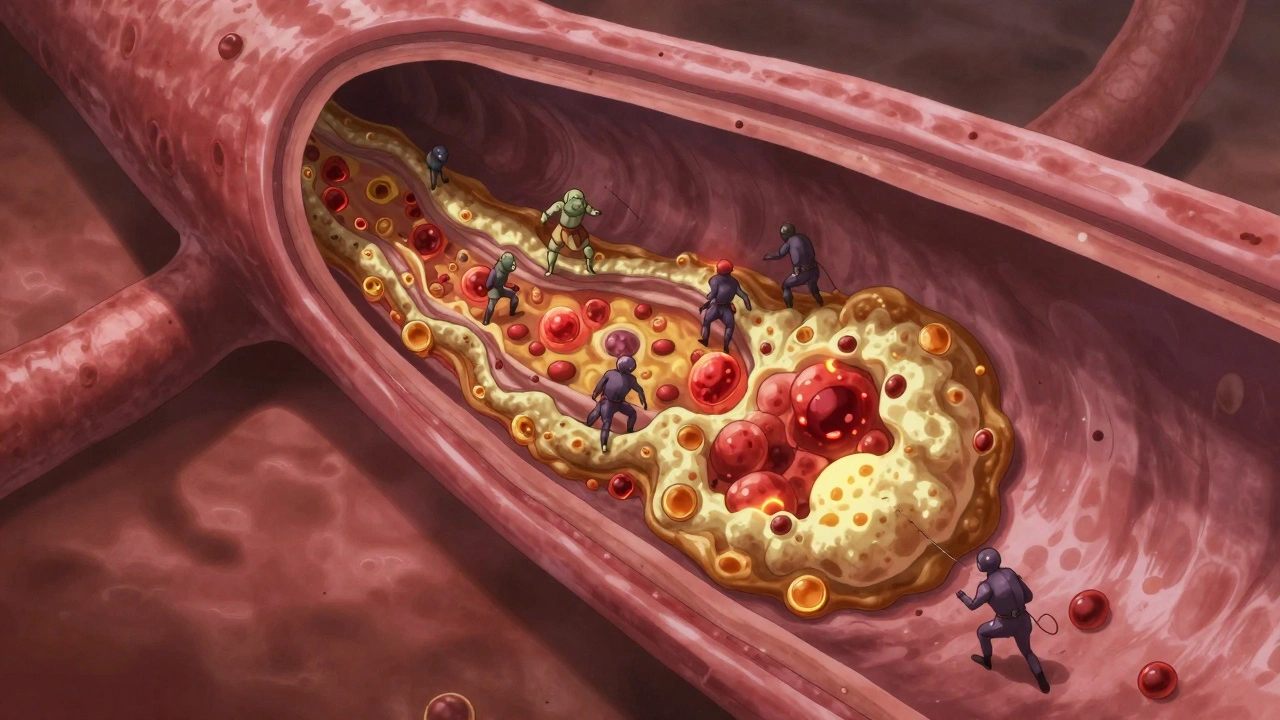
Coronary Artery Disease: Understanding Atherosclerosis, Risk Factors, and Treatments
Coronary artery disease, caused by atherosclerosis, is the world's leading cause of death. Learn how plaque forms, who's at risk, and what treatments actually work-from lifestyle changes to stents and bypass surgery.
More Detail