
Child-Resistant Caps: What They Are, Why They Matter, and How They Keep Kids Safe
When you open a bottle of pills, the child-resistant caps, specialized closures designed to prevent young children from accessing medications. Also known as childproof caps, they’re required by law for most prescription and many over-the-counter drugs in the U.S. and other developed countries. But they’re not foolproof—and understanding how they actually work can make all the difference in keeping your home safe.
These caps aren’t just tighter lids. They’re engineered with mechanisms like push-and-turn, squeeze-and-turn, or dual-action releases that are easy for adults with normal dexterity but nearly impossible for small hands. The FDA requires them to be effective for at least 85% of children under five in lab tests. Yet, no cap stops a determined 6-year-old who’s watched an adult open a bottle a dozen times. That’s why medication safety, the broader practice of securing drugs to prevent accidental ingestion goes beyond the cap. It’s about storing bottles up high, out of sight, and never leaving them on counters—even for a second. And it’s why drug packaging, the design and structure of medicine containers that include caps, labels, and blister packs keeps evolving. New designs now include tactile cues, color contrasts, and even smart sensors that alert caregivers if a bottle is opened unexpectedly.
Not every pill bottle has these caps. Some medications, like nitroglycerin for heart patients, are exempt because they need to be accessed quickly in emergencies. Others, like certain inhalers or liquid suspensions, use different safety features altogether. That’s why reading the label matters—not just for dosage, but for safety warnings. A cap that works for aspirin might not work for liquid antibiotics, and a bottle that’s child-resistant today might be replaced with a different design next year. prescription safety, the system of practices and regulations designed to prevent medication errors and accidental poisonings isn’t just about the cap. It’s about awareness, habits, and knowing that even one unsecured bottle can lead to a trip to the ER.
Below, you’ll find real stories and facts from people who’ve dealt with accidental ingestions, pharmacists who’ve seen the same mistakes over and over, and experts who’ve tested these caps in labs. You’ll learn which drugs still don’t have child-resistant packaging, why some families skip the safety feature altogether, and how to spot a cap that’s broken or worn out. This isn’t theory—it’s what happens when safety measures meet real life.
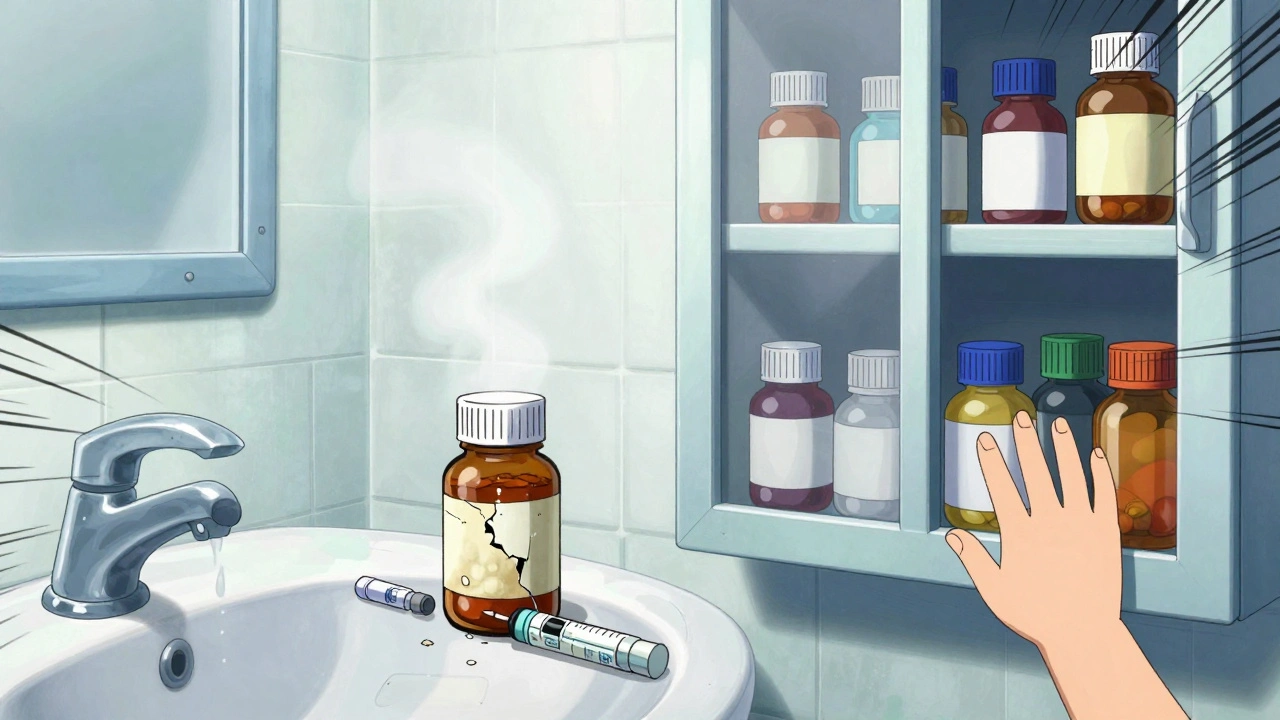
Medication Storage and Authenticity: How to Protect Your Home Supply from Counterfeits and Accidents
Learn how to store medications safely at home to prevent accidental poisonings, teen misuse, and counterfeit drugs. Discover the best storage practices, temperature rules, and disposal methods backed by health authorities.
More Detail