
Coronary Artery Disease: Causes, Risks, and Medication Management
When your coronary artery disease, a condition where plaque builds up in the arteries that feed your heart, reducing blood flow and increasing heart attack risk. It's also known as atherosclerosis, and it’s the number one killer of adults in the U.S. This isn’t just about aging—it’s about what you eat, how you move, and the meds you take every day.
Coronary artery disease doesn’t happen overnight. It’s shaped by years of high cholesterol, high blood pressure, smoking, or diabetes. But here’s what most people miss: the medications you take for other conditions can make it worse—or better. For example, NSAIDs, like ibuprofen or naproxen, used for pain or inflammation, can raise blood pressure and increase heart strain in people with existing artery blockages. Then there’s statins, the go-to drugs for lowering LDL cholesterol and slowing plaque growth. They’re not just pills—they’re life-extending tools, but only if you take them right and avoid interactions. Warfarin, antibiotics, even grapefruit juice can change how these drugs work in your body, sometimes dangerously.
People with coronary artery disease often end up on multiple meds—statins, blood thinners, beta-blockers, sometimes even diabetes drugs. That’s where things get tricky. A simple switch from brand to generic, or mixing a new antibiotic with your usual pills, can throw off your whole system. You might not feel anything until it’s too late. That’s why tracking your meds, knowing your lot numbers, and understanding drug interactions isn’t optional—it’s survival. And it’s not just about the pills. Diet, stress, sleep, even dental health can influence how your arteries behave over time.
Below, you’ll find real, practical guides on exactly how to manage this condition without guesswork. From how NSAIDs can quietly hurt your heart, to why switching to a generic statin might save your life—or cost you more than you think. You’ll see how grapefruit can mess with your meds, why some people need to avoid certain painkillers, and how to spot a dangerous interaction before it hits you. No fluff. No theory. Just what works when your heart is on the line.
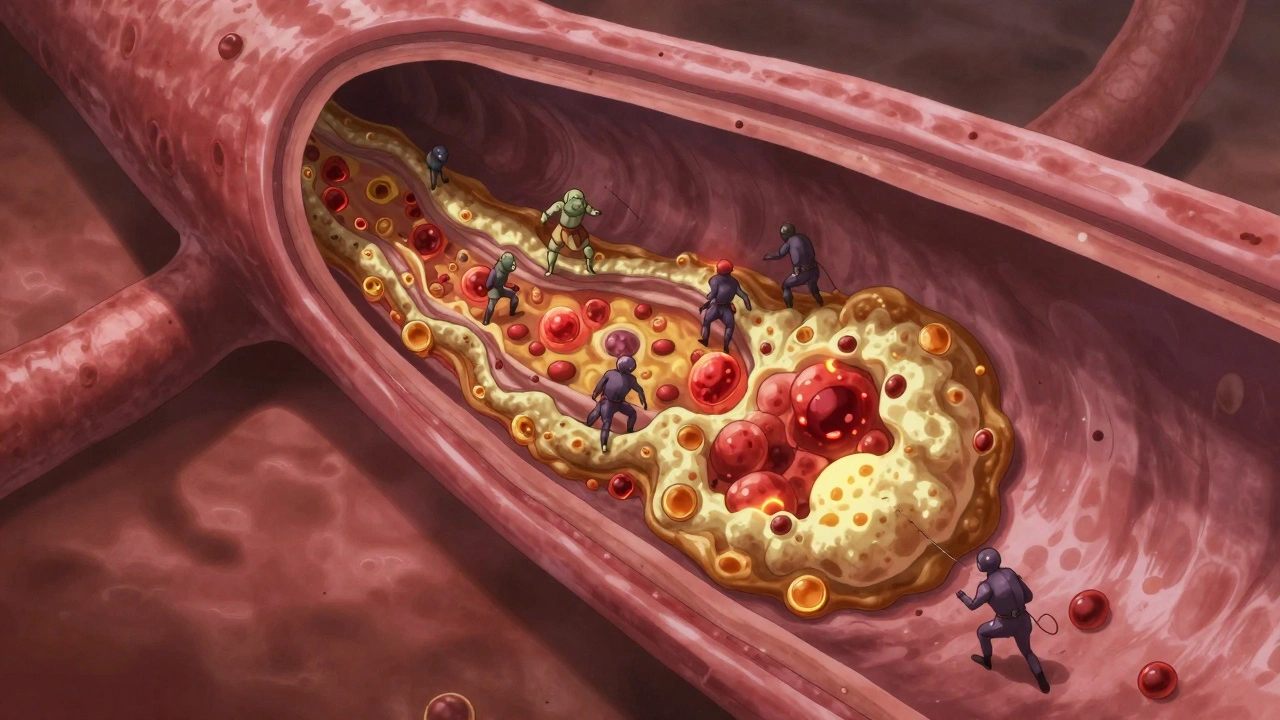
Coronary Artery Disease: Understanding Atherosclerosis, Risk Factors, and Treatments
Coronary artery disease, caused by atherosclerosis, is the world's leading cause of death. Learn how plaque forms, who's at risk, and what treatments actually work-from lifestyle changes to stents and bypass surgery.
More Detail