
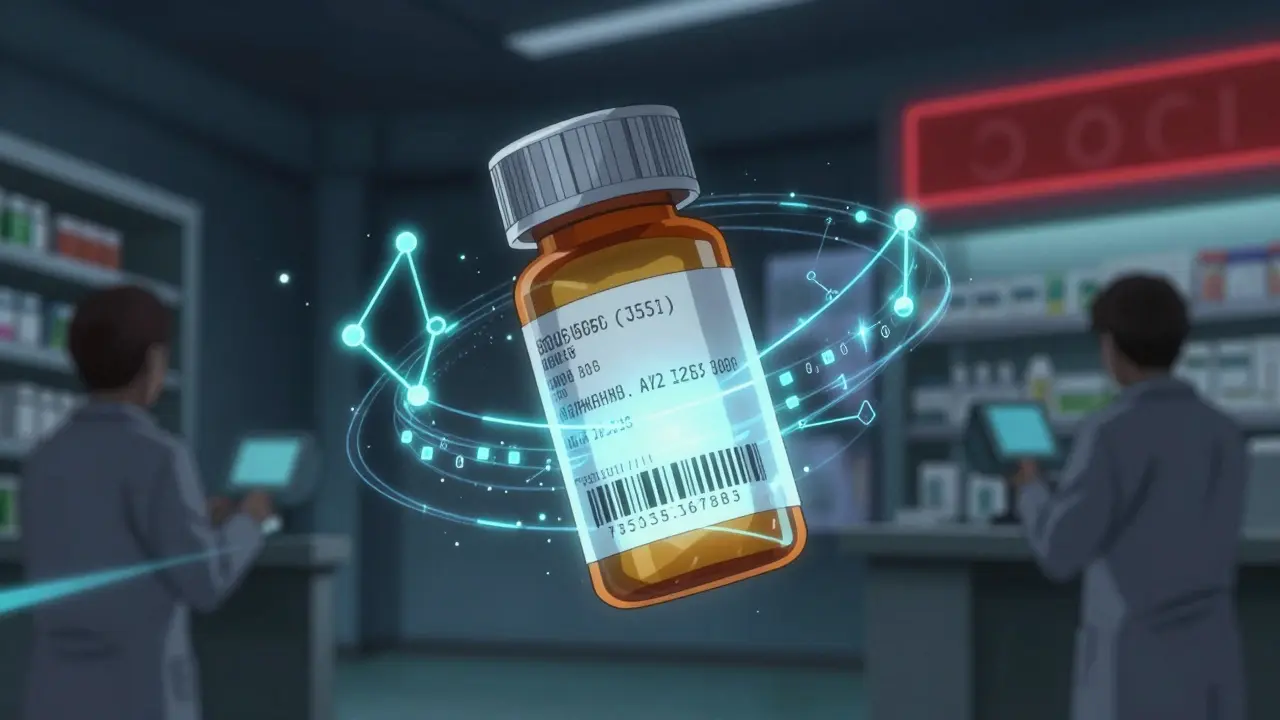
The U.S. pharmaceutical supply chain handles over 5 billion prescription drug transactions every year. That’s a lot of pills, vials, and boxes moving through manufacturers, wholesalers, and pharmacies. And for years, there was no reliable way to tell if a drug was real - or if it was a dangerous fake made in an unlicensed lab halfway across the world. That changed with the DSCSA - the Drug Supply Chain Security Act. Signed into law in 2013, this federal rule is now the backbone of the fight against counterfeit drugs in America. By November 27, 2024, every single prescription drug package must carry a unique digital fingerprint. If a drug doesn’t have it, it can’t be sold. This isn’t just bureaucracy. It’s a lifeline for patients.
What the DSCSA Actually Does
The DSCSA doesn’t just add paperwork. It forces every company in the drug supply chain - from big manufacturers to your local pharmacy - to track each drug package electronically from the moment it’s made until it’s handed to you. Before DSCSA, tracing a drug meant flipping through paper logs or calling suppliers. Now, it’s done in seconds using a digital system that checks the product’s serial number, lot number, expiration date, and National Drug Code (NDC) against a secure database.
Each package gets a unique 20-character serial number - a mix of letters and numbers - printed in both human-readable text and a machine-scannable barcode. That’s not optional. If your insulin bottle doesn’t have it, the pharmacy can’t accept it. The system also requires three key pieces of data to move with each shipment: Transaction Information (what the drug is), Transaction History (who handled it before), and Transaction Statement (a legal certification that it’s legitimate). No paper. No guesswork. Just verified data.
Why This Matters: Real Risks, Real Consequences
Counterfeit drugs aren’t a hypothetical threat. In 2021, the FDA found fake versions of cancer drugs, blood pressure pills, and even erectile dysfunction medications in U.S. supply chains. Some had no active ingredient. Others had too much. One batch of fake metformin contained a toxic chemical linked to kidney damage. Patients didn’t know. They just felt worse.
The DSCSA cuts that risk by over 90%, according to FDA estimates. Why? Because every time a drug changes hands, its digital identity is checked. If a package doesn’t match the manufacturer’s record, the system flags it. That’s how CVS Health reduced suspect product investigations by 75% after upgrading their systems. It’s also how McKesson now processes over 1.2 billion serialized transactions a year with 99.98% accuracy.
But it’s not just about fakes. The system also stops stolen drugs from being resold and prevents diverted medications - like opioids meant for hospitals - from ending up on the black market. Before DSCSA, a stolen shipment of painkillers could be repackaged and sold to a pharmacy with no way to trace where it came from. Now, the serial number doesn’t match the original record. The system knows. And it stops it.
How It’s Different From Other Countries
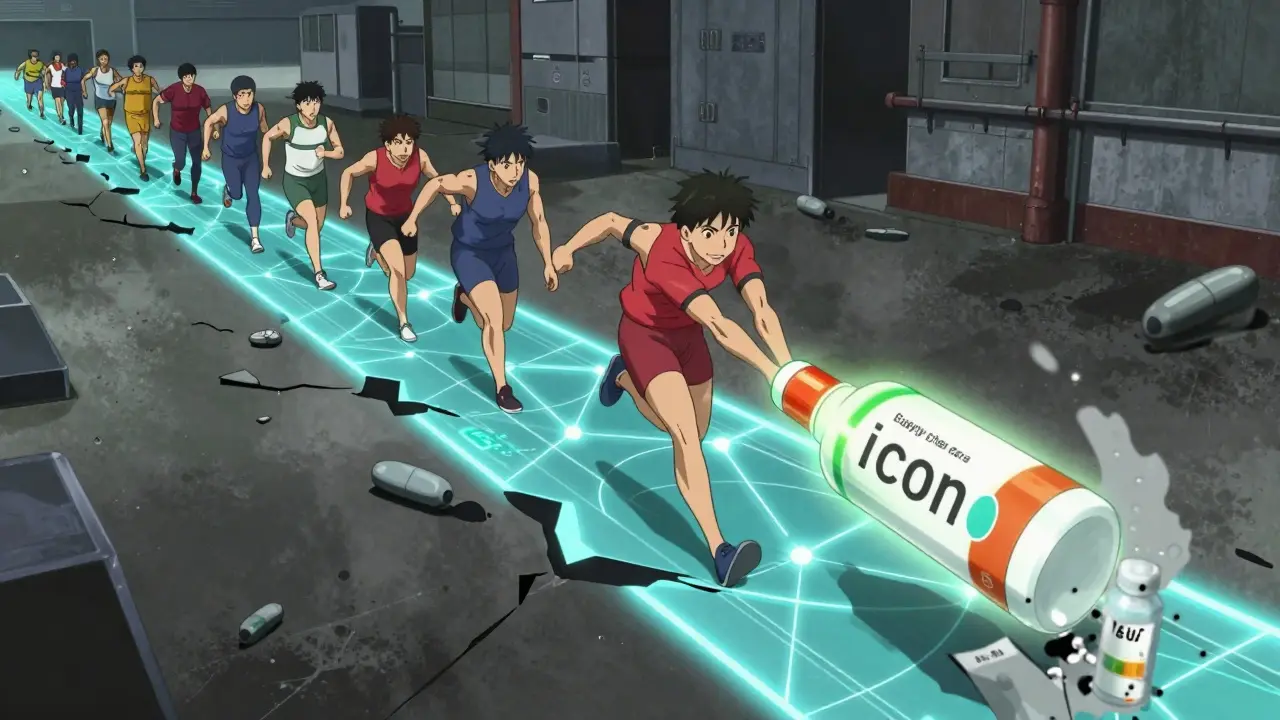
Europe has its own system - the Falsified Medicines Directive (FMD). It’s similar, but not the same. The EU requires anti-tamper seals and a central database where every drug’s serial number is stored. The U.S. doesn’t have that central database. Instead, DSCSA relies on trading partners sharing data directly with each other. Think of it like a relay race: each runner passes the baton with verified info, but no one person holds the whole race record.
This design choice was intentional. The U.S. supply chain is huge, complex, and run by hundreds of private companies. A single government database would be a massive target for hackers and a logistical nightmare to build. The DSCSA’s decentralized model gives flexibility but demands perfect coordination. That’s where things get messy.
The Big Hurdles: Data Mismatches and System Chaos
Here’s the truth: the system isn’t flawless. Even with a 2024 deadline looming, many pharmacies and distributors are still struggling. The biggest problem? Data mismatches. A manufacturer sends a box with serial number ABC123. The wholesaler’s system reads it as ABC124. Or the expiration date is entered as 12/2025 instead of 12/25. These tiny errors trigger verification failures. The drug gets stuck in limbo. No one can sell it. No one can return it. Patients wait.
Smaller pharmacies are hit hardest. A 2023 survey by the National Community Pharmacists Association found 68% of independent pharmacies called DSCSA compliance their top tech challenge. The average cost? Around $185,000. That’s not just software - it’s new scanners, staff training, IT support, and system integration. Walgreens spent $120 million just on upgrades between 2021 and 2022. For a small town pharmacy, that’s a year’s profit.
And the software market? It’s a mess. Over 40 vendors sell DSCSA-compliant systems. TraceLink, SAP, and Oracle dominate, but many smaller tools don’t talk to each other. A pharmacy using one vendor might not be able to verify a shipment from a wholesaler using another. That’s why the FDA gave a one-year “stabilization period” after the deadline - to let everyone fix glitches without shutting down the supply chain.
Who’s Doing It Right?
Some companies didn’t wait for the deadline. CVS Health automated their verification process. Now, if a package is flagged as suspect, their system pulls up the manufacturer’s data, checks the serial number, and flags the issue in under 30 seconds. No human review needed. That’s how they cut investigations by 75%.
McKesson, one of the largest distributors, built their own system from the ground up. They now handle over a billion transactions a year with near-perfect accuracy. Their secret? Aggregation. Instead of tracking every single pill, they track cases, pallets, and individual units - all linked together. That way, if a problem pops up, they can recall just one batch of 500 bottles instead of 500,000.
Manufacturers like Pfizer and Merck have been serializing drugs since 2017. Their systems are mature. Their data is clean. They’ve turned compliance into a competitive advantage. Hospitals and pharmacies that trust them know they’re getting real drugs - every time.
What Happens After November 2024?
The big deadline is November 27, 2024. After that, the FDA says enforcement will ramp up. No more grace periods. No more excuses. If your system can’t verify a drug, you can’t handle it. But the work doesn’t stop there.
FDA Commissioner Dr. Robert Califf has hinted that the system could expand to over-the-counter drugs - especially high-risk ones like insulin, asthma inhalers, or heart medications sold without a prescription. Imagine a fake nicotine patch causing a heart attack. That’s the next frontier.
Long-term, experts predict DSCSA will save the U.S. healthcare system $2.3 billion a year by cutting down on costly recalls, reducing drug diversion, and preventing patient harm. It’s not just about stopping fakes. It’s about making the entire system smarter, faster, and safer.
What You Can Do
As a patient, you don’t need to scan barcodes or check serial numbers. That’s the pharmacy’s job. But you can stay alert. If a pill looks different - wrong color, shape, or taste - ask your pharmacist. If you bought medication online and it arrived in a plain box with no label, be suspicious. Legitimate U.S. pharmacies don’t ship drugs that way.
And if you’re in the industry - manufacturer, distributor, or pharmacist - don’t wait. If you haven’t tested your system with your trading partners yet, do it now. If you’re still using paper logs, you’re already behind. The DSCSA isn’t going away. It’s here to stay.
What is the DSCSA deadline for full implementation?
The full implementation deadline for the Drug Supply Chain Security Act (DSCSA) is November 27, 2024. By that date, every prescription drug package in the U.S. must have a unique serialized identifier, and all trading partners must use electronic systems to verify and trace the product from manufacturer to dispenser. The FDA has granted a one-year stabilization period after this date to allow for troubleshooting, but full compliance is required.
How does DSCSA stop counterfeit drugs?
DSCSA stops counterfeit drugs by requiring every prescription drug package to carry a unique serial number, lot number, expiration date, and NDC code - all in machine-readable format. When a drug changes hands, the receiving party scans the barcode and verifies the data against the manufacturer’s official record. If the serial number doesn’t match, or if the product history is missing, the system flags it as suspect. This prevents fake, stolen, or tampered drugs from entering the legal supply chain.
What’s the difference between DSCSA and the EU’s FMD?
The EU’s Falsified Medicines Directive (FMD) uses a centralized database where every drug’s serial number is stored and checked against a national repository. DSCSA doesn’t have a central database. Instead, it relies on direct data exchange between trading partners - manufacturers, wholesalers, and pharmacies - using standardized electronic formats. FMD also requires anti-tamper seals on packaging; DSCSA does not. DSCSA focuses on traceability through data; FMD adds physical security features.
How much does DSCSA compliance cost a pharmacy?
For independent pharmacies, DSCSA compliance typically costs between $150,000 and $200,000. This includes new barcode scanners, software integration, staff training, IT support, and system upgrades. Chain pharmacies spend millions - Walgreens invested $120 million between 2021 and 2022. The cost isn’t just hardware; it’s the time and labor to fix data mismatches and train staff to handle verification failures.
What happens if a pharmacy can’t verify a drug?
If a pharmacy can’t verify a drug’s serial number or transaction data, they must quarantine it immediately and notify the supplier. The FDA requires them to investigate whether the product is suspect or illegitimate - meaning it could be counterfeit, stolen, or tampered with. They must also report the issue to the FDA. Selling or dispensing an unverified product violates DSCSA and can lead to fines, license suspension, or legal action.
Are over-the-counter drugs covered by DSCSA?
As of 2026, DSCSA only applies to prescription drugs. However, FDA Commissioner Dr. Robert Califf has publicly stated the agency is evaluating whether to extend track-and-trace requirements to certain high-risk over-the-counter medications - such as insulin pens, epinephrine auto-injectors, or asthma inhalers - especially those frequently targeted by counterfeiters. No official rule has been proposed yet, but expansion is likely in the next few years.


so basically we’re paying $185k so pharmacies can stop selling fake insulin that might have rat poison in it? honestly? worth it. 🤷♀️