
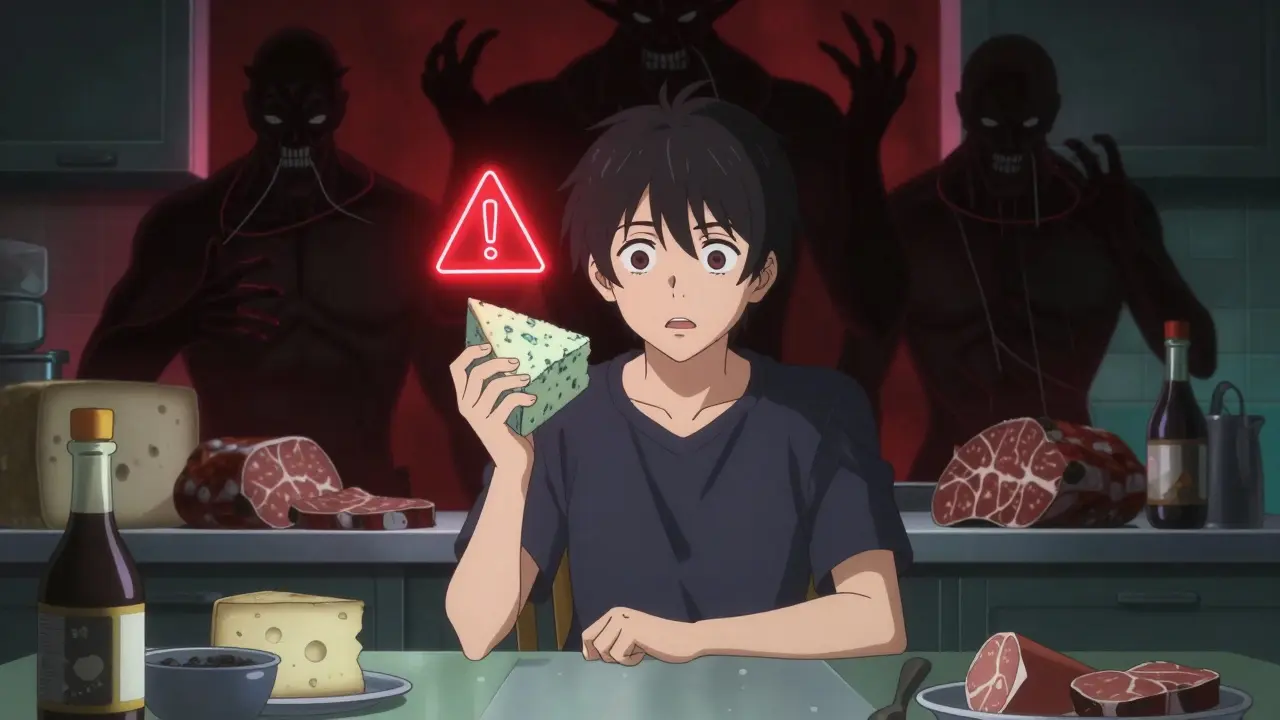
When most people think of antidepressants, they picture SSRIs like Prozac or Zoloft - pills with mild side effects and no big dietary rules. But there’s another class of antidepressants that works differently, works better for some, and comes with serious, life-altering restrictions: Monoamine Oxidase Inhibitors, or MAOIs.
MAOIs aren’t new. They were the first antidepressants ever developed, back in the 1950s. Iproniazid, originally meant for tuberculosis, accidentally lifted patients’ moods. That led to phenelzine and tranylcypromine - the first real MAOIs. Today, they’re used in less than 1% of antidepressant prescriptions in the U.S. But for the people who’ve tried five, six, or even ten other meds and still feel trapped in depression, MAOIs can be the only thing that works.
How MAOIs Actually Work
Your brain uses chemicals like serotonin, norepinephrine, and dopamine to regulate mood. These are called monoamines. Normally, an enzyme called monoamine oxidase breaks them down after they’ve done their job. MAOIs block that enzyme. That means more of these mood-lifting chemicals stick around in your brain, longer.
There are two types of this enzyme: MAO-A and MAO-B. MAO-A is the big one for depression - it handles serotonin and norepinephrine. That’s why drugs like phenelzine and tranylcypromine, which block MAO-A, work as antidepressants. MAO-B is more about movement and is targeted in Parkinson’s. Selegiline, sold as the Emsam patch, blocks MAO-B at low doses but can block MAO-A at higher ones - which is why it’s used for depression too.
Older MAOIs like phenelzine bind permanently to the enzyme. Your body has to make new enzyme molecules, which takes two weeks. Newer ones like moclobemide (available in Europe) are reversible - they let go after a while. That’s why they’re considered safer.
The Tyramine Trap: Why Your Cheese Could Be Dangerous
This is where MAOIs get scary. When MAO-A is blocked, your body can’t break down tyramine - a chemical found in aged, fermented, or spoiled foods. Normally, tyramine gets destroyed in your gut by MAO-A. But if you’re on an MAOI, it slips into your bloodstream and triggers a massive release of norepinephrine. That sends your blood pressure skyrocketing.
A hypertensive crisis isn’t just a headache. It’s a medical emergency. Systolic pressure can hit 200 mmHg or higher. Symptoms include pounding headache, chest pain, nausea, blurred vision, and in worst cases, stroke or heart attack.
So what foods are dangerous? Aged cheeses like cheddar, blue, parmesan - any cheese that’s been sitting for more than a few days. Cured meats like salami, pepperoni, and summer sausage. Tap beer, homebrew, and some wines. Soy sauce, miso, tempeh. Overripe bananas, fava beans, and even yeast extracts like Marmite. Even leftover meals stored past 48 hours can become risky.
There’s a cutoff: anything with more than 6 mg of tyramine per serving is off-limits. Fresh mozzarella, cottage cheese, and plain yogurt? Safe. Fresh chicken, fish, and vegetables? Fine. But if you’re unsure - skip it. A 2022 study found that 28% of MAOI users had at least one hypertensive episode in their first year, often from eating something they thought was harmless.
Drug Interactions: The Hidden Risks
MAOIs don’t just clash with food. They clash with other medications - sometimes fatally.
Combining an MAOI with an SSRI or SNRI can cause serotonin syndrome. That’s when your brain gets flooded with too much serotonin. Symptoms: high fever, rapid heart rate, confusion, muscle rigidity, seizures. It can be deadly. The rule? Wait at least two weeks after stopping an SSRI before starting an MAOI. And five weeks if you were on fluoxetine (Prozac), because it sticks around so long.
Even over-the-counter stuff can be dangerous. Decongestants like pseudoephedrine (Sudafed) or phenylephrine can trigger dangerous blood pressure spikes. Cough syrups with dextromethorphan? No. Painkillers like tramadol or meperidine? Absolutely not. Even some herbal supplements - St. John’s Wort, 5-HTP, L-tryptophan - can push you into serotonin syndrome.
The FDA requires a black box warning on all oral MAOIs for these exact reasons. That’s the strongest warning they give. It’s not a scare tactic. It’s a life-saving label.
Who Benefits Most - And Who Should Avoid Them
MAOIs aren’t for everyone. But for certain types of depression, they’re the gold standard.
Atypical depression - where you feel heavy, sleep too much, crave carbs, and are hypersensitive to rejection - responds better to MAOIs than SSRIs. A 2023 Lancet Psychiatry meta-analysis found MAOIs had a number needed to treat (NNT) of 4.2. That means for every 4 people treated, one will respond when others fail. SSRIs? NNT of 7.8. MAOIs are nearly twice as effective for this subtype.
People who’ve tried multiple antidepressants and still struggle? MAOIs work for 50-60% of them, according to a 2021 meta-analysis in the American Journal of Psychiatry.
But if you have heart problems, uncontrolled high blood pressure, or a history of stroke, MAOIs are usually off the table. If you’re not willing to learn a new way of eating, track every medication, and avoid risky situations - they’re not for you.
The Patch That Changed Everything: Emsam
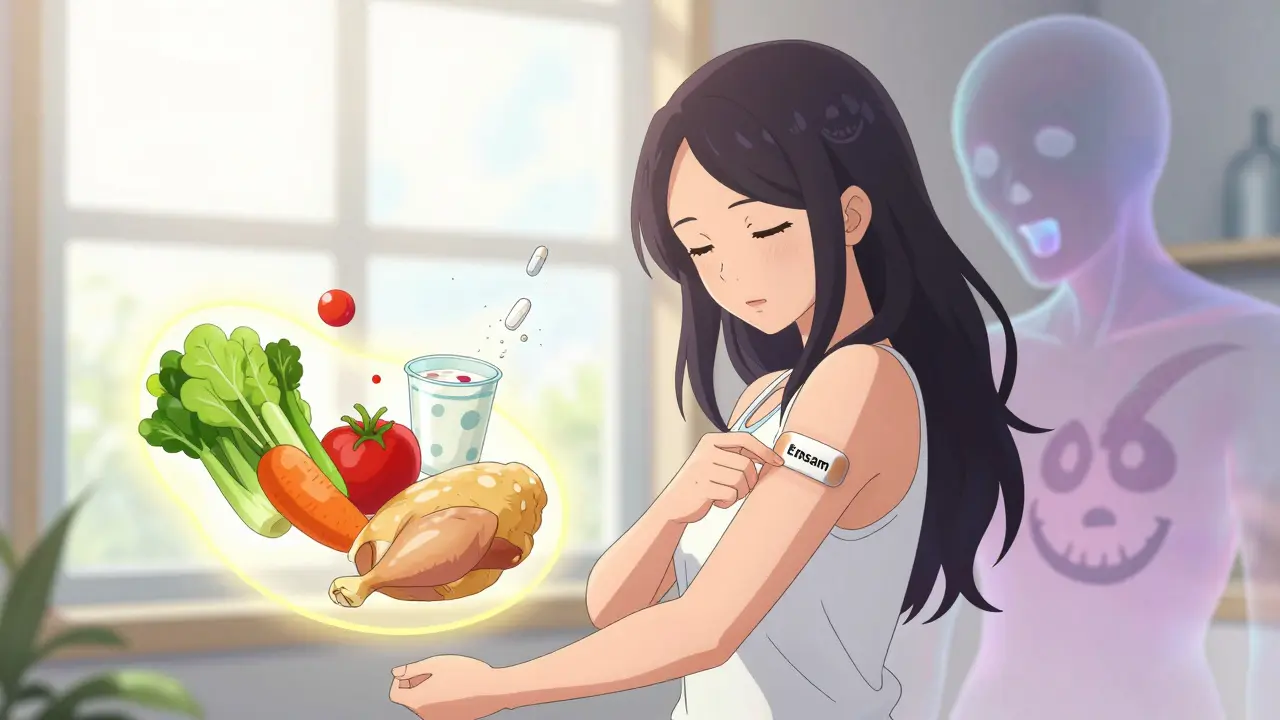
One big reason MAOIs fell out of favor? The diet. But the Emsam patch, approved in 2006, changed the game.
At the lowest dose (6 mg/24 hours), the patch delivers the drug through your skin. It doesn’t flood your gut with the drug, so tyramine can still be broken down there. That means - no diet restrictions. You can eat cheese, drink beer, have soy sauce. Only at higher doses (9 mg and 12 mg) do you need to cut back on tyramine.
That’s why 92% of people on oral MAOIs need strict diets, but only 8% on the low-dose patch do. The catch? It costs $850 to $1,200 a month. Generic oral MAOIs? $30 to $50.
For people who can afford it and hate the diet, Emsam is a game-changer. For others? It’s a reminder that science keeps trying to make these drugs safer.
Real People, Real Stories
On Reddit’s r/antidepressants, a 2023 thread with over 1,200 comments tells the real story.
One user, ChronicDepressor87, wrote: “After 12 years of failed meds, Parnate changed my life. Then I ate blue cheese I thought was fresh. BP hit 220/110. ER. I’m alive, but I’ll never forget that.”
Another, NeurochemNerd, said: “The restrictions are manageable if you cook at home. But dating? Forget it. Explaining you can’t have soy sauce on a first date? It’s a mood killer.”
On Drugs.com, 63% of negative reviews mention constant food anxiety. But 78% of positive reviews say MAOIs gave them back their life.
A 2022 survey by the Depression and Bipolar Support Alliance found that 65% of MAOI users stayed on the medication for over two years - even with the restrictions - compared to just 42% of SSRI users in the same group. That’s not just compliance. That’s desperation turned into hope.
Managing MAOIs: What You Actually Need to Do
If you’re considering MAOIs, here’s what you need to do:
- Get a psychiatrist who’s experienced with them. Not every doctor knows how to manage them safely.
- Complete a 12-hour education program. The Cleveland Clinic requires it before prescribing.
- Meet with a dietitian who specializes in MAOIs. Learn what’s safe. Make a list. Keep it on your fridge.
- Carry emergency phentolamine (5-10 mg sublingual). If you feel a hypertensive crisis coming on - headache, chest tightness, vision blurring - take it immediately and call 911.
- Keep a food diary. Write down everything you eat. Even if it seems safe, write it down.
- Never stop MAOIs cold turkey. Taper slowly under medical supervision.
And if you’re switching from another antidepressant? Wait. Two weeks for most. Five weeks for fluoxetine. Don’t rush it. The risk isn’t theoretical. It’s documented.
The Future of MAOIs
Research is moving forward. A new MAO-A inhibitor called AZD7325, tested in early 2023, showed a 70% drop in tyramine sensitivity. That could mean fewer dietary rules in the future.
The National Institute of Mental Health is funding studies on MAOIs for bipolar depression - a population that usually can’t take regular antidepressants. Early results show 55% remission rates.
But here’s the truth: MAOIs aren’t going away because they work too well for too many people. They’re just not for most. They’re for the ones who’ve run out of options. The ones who’ve tried everything else and still can’t get out of bed. For them, the diet, the risks, the anxiety - it’s worth it.
As Dr. Charles Nemeroff, a top psychiatrist, put it: “The fears about MAOIs are often exaggerated. With proper care, they’re safe. And for some, they’re the only thing that works.”
If you’re considering MAOIs, don’t be scared by the warnings. Be informed. Be prepared. And if you’re the person who’s tried everything else - don’t give up. This might be your path.
Can you drink alcohol on MAOIs?
No. Alcohol, especially red wine, tap beer, and fermented drinks, can interact with MAOIs and trigger high blood pressure. Even small amounts can be risky. Some people report headaches or flushing after just one drink. It’s safest to avoid alcohol completely while on MAOIs.
Are MAOIs safe during pregnancy?
There’s not enough data to say MAOIs are safe in pregnancy. Most doctors avoid them during pregnancy unless the mother’s depression is severe and other treatments have failed. If you’re pregnant or planning to be, talk to your psychiatrist about risks versus benefits. The Emsam patch has slightly lower systemic exposure, but it’s still not considered first-line in pregnancy.
Do MAOIs cause weight gain?
Unlike many SSRIs, MAOIs often cause little to no weight gain - and sometimes even weight loss. This is one reason they’re preferred for atypical depression, where people tend to overeat and gain weight. However, increased appetite can happen in some, so monitoring is still important.
How long until MAOIs start working?
Most people notice improvements in 2 to 4 weeks, but full effects can take 6 to 8 weeks. That’s similar to other antidepressants. The key is patience. Don’t stop if you don’t feel better right away. And don’t increase the dose without your doctor’s approval.
Can you take MAOIs with supplements like omega-3 or vitamin D?
Yes. Omega-3 fatty acids and vitamin D are generally safe with MAOIs. They don’t affect serotonin or tyramine levels. But avoid supplements like 5-HTP, L-tryptophan, St. John’s Wort, or SAM-e - these can trigger serotonin syndrome. Always check with your doctor before starting any new supplement.
What happens if you miss a dose?
If you miss a dose, take it as soon as you remember - unless it’s close to your next dose. Don’t double up. Missing doses occasionally isn’t dangerous, but stopping suddenly can cause withdrawal symptoms like dizziness, nausea, or anxiety. Always taper under medical supervision if you need to stop.
Are there any MAOIs without dietary restrictions?
The low-dose Emsam patch (6 mg/24hr) has no dietary restrictions. Moclobemide, available in Europe and Australia, is a reversible MAO-A inhibitor with much lower tyramine risk - but it’s not approved in the U.S. No oral MAOI is completely free of dietary rules. The patch is the only option that truly removes the restriction at its lowest dose.


I never knew cheese could be this dangerous. My mom makes the best cheddar and now I’m scared to even look at it. Thanks for the warning.