
CAD Treatment: What Works, What to Avoid, and How to Stay Safe
When you have coronary artery disease, a condition where plaque builds up in the arteries that feed your heart. Also known as heart disease, it’s not just a diagnosis—it’s a daily reality that changes how you eat, move, and take medicine. The goal of CAD treatment isn’t to cure it overnight, but to keep your heart working, prevent heart attacks, and help you live without constant fear. It’s not about fancy pills or miracle diets. It’s about the steady, proven stuff: lowering bad cholesterol, controlling blood pressure, and avoiding things that make your arteries worse.
Most people with CAD are put on statins, medications that reduce LDL cholesterol and slow plaque buildup. But here’s the catch: high doses aren’t always better. Some people do just as well with lower doses combined with ezetimibe, a drug that blocks cholesterol absorption in the gut. This combo cuts side effects like muscle pain while still protecting your heart. And if you’re on a statin, watch out for grapefruit, a fruit that can spike statin levels to dangerous amounts. Even one glass can mess with your meds for days.
Not all pain relief is safe with CAD. NSAIDs, like ibuprofen or naproxen, used for joint pain or headaches, can raise your risk of heart attack, especially if you’re already at risk. They also hurt your kidneys and can cause stomach bleeding. If you need pain relief, talk to your doctor before grabbing the bottle. And don’t forget: drug interactions, when one medicine changes how another works, are silent killers. Warfarin and antibiotics? A bad mix. Diabetes drugs and certain supplements? Can send your blood sugar crashing. You can’t just take what’s on the label—you have to know what’s in your cabinet.
What you’ll find here isn’t theory. It’s what people actually deal with: how to store pills safely so kids don’t get into them, why switching to a generic doesn’t mean you’re getting less, how to spot fake meds, and what to do when your medicine gives you a weird metallic taste. These aren’t side notes—they’re part of living with CAD. The real treatment isn’t just the pill you swallow. It’s knowing how to handle the whole system around it.
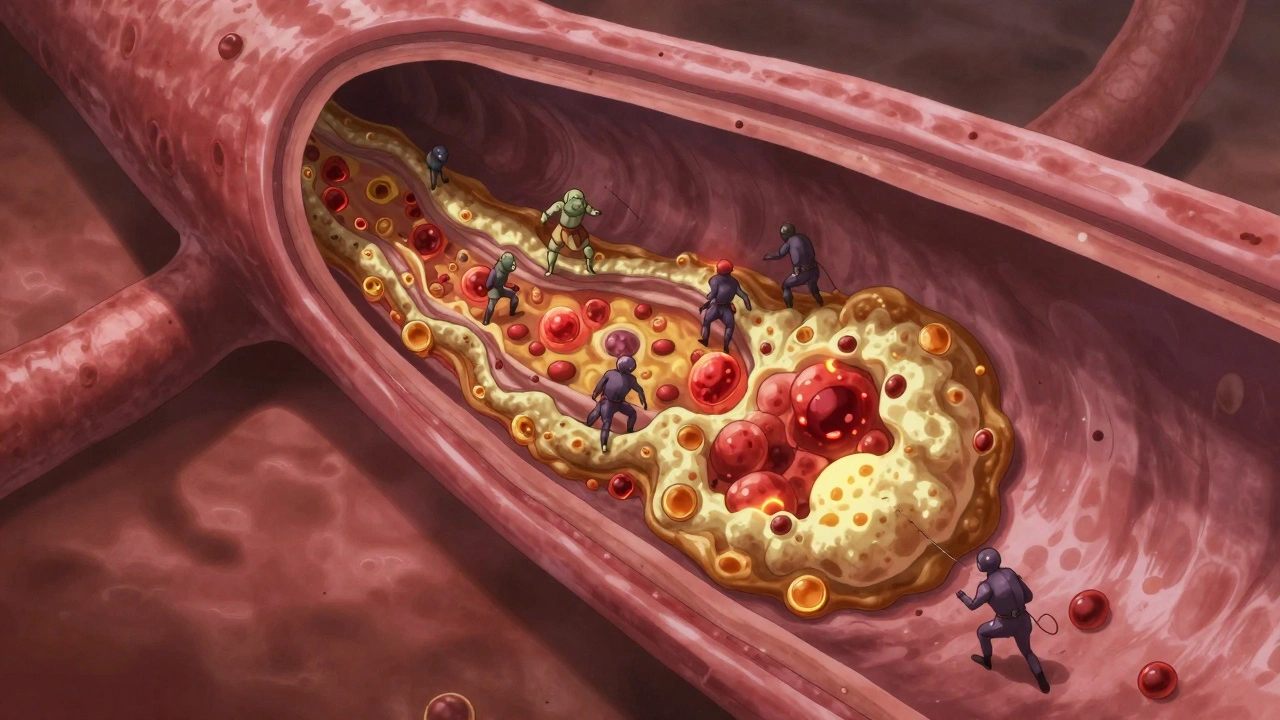
Coronary Artery Disease: Understanding Atherosclerosis, Risk Factors, and Treatments
Coronary artery disease, caused by atherosclerosis, is the world's leading cause of death. Learn how plaque forms, who's at risk, and what treatments actually work-from lifestyle changes to stents and bypass surgery.
More Detail