
Drug Compliance: Why Taking Medication Right Matters More Than You Think
When you hear drug compliance, the practice of taking medications exactly as prescribed by your doctor. Also known as medication adherence, it's not just a medical term—it's the difference between feeling better and ending up in the hospital. Too many people skip doses, stop early, or mix pills without thinking—and it’s costing lives. One glass of grapefruit juice can wreck your immunosuppressant levels. A simple antibiotic can spike your warfarin INR and cause internal bleeding. These aren’t rare accidents. They’re direct results of poor drug compliance.
Drug compliance isn’t just about remembering your pills. It’s about understanding drug interactions, how medications react with food, other drugs, or even your own body chemistry. That metallic taste from your medicine? It’s a warning sign. Switching from brand to generic? Usually safe—but not always. If you’re on thyroid meds, blood thinners, or seizure drugs, even tiny changes in formulation can throw off your balance. And when pharmacies swap your pills without telling you, you’re not just confused—you’re at risk.
It’s also about cost. Many people skip doses because they can’t afford their meds. Generics slash prices by up to 90%, but pharmacy markups still leave you paying 10x what the drug actually costs. You’re not being lazy—you’re being misled. That’s why knowing how to find true generic prices, tracking lot numbers for recalls, and keeping a personal medication list aren’t optional. They’re survival tools. And when you’re managing chronic conditions like kidney disease, diabetes, or Parkinson’s, missing a dose isn’t an oversight—it’s a crisis waiting to happen.
Drug compliance connects everything: your diet, your finances, your sleep, your mental health. It’s why someone on escitalopram needs to wait weeks before giving up. Why shift workers with sleep disorders must time their meds carefully. Why cancer pain patients need to know meloxicam isn’t a cure. It’s why you need to know the difference between acute and chronic diarrhea before reaching for loperamide. This isn’t theoretical. These are real, daily decisions that shape your health.
Below, you’ll find clear, no-fluff guides on exactly what goes wrong when drug compliance breaks down—and how to fix it. No jargon. No hype. Just what you need to know to stay safe, save money, and actually get results from your prescriptions.
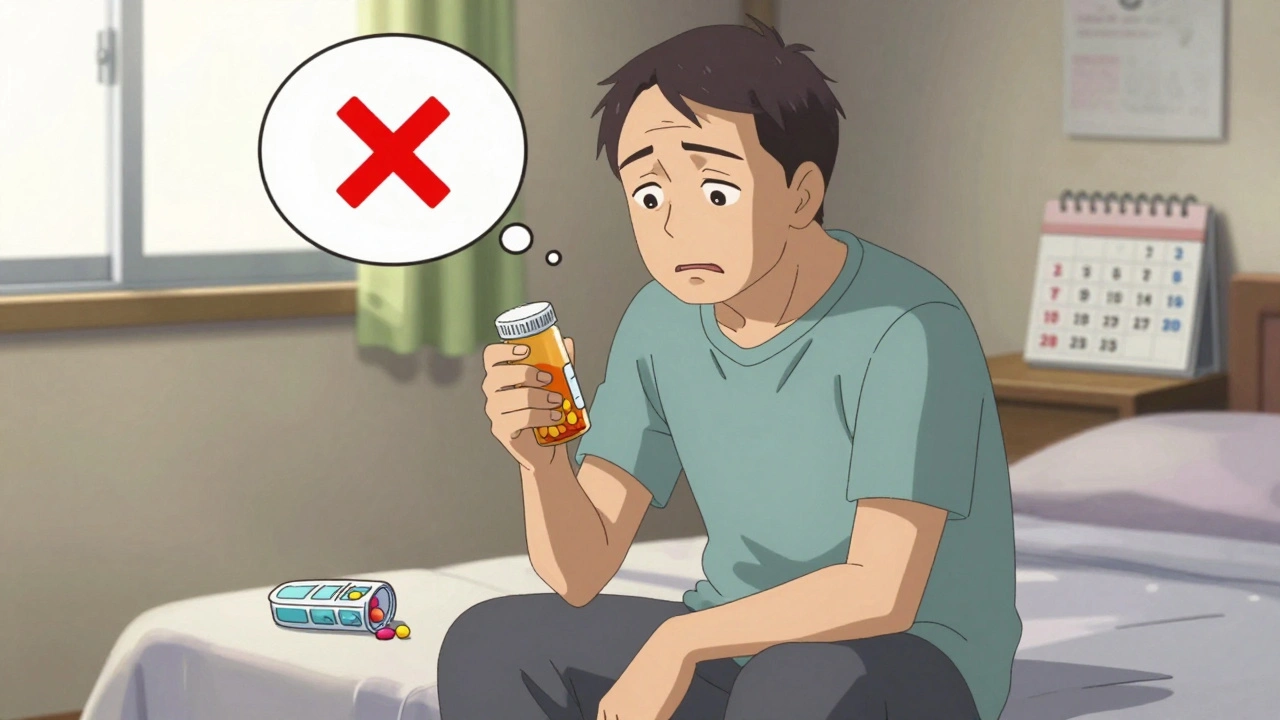
Side Effects and Medication Adherence: How to Stay on Track When Drugs Cause Problems
Side effects are the #1 reason people stop taking their meds - even when they know it’s important. Learn why adherence fails, what really works to fix it, and how to get support without feeling guilty.
More Detail