
Heart Disease Risk Factors: What You Need to Know to Protect Your Heart
When we talk about heart disease risk factors, conditions and behaviors that increase your chance of developing cardiovascular problems. Also known as cardiovascular risk factors, these aren’t just numbers on a lab report—they’re daily choices that add up over time. Most people think heart disease is about old age or bad luck. But the truth? It’s often preventable. The biggest drivers aren’t mysterious—they’re common, and they’re in plain sight.
High blood pressure, a silent force that strains your arteries and heart affects nearly half of U.S. adults and doesn’t always cause symptoms. Left unchecked, it wears down your blood vessels until they can’t deliver oxygen properly. Then there’s cholesterol, specifically the LDL kind that builds up as plaque in your arteries. It’s not the fat you eat alone—it’s how your body processes it. And smoking, a direct toxin to your heart and blood vessels—even a few cigarettes a day raises your risk as much as heavy smoking did decades ago.
Diabetes doesn’t just mean high sugar—it means your blood is corrosive to your arteries. People with type 2 diabetes are two to four times more likely to die from heart disease. Obesity, lack of movement, and chronic stress aren’t just lifestyle complaints—they’re measurable threats. And here’s what most don’t tell you: heart disease risk factors don’t wait for you to be ready. They creep in quietly, often long before you feel anything wrong.
What you’ll find in these articles isn’t theory. It’s real-world advice from people who’ve been there—how to spot hidden dangers in your meds, why grapefruit can mess with your heart drugs, how to tell if your generic pills are safe, and what to do when side effects make you want to quit. These posts don’t sugarcoat anything. They show you how to take control, one smart choice at a time.
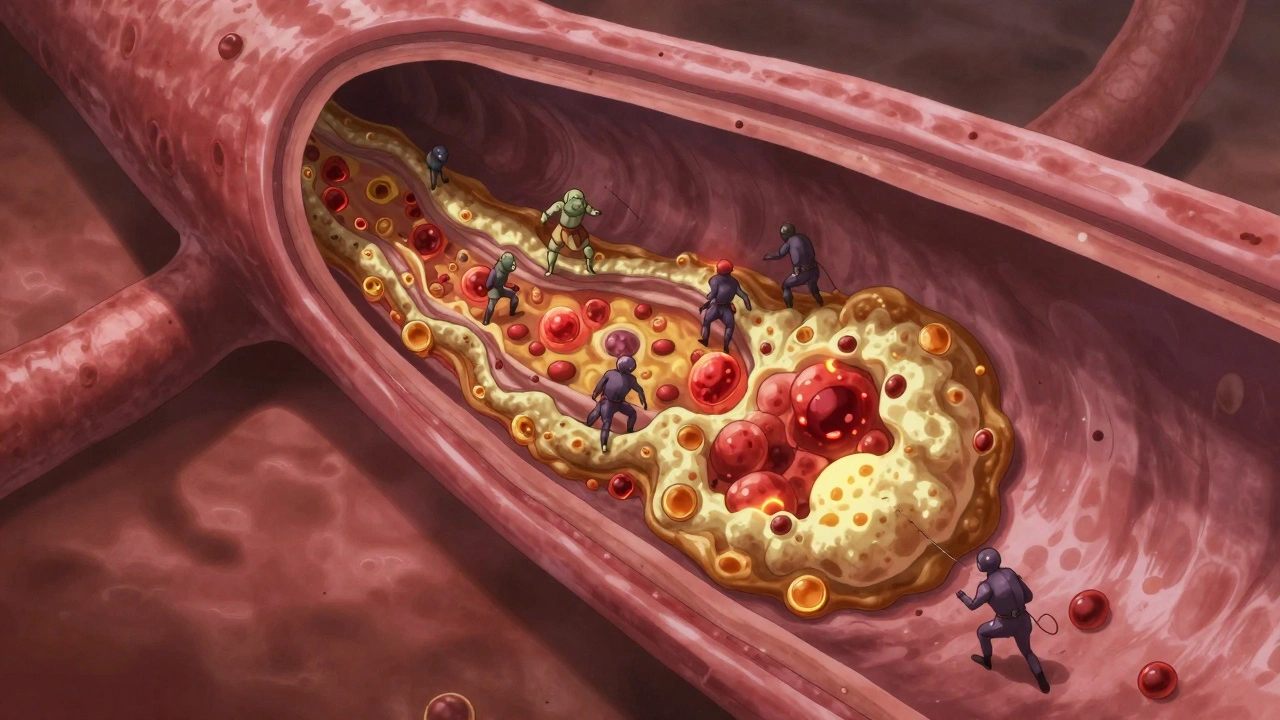
Coronary Artery Disease: Understanding Atherosclerosis, Risk Factors, and Treatments
Coronary artery disease, caused by atherosclerosis, is the world's leading cause of death. Learn how plaque forms, who's at risk, and what treatments actually work-from lifestyle changes to stents and bypass surgery.
More Detail