
Medication Adherence: Why Taking Your Pills Right Matters More Than You Think
When you’re told to take a medication every day, medication adherence, the practice of taking drugs exactly as prescribed, including the right dose, at the right time, and for the full duration. Also known as drug compliance, it’s one of the most overlooked factors in treatment success. It doesn’t matter how powerful a drug is if you’re not taking it right. Half of all people with chronic conditions skip doses, delay refills, or stop early—and it’s costing lives, not just money.
Why does this happen? Sometimes it’s the side effects—like a metallic taste from chemotherapy or dry mouth from Parkinson’s meds—that make you want to quit. Other times, it’s the cost: paying 10 times more than you should for a generic because your pharmacy doesn’t tell you the truth. Or maybe you’re juggling five different pills and forget which one does what. That’s where a personal medication list, a simple written or digital record of all your drugs, doses, and reasons for taking them becomes essential. It’s not just for doctors—it’s your safety net. And when you’re on blood thinners like warfarin or diabetes meds like metformin, even one missed dose or one wrong interaction—say, grapefruit with your immunosuppressant—can trigger a medical emergency.
It’s not about being perfect. It’s about being consistent. People who stick to their regimen for conditions like high blood pressure, depression, or thyroid disease see real results: fewer hospital visits, lower risk of stroke, better mood, stable energy. But if you’re skipping doses because you feel fine, you’re playing Russian roulette with your health. The truth is, most meds don’t work if you don’t take them like clockwork. And if you’re switching from brand to generic—like many do to save money—you need to know that authorized generics work the same, but pharmacy errors can still happen. That’s why tracking lot numbers and knowing your drug’s exact name matters.
You don’t need to memorize every side effect. You just need to know what to watch for. If your taste changes, your kidneys hurt, your INR spikes, or you feel dizzy after starting a new antibiotic, that’s not normal. That’s your body signaling something’s off. And if you’re on a complex mix—like statins plus ezetimibe, or GLP-1s for PCOS—you need to understand how they interact. This collection isn’t about scare tactics. It’s about giving you the real, no-fluff facts: how to store your meds safely, when to call your doctor, how to spot counterfeit pills, and how to cut costs without cutting corners. These aren’t abstract ideas. They’re the things people wish they’d known before their health went sideways. What you’ll find below are the practical, tested strategies that actually work—because getting your meds right isn’t optional. It’s your lifeline.
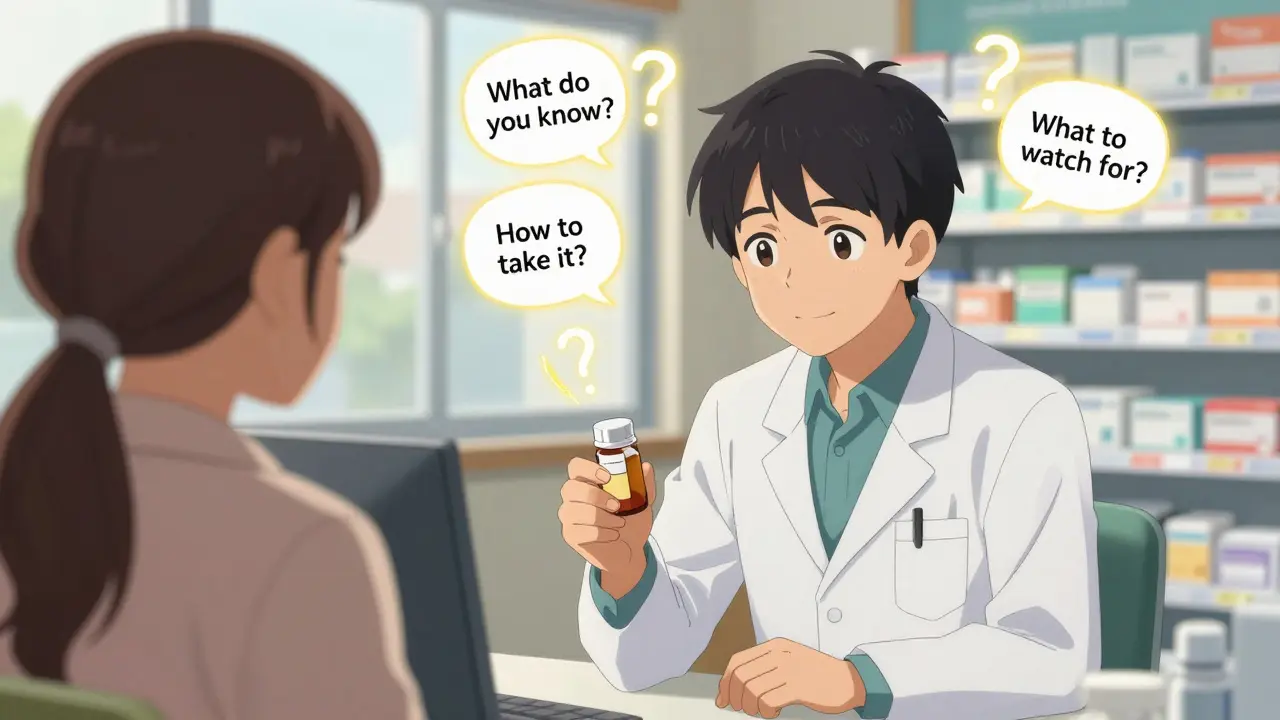
Pharmacist Counseling Scripts: Training Materials for Generic Patient Talks
Pharmacist counseling scripts are structured tools to ensure patients understand their medications. Used in pharmacies across the U.S., they improve adherence, reduce errors, and meet legal requirements like OBRA '90. Learn how to use them effectively.
More Detail
Behavioral Economics: Why Patients Choose Certain Drugs Over Others
Behavioral economics explains why patients often choose expensive, familiar drugs over cheaper alternatives-driven by fear, habit, and cognitive biases. Learn how psychology, not just price, shapes medication decisions.
More Detail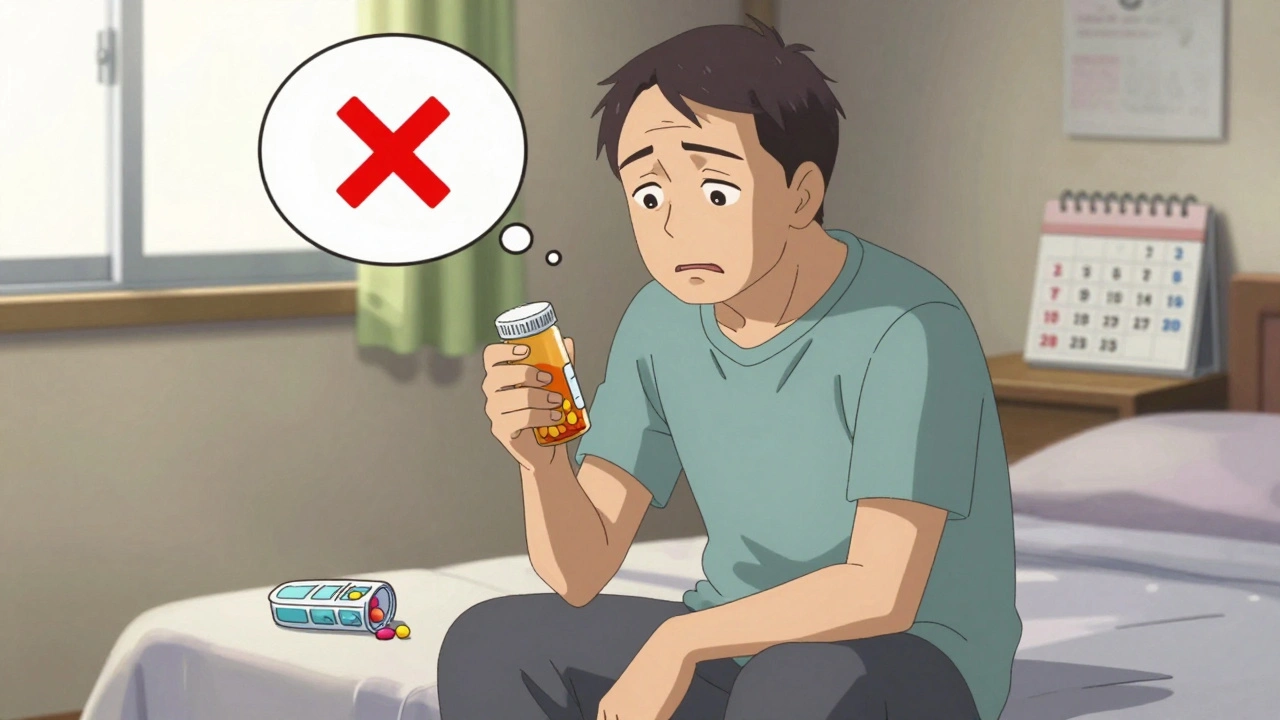
Side Effects and Medication Adherence: How to Stay on Track When Drugs Cause Problems
Side effects are the #1 reason people stop taking their meds - even when they know it’s important. Learn why adherence fails, what really works to fix it, and how to get support without feeling guilty.
More Detail