
Pharmacist Help: Expert Guidance on Medications, Interactions, and Safety
When you need pharmacist help, a licensed professional who ensures your medications are safe, effective, and properly used. Also known as medication advisor, they’re the person who catches dangerous drug combinations before they hurt you. Most people think pharmacists just hand out pills, but they’re your hidden safety net—checking for interactions, spotting dosage errors, and telling you when a generic is just as good as the brand name. You don’t need to wait for a crisis to ask them questions. A quick chat could prevent a hospital visit.
Pharmacist help isn’t just about drug interactions, when two or more medications react in a harmful way. It’s also about knowing when a generic drug, a cheaper version of a brand-name medicine that works the same way is safe to switch to, and when it’s not. For example, switching from brand to generic thyroid or seizure meds can be risky if not monitored. Pharmacists track these nuances because they see what doctors don’t—how your pills actually behave in your body. They know grapefruit can wreck immunosuppressants, antibiotics can spike warfarin levels, and even a metallic taste from a drug might mean you need zinc, not a new prescription.
And it’s not just about what’s in the bottle. Pharmacist help includes understanding your out-of-pocket costs. Generics cut prices by up to 90%, but pharmacies often charge you 10 times more than they pay. A pharmacist can show you where to buy the same pill for under $5 instead of $50. They know which lot numbers are recalled, how to read FDA labeling rules, and why your authorized generic isn’t a compromise—it’s the exact same medicine, just cheaper. They can also help you build a personal medication list, so you never forget what you’re taking or why.
From managing Meniere’s disease symptoms to adjusting diabetes meds after starting a new antibiotic, pharmacist help covers the messy, real-world stuff that Google can’t fix. You don’t need to be sick to ask. If you’re confused about your meds, worried about side effects, or just want to know if that new supplement is safe with your blood thinner, talk to your pharmacist. They’re trained to spot what others miss—and they’re right there, behind the counter, ready to help.
Below, you’ll find real cases where pharmacist help made the difference: how to avoid kidney damage from NSAIDs, why loperamide might not be the answer for chronic diarrhea, and what to do when your cholesterol meds stop working. These aren’t theory pages. These are stories from people who used pharmacist advice to stay safe, save money, and feel better.
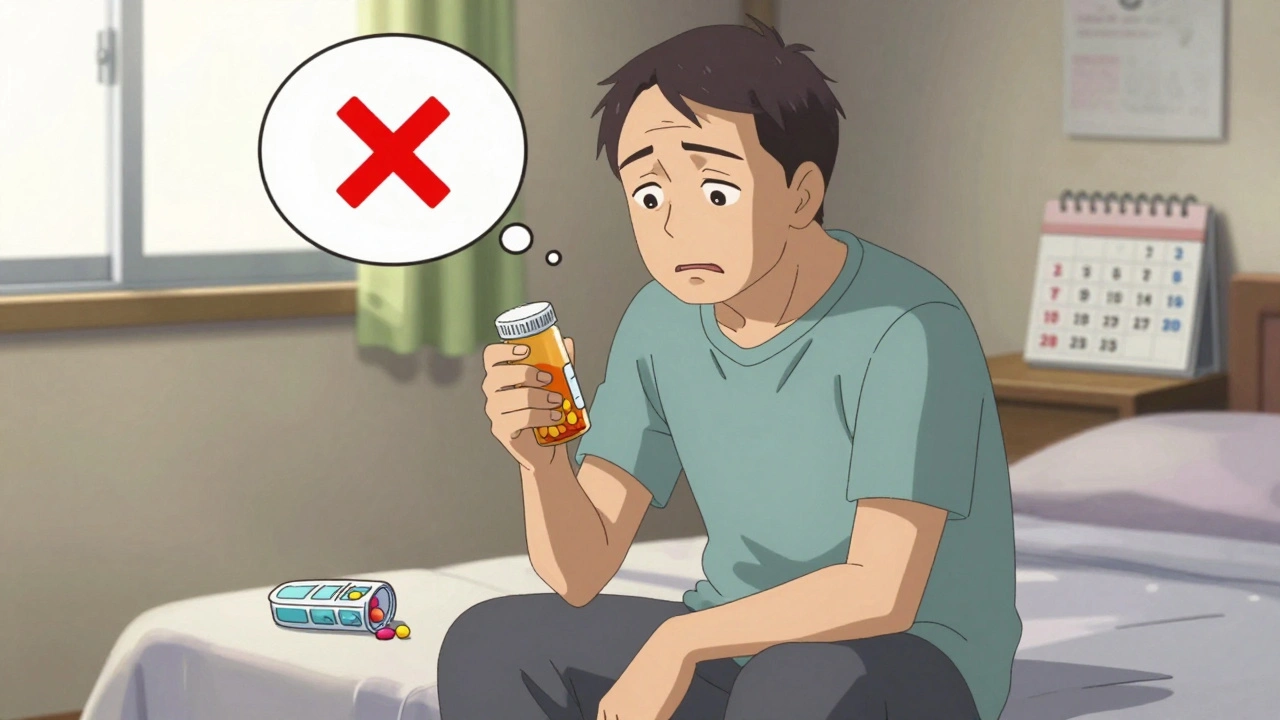
Side Effects and Medication Adherence: How to Stay on Track When Drugs Cause Problems
Side effects are the #1 reason people stop taking their meds - even when they know it’s important. Learn why adherence fails, what really works to fix it, and how to get support without feeling guilty.
More Detail