

When you’re taking multiple medications for chronic conditions like diabetes, high blood pressure, or asthma, it’s easy to feel overwhelmed. You might forget if you took your pill this morning, worry about interactions between drugs, or wonder if there’s a cheaper option. That’s where Medication Therapy Management (MTM) comes in - a free, personalized service designed to help you take your medications safely and effectively.
What Exactly Is Medication Therapy Management?
Medication Therapy Management, or MTM, isn’t just about getting your prescription filled. It’s a one-on-one consultation with a pharmacist who takes time to understand your full medication picture - including prescriptions, over-the-counter drugs, vitamins, and herbal supplements. The goal? To make sure every medication you take is doing what it’s supposed to, without causing harm or wasting money.
MTM was created as part of Medicare Part D back in 2006. It’s not optional for Part D plans - every single one must offer it. But you don’t have to be on Medicare to benefit. Some private insurers and state programs like TennCare also offer MTM services. The key thing to know: this service is free if you qualify.
Who Qualifies for MTM Services?
You don’t need to ask for MTM - if you’re eligible, your plan will reach out to you. To qualify under Medicare Part D, you typically need to meet all three of these criteria:
- You take eight or more Medicare Part D-covered medications
- You have three or more chronic health conditions (like heart disease, COPD, depression, or kidney disease)
- Your annual drug costs exceed $4,430 (as of 2023)
These numbers are set by Medicare, but some plans may have slightly different rules. If you’re unsure, call your Part D plan’s customer service line. They can tell you right away if you’re enrolled.
Even if you don’t meet the official criteria, it’s still worth asking. Some plans offer MTM to people with fewer medications but higher risk of side effects - especially older adults or those recently discharged from the hospital.
What Happens During a Medication Review?
Your first MTM session is called a Comprehensive Medication Review (CMR). It usually lasts 20 to 45 minutes and can happen over the phone, video call, or in person at your pharmacy.
Here’s what you can expect:
- The pharmacist will ask you to list every medication you take - including what you’re taking it for and how often
- They’ll check for dangerous interactions (like mixing blood thinners with certain painkillers)
- They’ll look for duplicates - like taking two different pills that do the same thing
- You’ll discuss whether any medications are too expensive or hard to take
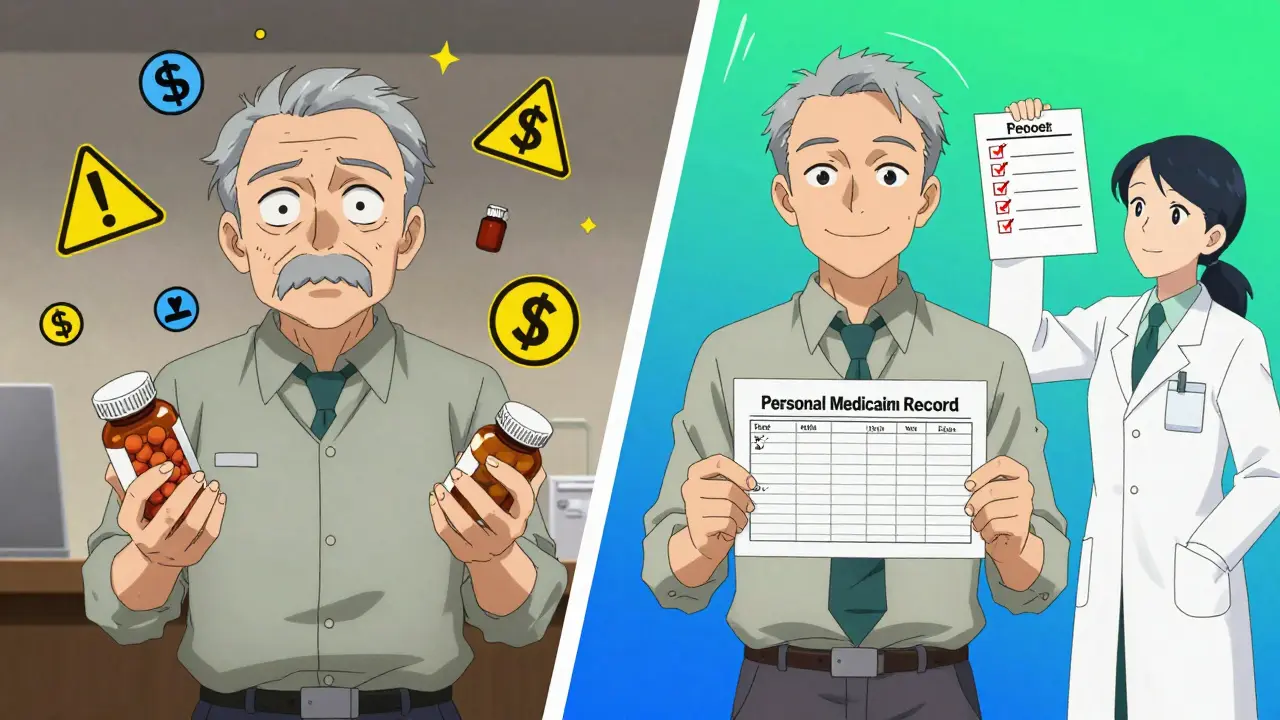
- You’ll get a clear, written list of all your medications - called a Personal Medication Record (PMR)
- You’ll walk away with a To-Do list: things to follow up on with your doctor or pharmacist
This isn’t just a checklist. It’s a conversation. The pharmacist will ask: “Do you know why you’re taking this pill?” “Do you ever skip doses?” “Have you had any side effects you didn’t tell your doctor about?”
What You Get After the Review
After your CMR, you’ll receive two important documents:
- Personal Medication Record (PMR) - A complete, up-to-date list of every drug, supplement, and herbal product you take. This is yours to keep and share with any new doctor or emergency room.
- Medication Action Plan - A simple To-Do list that tells you what to do next. For example: “Call your doctor about dizziness after taking Lisinopril,” or “Switch to generic Metformin to save $50/month.”
These documents are designed to be easy to understand. No medical jargon. No confusing charts. Just plain language that helps you take control.
What About Ongoing Support?
MTM isn’t a one-time event. After your annual CMR, you’ll get quarterly Targeted Medication Reviews (TMRs). These are shorter check-ins - usually 10 to 15 minutes - focused on new problems.
For example:
- You started a new blood pressure pill and feel dizzy
- You ran out of your inhaler and couldn’t refill it
- Your pharmacy switched your diabetes med to a different brand
During a TMR, the pharmacist will ask: “How’s the new pill working?” “Did you have any side effects?” “Can we help you get it cheaper?” They’ll then send a note to your doctor if changes are needed.
This ongoing support is what makes MTM different from a regular pharmacy visit. You’re not just getting your pills - you’re getting a medication coach.
Why Pharmacists? Why Not Just Your Doctor?
Doctors are experts in diagnosing illness. Pharmacists are experts in medications. While your doctor might see you for 10 minutes, your pharmacist has the time to look at all your meds together - even the ones prescribed by different specialists.
Pharmacists know which drugs interact with grapefruit. They know which pills need to be taken on an empty stomach. They know which generics work just as well as brand names - and which ones don’t.
MTM brings this knowledge directly to you. And because pharmacists are often more accessible than doctors - you can walk into a pharmacy anytime - they’re the perfect people to catch problems before they become emergencies.
Real Benefits: What Patients Say
People who use MTM regularly report feeling more confident about their meds. One patient in Texas, who takes eight medications for diabetes, heart failure, and depression, said: “I used to be scared to take my pills. Now I know why each one is there. I even saved $120 a month by switching to generics.”
Studies show MTM helps people take their meds on time - which reduces hospital visits. One analysis found that patients using MTM had 30% fewer emergency room trips related to medication errors.
It also saves money - not just for you, but for the whole system. When people take their meds correctly, they need fewer tests, fewer doctor visits, and fewer hospital stays. That’s why Medicare invests in MTM: it works.

What If You Can’t Talk to the Pharmacist?
If you’re unable to attend your CMR due to mobility issues, memory problems, or language barriers, you can assign someone else to speak for you. That could be a family member, caregiver, or legal representative.
Just let your plan know in advance. They’ll make sure the person you choose gets the same information and can ask questions on your behalf.
How to Get Started
You don’t need to apply. If you qualify, your Part D plan will mail or call you with an invitation. But if you think you should be eligible and haven’t heard anything:
- Check your plan’s website - look for “MTM” or “Medication Therapy Management”
- Call the customer service number on your insurance card
- Ask: “Am I eligible for Medication Therapy Management? If so, how do I schedule my review?”
Don’t wait. The sooner you get your review, the sooner you can stop worrying about your meds and start feeling better.
What MTM Won’t Do
MTM won’t give you new prescriptions. It won’t replace your doctor. And it won’t give you medical advice outside of medication use.
But it will help you understand what your doctor prescribed. It will help you avoid dangerous mix-ups. And it will help you save money.
Think of MTM as your medication safety net - a clear, free, expert check-up that keeps you from falling through the cracks.
Is Medication Therapy Management the same as a regular pharmacy consultation?
No. A regular pharmacy consultation is usually brief and focused on filling one prescription. MTM is a full review of all your medications - including over-the-counter drugs and supplements - done by a pharmacist who spends 30+ minutes with you. It’s structured, documented, and happens annually with follow-ups throughout the year.
Do I have to pay for MTM services?
No. If you’re enrolled in Medicare Part D and qualify, MTM services are completely free. There are no copays, no extra fees. It’s included as part of your plan benefits.
Can I get MTM if I’m not on Medicare?
Yes. While MTM is required under Medicare Part D, some private insurers and state Medicaid programs like TennCare also offer it. Check with your insurer or ask your pharmacist if your plan includes MTM services.
What if I don’t want to talk about my medications?
You’re never forced to participate. MTM is voluntary. But if you’re taking multiple medications, skipping the review could mean missing out on serious safety issues - like dangerous drug interactions or unnecessary costs. Most people who try it say they wish they’d done it sooner.
Will my doctor be involved in MTM?
Yes. After your review, the pharmacist will send a detailed report to your doctor(s) with recommendations - like stopping a duplicate drug or adjusting a dose. You’ll also get a copy. This ensures everyone on your care team is on the same page.
How often do I get a medication review?
You get one full Comprehensive Medication Review (CMR) every year. Plus, you’ll get at least three shorter Targeted Medication Reviews (TMRs) during the year - usually every three months - to check on new issues or changes in your meds.
Can MTM help me save money on my prescriptions?
Absolutely. Pharmacists look for cheaper alternatives, like switching from brand-name drugs to generics, using mail-order pharmacies, or finding manufacturer coupons. Many patients save hundreds of dollars a year just by making these simple changes.
What if I’m taking herbal supplements or vitamins?
You need to tell the pharmacist about everything you take - even if you think it’s harmless. Some supplements, like St. John’s Wort or fish oil, can interfere with blood thinners, antidepressants, or heart meds. MTM includes all of it.
Next Steps
If you’re on multiple medications, don’t wait for an invitation. Call your Part D plan today and ask: “Am I eligible for Medication Therapy Management?” If you’re not sure what medications you’re taking, write them down before your call. Bring your pill bottles or a list to your review. The more accurate your list, the better the advice you’ll get.
MTM isn’t about fixing problems - it’s about preventing them. And in a world where medication errors are one of the leading causes of hospital visits, that’s not just helpful. It’s life-changing.


MTM? More like Medication Tax Manipulation. Pharmacies are just another arm of Big Pharma’s profit machine. They don’t care if you live or die-they care if you keep buying pills. This ‘free service’? It’s a Trojan horse to upsell you on generics they get kickbacks for. Wake up.