

When you’re living with cancer, pain isn’t just a symptom-it’s a constant shadow. Many people turn to medications like meloxicam hoping for relief, but is it actually helpful? And more importantly, is it safe? Meloxicam is an NSAID, a type of anti-inflammatory painkiller often used for arthritis or muscle strains. But cancer pain works differently. It’s not just swelling or wear and tear. It’s bone destruction, nerve compression, tumor pressure. So does meloxicam help-or does it just add risk?
How Meloxicam Works
Meloxicam blocks enzymes called COX-2, which trigger inflammation and pain signals. It’s not a strong opioid like morphine, but it can reduce swelling and dull aching, burning, or throbbing pain. For some people with cancer, especially those with bone metastases or soft tissue tumors causing inflammation, this can make a real difference. A 2023 study in the Journal of Pain and Symptom Management found that about 40% of cancer patients using meloxicam reported moderate improvement in their baseline pain levels-enough to move more easily, sleep better, or get through daily tasks without constant discomfort.
But here’s the catch: meloxicam doesn’t touch the root cause. It doesn’t shrink tumors. It doesn’t stop nerves from firing from cancer invasion. It just tries to quiet the noise. That’s why it’s often used alongside other treatments-not as a replacement.
Who Might Benefit
Not everyone with cancer pain will feel better on meloxicam. It works best for certain types of pain:
- Bone pain from metastases-especially in the spine, pelvis, or ribs-where inflammation plays a big role.
- Soft tissue swelling around tumors pressing on nerves or muscles.
- Post-surgical or radiation-related inflammation that lingers after treatment ends.
People with osteoarthritis who later develop cancer often continue meloxicam because they’re already used to it. For them, switching pain meds can be more disruptive than helpful. But if your pain is sharp, shooting, or feels electric, meloxicam likely won’t help much. That kind of pain comes from nerve damage, and NSAIDs like meloxicam don’t touch neuropathic pain.
What the Research Says
There’s no magic study proving meloxicam cures cancer pain. But there are enough real-world reports to suggest it has a place in the toolkit. A 2022 analysis of over 1,200 cancer patients in Europe found that those using meloxicam as part of a multimodal pain plan had a 25% lower need for stronger opioids over six months. That’s significant. Less opioid use means fewer side effects like constipation, drowsiness, or confusion-common problems that make life harder for people already dealing with cancer.
Some lab studies even suggest meloxicam might slow tumor growth in certain cancers by reducing inflammation-driven cell signaling. But this is still early science. No one is prescribing meloxicam to cure cancer. The goal is pain control, not tumor shrinkage.
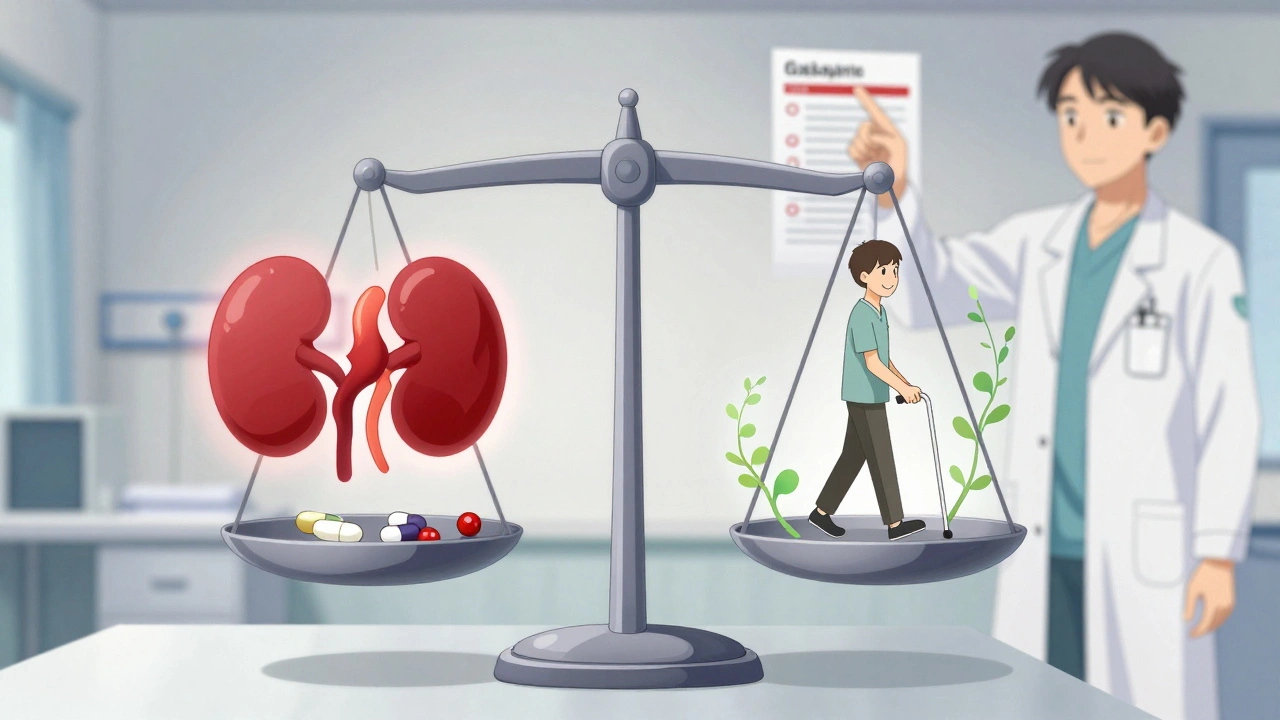
Risks You Can’t Ignore
Meloxicam isn’t harmless. In fact, for cancer patients, the risks can be higher.
- Kidney damage-Cancer and its treatments often strain the kidneys. Meloxicam reduces blood flow to them. This can lead to sudden kidney failure, especially if you’re dehydrated or on diuretics.
- Bleeding risk-Many cancer patients have low platelets or are on blood thinners. Meloxicam makes bleeding more likely, even from minor cuts or internal sources like stomach ulcers.
- Heart issues-Long-term use of any NSAID raises blood pressure and heart strain. For someone already weakened by cancer, that’s dangerous.
- Drug interactions-Meloxicam can interfere with chemotherapy drugs like methotrexate, and with steroids often used in cancer care.
One patient in Melbourne, diagnosed with breast cancer that spread to her bones, started meloxicam after her oncologist suggested it. She felt better for two weeks-until she started bleeding internally. Her doctor had to stop it. She later switched to a different pain plan that included gabapentin and low-dose morphine. That’s the reality: what helps one person can hurt another.
When to Avoid It
Don’t use meloxicam if you have:
- Active stomach ulcers or a history of GI bleeding
- Severe kidney disease or are on dialysis
- Heart failure or recent heart attack
- Low platelet count (under 50,000)
- Are taking other NSAIDs, aspirin, or blood thinners like warfarin
Also, don’t start meloxicam on your own-even if you’ve used it before for arthritis. Cancer changes your body’s chemistry. What was safe last year might be risky now.

Alternatives That Work Better
If meloxicam isn’t right for you, there are other options:
- Gabapentin or pregabalin-For nerve pain from cancer pressing on nerves.
- Low-dose opioids-Like tramadol or oxycodone, often paired with non-opioid meds to reduce side effects.
- Bisphosphonates or denosumab-For bone pain, these drugs actually strengthen bones and reduce tumor-related damage.
- Corticosteroids-Like dexamethasone, which reduce swelling around tumors quickly.
- Physical therapy and nerve blocks-Non-drug options that can reduce pain without side effects.
The best approach is usually a mix. A 2024 guideline from the American Society of Clinical Oncology recommends combining at least two types of pain relief for moderate to severe cancer pain. That might mean a low-dose opioid plus gabapentin plus a short course of meloxicam-if your doctor says it’s safe.
What to Ask Your Doctor
If you’re considering meloxicam, don’t just accept it. Ask:
- Is my pain likely to respond to an anti-inflammatory?
- What are my kidney and liver function levels right now?
- Am I on any drugs that could interact with meloxicam?
- What’s the plan if it doesn’t work-or if it causes side effects?
- Are there non-drug options I should try first?
Good doctors won’t push meloxicam. They’ll test your pain type, check your bloodwork, and only suggest it if the benefits clearly outweigh the risks.
Real Talk: What Patients Say
One man in Sydney with prostate cancer that spread to his spine tried meloxicam after his pain got worse. He said: "I felt like I could breathe again for the first time in weeks. But after a month, my legs started feeling numb. My oncologist pulled me off it. I didn’t blame her. I’d rather be uncomfortable than lose feeling in my legs."
Another woman in Adelaide with lung cancer used meloxicam for three weeks while waiting for radiation to take effect. "It didn’t make the pain vanish," she said, "but it took the edge off. I could sit up long enough to eat a meal. That was worth it."
These stories aren’t proof. But they show something important: meloxicam can be a temporary bridge-not a cure, not a miracle, but sometimes, just enough.
Can meloxicam shrink cancer tumors?
No, meloxicam does not shrink tumors. It’s an anti-inflammatory painkiller, not a cancer treatment. Some lab studies suggest it might slow tumor growth in certain cases by reducing inflammation, but this is not proven in humans. It should never be used as a substitute for chemotherapy, radiation, or other cancer therapies.
Is meloxicam safer than opioids for cancer pain?
It can be, but only in specific cases. Meloxicam avoids the drowsiness, constipation, and addiction risks of opioids. But it carries its own dangers-kidney damage, bleeding, and heart strain. For many people, the safest approach is combining low-dose opioids with non-opioid meds like meloxicam or gabapentin to reduce overall opioid needs.
How long can you take meloxicam for cancer pain?
There’s no fixed timeline, but most doctors limit it to a few weeks unless closely monitored. Long-term use increases risks of kidney, stomach, and heart problems. If pain persists beyond a month, your doctor should reassess your plan and consider other options like nerve blocks, radiation, or stronger pain meds.
Can I take meloxicam with chemotherapy?
Sometimes, but only under strict supervision. Meloxicam can interfere with drugs like methotrexate and increase the risk of kidney damage when combined with certain chemo agents. Always tell your oncologist about every medication you’re taking-even over-the-counter ones.
What should I do if meloxicam isn’t helping?
Don’t increase the dose on your own. Contact your doctor immediately. Your pain may need a different approach-like switching to a nerve-targeted drug (gabapentin), adding a low-dose opioid, or considering radiation therapy for bone pain. Pain that doesn’t respond to NSAIDs often needs a more targeted strategy.
Managing cancer pain isn’t about finding one magic pill. It’s about building a plan that fits your body, your cancer, and your life. Meloxicam can be part of that plan-for some people, in some situations. But it’s not a default choice. It’s a tool, used carefully, with eyes wide open to the risks.


Meloxicam helps some people with bone pain but it's not a cure and it can wreck your kidneys