
Atherosclerosis: Causes, Risks, and How Medications Help Manage It
When atherosclerosis, a condition where fatty deposits build up inside arteries, restricting blood flow. Also known as hardening of the arteries, it’s the main reason most heart attacks and strokes happen. It doesn’t show up overnight — it builds over years, quietly clogging the pipes that feed your heart, brain, and legs. And while it’s common, it’s not inevitable. What you eat, how active you are, and the meds you take all play a real role in whether it gets worse — or slows down.
At the core of atherosclerosis is cholesterol, a waxy substance that moves through your blood. Too much of the bad kind — LDL — sticks to artery walls. Over time, it teams up with calcium and other stuff to form plaque, a thick, hard deposit that narrows arteries and makes them less flexible. That’s when blood flow drops. If plaque cracks, your body tries to patch it with a clot — and that’s when a heart attack or stroke can strike. People with high blood pressure, diabetes, or who smoke are at higher risk, but even those without obvious symptoms can have silent buildup.
That’s where statins, a class of drugs that lower LDL cholesterol and stabilize plaque come in. They don’t just reduce numbers on a lab report — they actually help prevent plaque from rupturing. And they’re not the only tool. Drugs like ezetimibe, PCSK9 inhibitors, and even low-dose aspirin are used in combination, especially when statins alone aren’t enough. But meds only work if you take them. Many people stop because of side effects like muscle pain or liver concerns — and that’s where knowing what’s normal versus what’s dangerous matters.
What you’ll find here aren’t generic health tips. These are real, practical insights from people who’ve lived with atherosclerosis, managed side effects from cholesterol meds, or avoided complications after a heart scare. You’ll see how grapefruit can mess with your statins, why switching to a generic version might save you hundreds, and how sodium imbalances or NSAID use can quietly make things worse. There’s no fluff — just what works, what doesn’t, and what your doctor might not have told you.
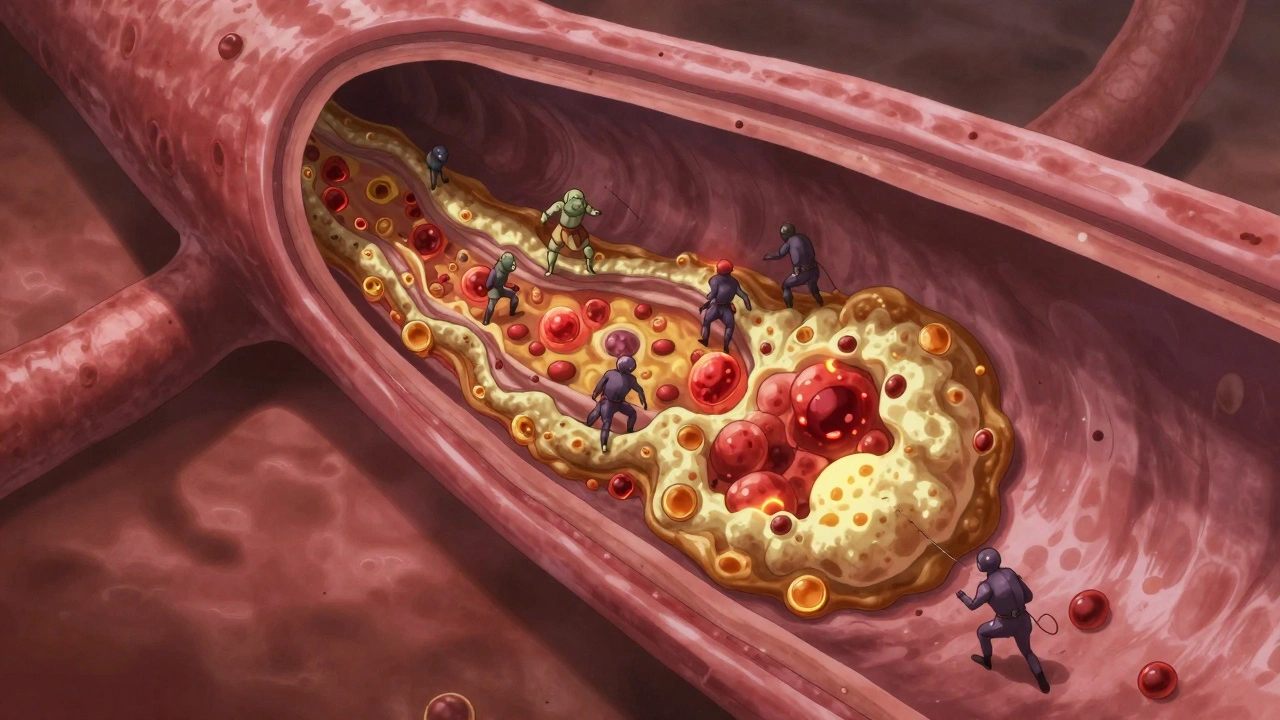
Coronary Artery Disease: Understanding Atherosclerosis, Risk Factors, and Treatments
Coronary artery disease, caused by atherosclerosis, is the world's leading cause of death. Learn how plaque forms, who's at risk, and what treatments actually work-from lifestyle changes to stents and bypass surgery.
More Detail