
Drug-Food Interaction: What You Need to Know Before Eating with Your Meds
When you take a drug-food interaction, a change in how a medication works because of what you eat or drink. Also known as food-drug interaction, it can turn a safe pill into a risk—either weakening its effect or making it dangerously strong. This isn’t just about grapefruit and statins. It’s about your morning coffee, your salt intake, your daily vitamin, even your glass of orange juice. These aren’t edge cases. They’re everyday moments that can mess with your treatment.
Take warfarin, a blood thinner used to prevent clots. Also known as Coumadin, it’s one of the most common drugs affected by food. Leafy greens like spinach and kale are full of vitamin K, which helps your blood clot. If you suddenly eat more of them, your INR drops. Too little? Your INR spikes. Either way, you’re at risk for a clot or a bleed. Same with antibiotics, medications that kill bacteria. Also known as antimicrobials, some—like tetracycline—bind to calcium in dairy. Take them with milk and they don’t absorb. You get no benefit. Just a wasted pill and a lingering infection. Even diabetes meds, drugs that control blood sugar. Also known as hypoglycemics, they can crash your glucose if paired with alcohol or skipped meals. You don’t need a chemistry degree to get this. You just need to know your own meds and your own habits.
It’s not just about avoiding certain foods. It’s about consistency. If you take your blood pressure pill with grapefruit every morning, that’s fine. But if you switch to orange juice one day, your levels might drop too low. Or if you start taking a magnesium supplement for sleep, it could reduce how well your thyroid med works. These aren’t rare surprises—they’re predictable outcomes. And they’re why doctors and pharmacists ask you to list every pill, every vitamin, every herbal tea you take. Because they’re not just checking for drug-drug clashes. They’re checking for drug-food ones too.
You won’t find a single list that covers every interaction. But you will find patterns. Salt affects diuretics. Fiber slows absorption. Alcohol worsens sedatives. Calcium ruins antibiotics. Grapefruit breaks down liver enzymes that process half the common meds out there. The more meds you take, the more these tiny choices add up. That’s why keeping a simple medication list isn’t just smart—it’s lifesaving. And it’s why you should never assume your pharmacist already knows what you’re eating. They need you to tell them.
Below, you’ll find real stories and clear facts about how food, supplements, and drinks change how your meds work. From warfarin and broccoli to antibiotics and dairy, from metallic taste caused by drugs to how diabetes meds behave with meals—you’ll see what actually matters. No fluff. No guesswork. Just what you need to know before you eat, drink, or swallow your next pill.
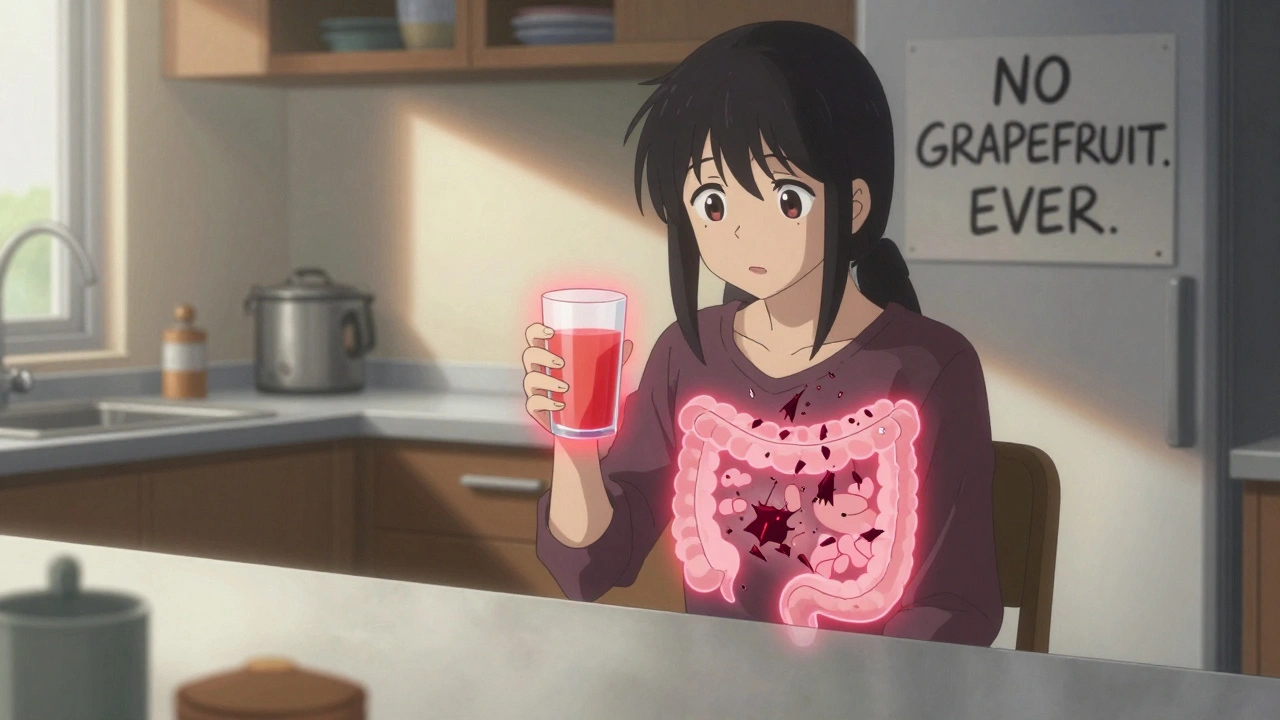
Grapefruit and Immunosuppressants: What You Need to Know Before You Eat It
Grapefruit can dangerously raise levels of immunosuppressants like cyclosporine and tacrolimus, leading to kidney damage, infections, or organ rejection. Even one glass can cause toxic effects lasting up to 72 hours.
More Detail