
L-tryptophan: What It Does, How It Affects Mood, and What You Need to Know
When you hear L-tryptophan, an essential amino acid your body can’t make on its own and must get from food or supplements. Also known as tryptophan, it’s the building block your brain uses to produce serotonin, a key neurotransmitter that helps regulate mood, appetite, and sleep and later turns into melatonin, the hormone that tells your body when it’s time to sleep. Without enough L-tryptophan, your brain struggles to keep these systems running smoothly—which is why low levels are linked to trouble sleeping, low mood, and even anxiety.
Most people get L-tryptophan from food: turkey, chicken, eggs, cheese, nuts, seeds, and soy products all have it. But if you’re dealing with chronic insomnia or mild depression, some people turn to supplements. Unlike prescription antidepressants, L-tryptophan isn’t a quick fix—it works slowly, building up in your system over days or weeks. Studies show it can help improve sleep quality and reduce the time it takes to fall asleep, especially when taken a few hours before bed. It’s also been studied for its role in reducing symptoms of premenstrual dysphoric disorder (PMDD) and seasonal affective disorder (SAD), though results vary by person. One thing’s clear: it doesn’t work the same for everyone, and it’s not a replacement for medical treatment if you’re struggling with clinical depression or anxiety.
There are risks too. Taking L-tryptophan with certain antidepressants—like SSRIs or SNRIs—can lead to a dangerous condition called serotonin syndrome. Symptoms include confusion, rapid heart rate, muscle stiffness, and high fever. That’s why you should never mix it with medications like Prozac, Zoloft, or Effexor unless your doctor says it’s safe. Also, if you’re on any kind of sleep aid, painkiller, or migraine medicine, check with a pharmacist first. The supplement industry isn’t tightly regulated, so quality and dosage can vary wildly between brands. Look for third-party tested products and avoid anything that promises instant results.
What you’ll find in the posts below is a practical look at how L-tryptophan fits into the bigger picture of mental health, medication interactions, and everyday supplement use. You’ll see how it connects to serotonin-related side effects, why some people feel better after taking it while others don’t, and how it compares to other natural mood support options. There’s no fluff—just real insights from people who’ve tried it, studies that tested it, and warnings you need to know before you buy a bottle.
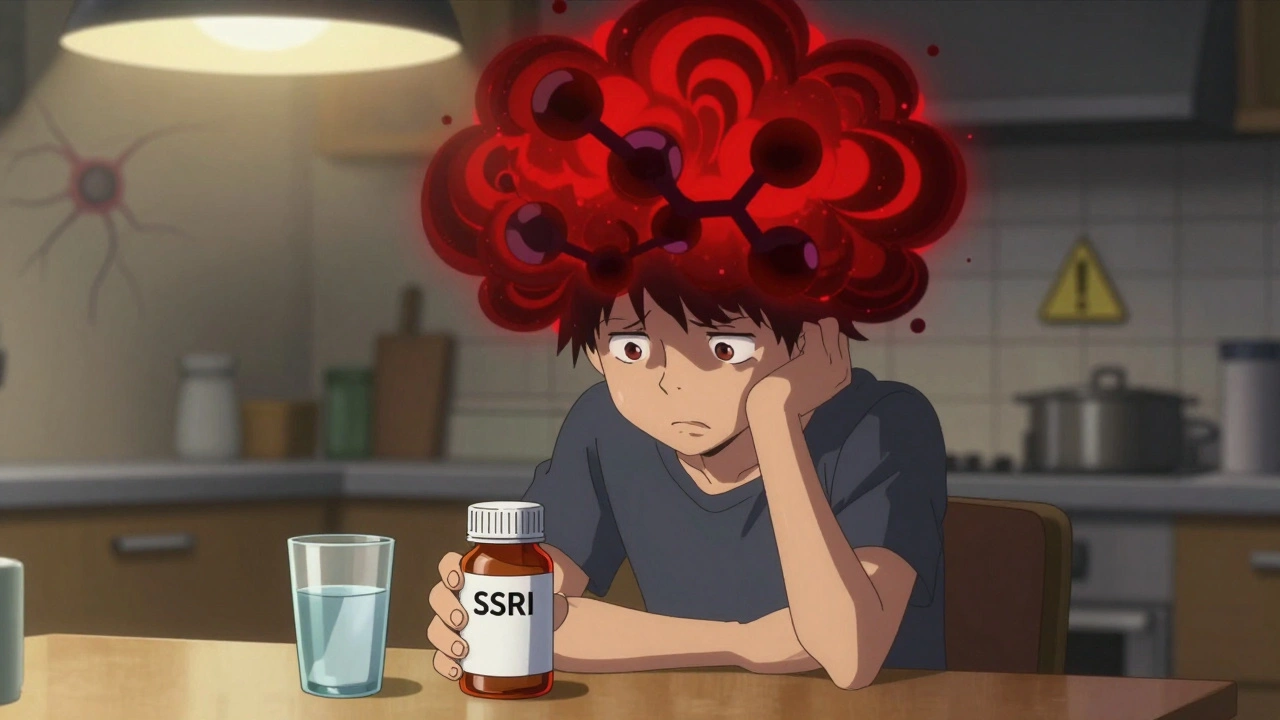
L-Tryptophan and Antidepressants: What You Need to Know About Serotonin Risks and Interactions
Combining L-tryptophan with antidepressants can trigger serotonin syndrome-a potentially fatal condition. Learn the real risks, who should avoid it, and safer alternatives for mood support.
More Detail