
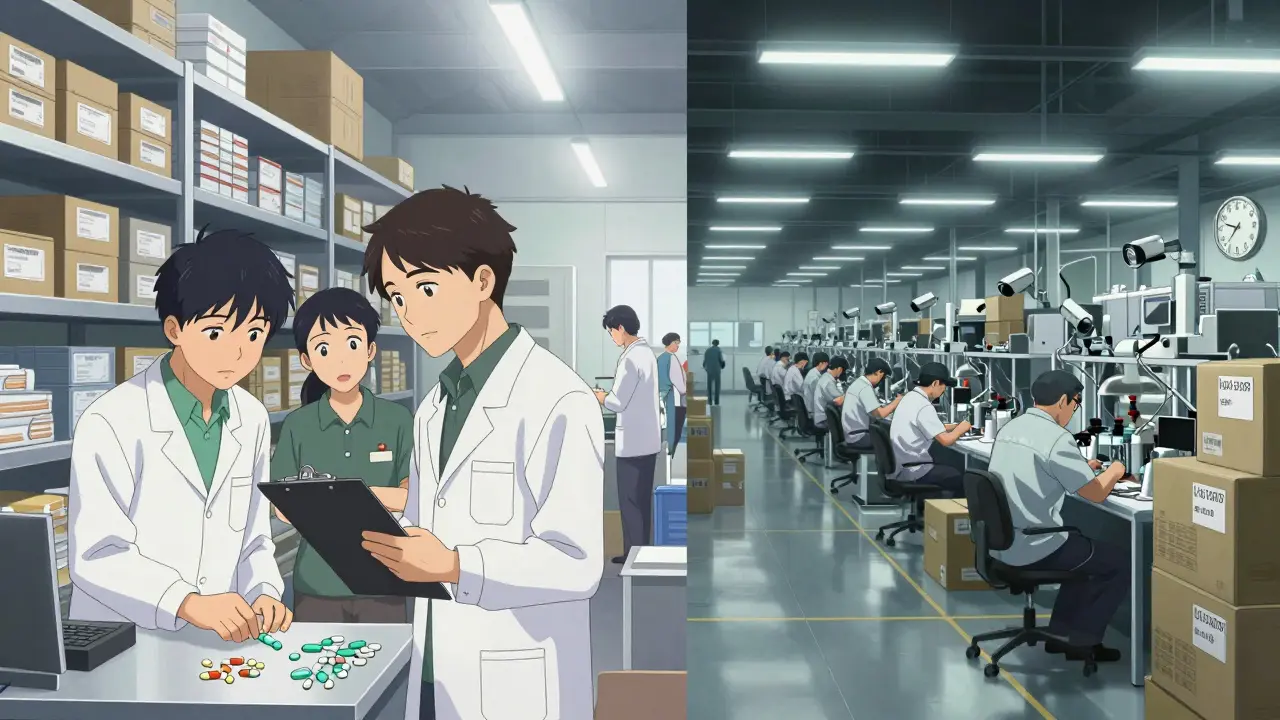
When you’re making generic products-whether it’s pills, medical devices, or health supplements-the place you choose to manufacture can make or break your business. It’s not just about saving money. It’s about control, speed, quality, and risk. Too many companies jump to overseas manufacturing because the price looks better on paper, only to get burned by delays, defective batches, or lost sales. Others stick with domestic production and miss out on massive cost savings. The truth? There’s no one-size-fits-all answer. But there is a smart way to decide.
Cost Isn’t Just the Price Tag
At first glance, overseas manufacturing wins. A unit made in Vietnam or China can cost 60% less than the same one made in the U.S. or Australia. That’s huge. But that’s only the sticker price. The real cost includes shipping, tariffs, inspections, and delays. For example, Section 301 tariffs on Chinese goods add 7.5% to 25% to your bill depending on what you’re making. Add in $300-$500 per inspection from a third-party quality checker, and you’re already eating into that savings. Then there’s inventory. Overseas production takes 3 months from order to delivery-45 to 60 days to make it, plus 30 to 45 days to ship and clear customs. That means you need to order way more upfront. Holding that extra stock costs money. Interest, warehouse space, insurance, spoilage-all add up. One company lost $187,000 in holiday sales because their Vietnamese order arrived 8 weeks late. The savings on production? Gone. Domestic manufacturing might cost $300 to $3,000 more per unit, but you get it in 45 to 60 days, no shipping delays, no customs headaches. You order what you need, when you need it. Less waste. Less risk.Speed Matters More Than You Think
In healthcare and wellness, timing isn’t just convenient-it’s critical. If you’re launching a new supplement or updating a device’s design, waiting 3 weeks for a factory in Shenzhen to reply to an email, then another 2 weeks for them to tweak the mold, can kill your momentum. Domestic manufacturers can change a design in 3 to 5 days. They’re in the same time zone. You can walk into their facility. You can see the batch being made. A survey of promotional product companies found that 83% rely on domestic production for orders needed within 30 days. That’s not because they’re expensive-it’s because they’re reliable. If you’re selling to pharmacies, clinics, or direct-to-consumer health brands, you can’t afford to miss a deadline. A delay isn’t just an inconvenience. It’s lost revenue, lost trust, lost customers.Quality Control: Seeing Is Believing
You can’t inspect quality through a Zoom call. Overseas factories often rely on third-party inspectors. These are professionals, sure-but they’re not there every day. They show up once, take photos, and leave. One Reddit user reported a 37% defect rate on their first Alibaba order, even with inspection. That’s $48,000 in ruined product and six weeks of lost time. Domestic manufacturers, by contrast, let you be on-site. You can watch the production line. You can test samples as they come off. You can demand rework on the spot. That’s why domestic manufacturers average 4.3 out of 5 stars on review platforms, with “quality” and “responsiveness” as top praises. Overseas manufacturers average 3.8-mostly because of communication delays. Language barriers cause 22% of overseas delays, with resolution times averaging 72 hours. Domestically? Four hours. Some argue overseas makes better technical products. But 78% of industry experts say direct oversight leads to superior quality. When your product is something people swallow or wear on their skin, you don’t gamble on “probably okay.”Intellectual Property and Copycats
If you’ve developed a unique formula, packaging design, or delivery mechanism, protecting it matters. In the U.S., Canada, Australia, and the EU, intellectual property laws are strong and enforceable. In many Asian manufacturing hubs, copying is common. One industry analyst found product replication risks rise by 37% in those regions. You can sign NDAs, but enforcement? That’s a legal battle you don’t want to fight across borders. Domestic manufacturing keeps your IP close. Your design stays in your country. Your formula stays in your hands. That’s not just legal protection-it’s peace of mind.
Supply Chain Risk Is Real
The pandemic showed us how fragile global supply chains are. A port strike in Los Angeles, a flood in Thailand, a political shutdown in Vietnam-any of these can halt your entire production line. Since 2020, businesses lost an average of $2.1 million per major supply chain incident, according to McKinsey. That’s why 57% of Fortune 500 companies now follow a “China Plus One” strategy-spreading production across multiple countries to reduce dependency. Mexico is becoming a popular middle ground. Manufacturing there costs only 12-15% of U.S. rates, but shipping takes 7-10 days instead of 28-42 from Asia. It’s close enough to manage, cheap enough to save money. And then there’s the reshoring trend. Since 2010, over 356,000 manufacturing jobs have returned to the U.S. The Inflation Reduction Act and CHIPS Act are pouring billions into domestic production. Consumers care too-68% say they’ll pay 5-12% more for locally made health products.Minimum Orders and Flexibility
If you’re a startup or testing a new product, you don’t need 5,000 units. You need 300. Domestic manufacturers routinely accept batches of 100-500 units. Overseas factories? Minimums of 1,000-5,000 are standard. That’s a huge cash commitment before you even know if your product sells. One startup saved money by using a Yiwu manufacturer for a 300-unit prototype at $2.10 per unit versus $8.75 domestically. That worked-for a prototype. But when they scaled up, they hit the minimum order wall. They had to borrow money just to meet the factory’s requirements. That’s not flexibility. That’s a trap.The Hybrid Model: Best of Both Worlds
The smartest companies don’t choose one or the other. They use both. This is called the hybrid model-and 44% of mid-sized manufacturers are already doing it. Make your core product-your active ingredient, your patented device, your branded packaging-domestically. That’s where you control quality, speed, and IP. Outsource the non-critical parts: boxes, labels, basic accessories. Those can come from overseas without risking your brand. It gives you the cost savings where it doesn’t hurt, and the control where it matters most.
What You Need to Know Before You Start
If you’re new to overseas manufacturing, prepare for a learning curve. First-time importers spend 120-150 hours just learning HS codes, Incoterms 2020, customs bonding, and documentation. You’ll need commercial invoices, packing lists, certificates of origin, and sometimes FDA or FCC paperwork. That’s 15-20 extra hours per shipment. Domestic? You can start production within two weeks. No bureaucracy. Just a purchase order.Final Decision Framework
Ask yourself these five questions:- Is speed critical? If yes, go domestic.
- Are you making under 1,000 units? If yes, go domestic.
- Is your product’s design or formula proprietary? If yes, go domestic.
- Are you producing over 10,000 units with stable demand? If yes, consider overseas.
- Can you afford to tie up capital in inventory and wait 3 months? If yes, overseas might work.
Bottom Line
The old rule-“make it overseas to save money”-is outdated. The real savings come from reducing risk, avoiding delays, and protecting your brand. For health and wellness products, where trust is everything, domestic manufacturing isn’t a luxury. It’s a necessity. But that doesn’t mean you can’t use overseas for the right parts. The future isn’t all domestic or all overseas. It’s smart, balanced, and strategic. Choose based on what matters most: your customers’ safety, your brand’s reputation, and your business’s survival.Is overseas manufacturing always cheaper than domestic?
No. While overseas production often has lower labor costs, hidden expenses like tariffs, shipping, third-party inspections, inventory holding, and delays can erase or even reverse the savings. When you account for all these factors, the cost advantage for many products has narrowed to just 12-15%, according to MIT’s 2024 supply chain analysis.
How long does it take to get products from overseas manufacturers?
Typically, it takes 3 months total: 45-60 days for production and another 30-45 days for shipping and customs clearance. This doesn’t include time for communication, revisions, or unexpected delays. Domestic manufacturing, by comparison, averages 45-60 days total-with no shipping delays.
Can I trust third-party quality inspections for overseas production?
They help, but they’re not foolproof. Third-party inspections add 3-5% to your costs and typically involve a single visit. One user reported a 37% defect rate on their first overseas order despite inspection. Direct oversight-being on-site or working with a local partner-gives you far better control over quality.
What’s the minimum order quantity for domestic manufacturers?
Many domestic manufacturers accept orders as small as 100-500 units, making them ideal for startups, testing new products, or low-volume specialty items. Overseas factories typically require 1,000-5,000 units minimum, which can be a financial barrier for small businesses.
Should I consider nearshoring to Mexico instead of Asia?
Yes, especially if you’re in North America. Mexican manufacturing costs about 12-15% of U.S. rates but offers shipping times of just 7-10 days-far faster than Asia’s 4-6 weeks. It’s a strong middle ground for balancing cost and speed while reducing supply chain risk.
How does consumer preference affect manufacturing decisions?
Sixty-eight percent of consumers are willing to pay 5-12% more for locally made health and wellness products, according to NielsenIQ’s 2024 survey. Brand reputation, trust, and sustainability concerns are pushing more companies toward domestic or nearshore production-even if it costs more.
What’s the hybrid manufacturing model?
The hybrid model means producing critical components-like active ingredients, patented devices, or branded packaging-domestically, while outsourcing non-critical items like packaging, labels, or accessories overseas. This strategy, used by 44% of mid-sized manufacturers in 2024, balances cost savings with quality control and IP protection.


Overseas manufacturing is a trap for startups. I saw a friend burn $80k on a Chinese order that arrived with half the pills missing. No one cares about your ‘cost savings’ when your customers are angry.