
Safe Medicine Storage: Keep Your Pills Secure and Effective
When you think about safe medicine storage, the practice of keeping medications in a secure, dry, and temperature-stable location to prevent misuse, degradation, or accidental ingestion. Also known as medication safety, it's not just about locking up pills—it’s about protecting your whole household from preventable harm. Every year, over 60,000 emergency room visits in the U.S. are caused by kids getting into medicines they weren’t supposed to touch. That’s not a statistic—it’s a mom forgetting to close the bathroom cabinet, or a grandpa leaving his blood thinner on the nightstand because he’s tired.
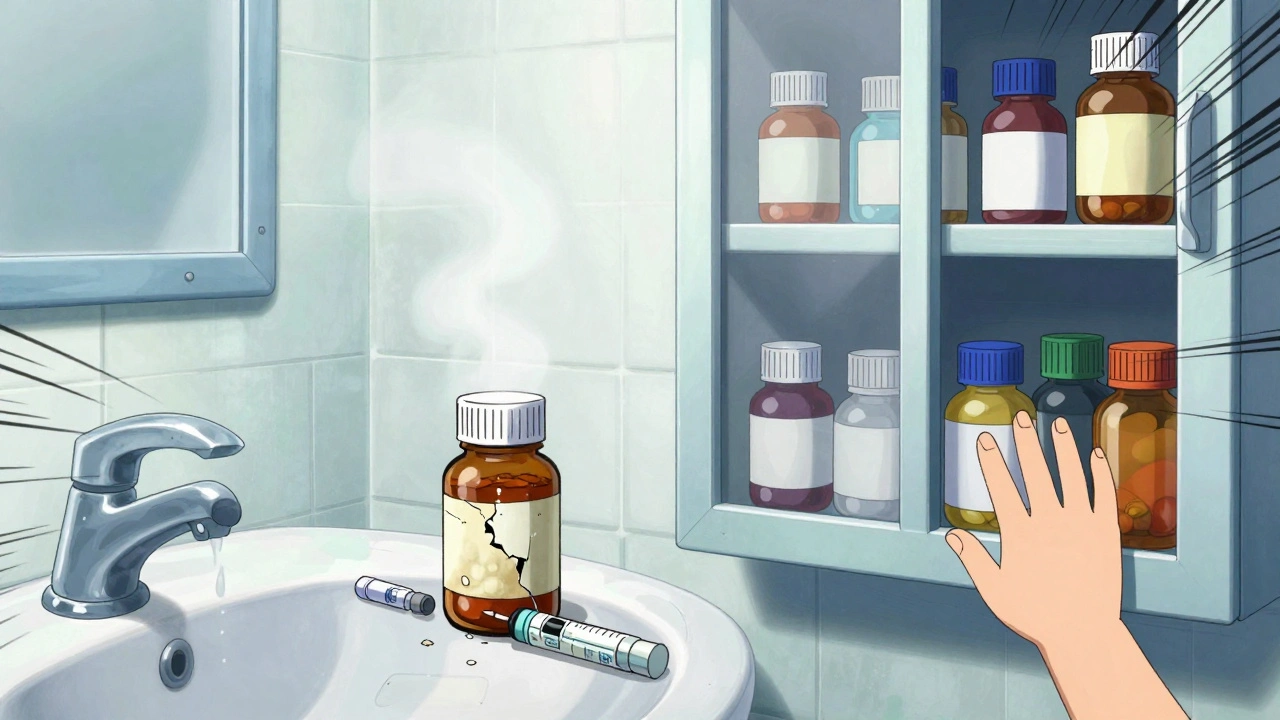
childproof medicine, a term used to describe storage methods and containers designed to prevent accidental access by children isn’t just about those push-and-turn caps. It’s about location. A drawer in the kitchen? Too easy. The medicine cabinet above the sink? Moisture ruins pills faster than you think. The best spot? A high cabinet in a cool, dry room—like a bedroom closet—away from heat, light, and curious hands. And if you have pets, don’t forget: dogs will eat anything that looks like a treat, including your antidepressants or painkillers.
medicine expiration, the point at which a drug is no longer guaranteed to be safe or effective by its manufacturer matters more than most people realize. That bottle of antibiotics from last winter? Toss it. Expired insulin can fail silently. Old nitroglycerin might not stop a heart attack. And don’t assume that just because the bottle says "use by 2024," it’s still good. Heat and humidity from your bathroom or car glovebox can break down medicine long before the date on the label.
Then there’s the risk of mixing meds. Someone else’s blood pressure pill might look like yours. A friend’s sleeping pill could be your neighbor’s anxiety med. That’s why keeping a medication list isn’t just smart—it’s life-saving. Write down what you take, why, and when. Keep it with your wallet or phone. If you’re rushed in an emergency, that list tells first responders exactly what’s in your system.
And don’t forget the environment. Flushing pills down the toilet? It pollutes water supplies. Throwing them in the trash? Someone might dig through it. The safest way to dispose of old meds? Take them to a pharmacy drop box. Most chain pharmacies have them. If not, mix them with coffee grounds or cat litter, seal them in a bag, and toss them. No one’s going to want to dig through that.
Safe medicine storage isn’t about paranoia. It’s about common sense. It’s the difference between a child staying healthy and ending up in the ER. Between a senior taking the right dose and accidentally overdosing. Between your painkiller working as it should and sitting in a damp drawer, losing potency. You don’t need fancy locks or smart cabinets. Just a little attention. A dry shelf. A locked box if you have kids or teens. A habit of checking expiration dates. And the courage to throw out what you don’t need.
Below, you’ll find real advice from people who’ve been there—how grapefruit messes with your meds, why generics aren’t always interchangeable, when taste changes mean something serious, and how to track recalls before they track you. This isn’t theory. It’s what works.
Medication Storage and Authenticity: How to Protect Your Home Supply from Counterfeits and Accidents
Learn how to store medications safely at home to prevent accidental poisonings, teen misuse, and counterfeit drugs. Discover the best storage practices, temperature rules, and disposal methods backed by health authorities.
More Detail