
Dysgeusia: What Causes Altered Taste and How Medications Play a Role
When your favorite food tastes like metal, ash, or nothing at all, you’re not imagining it—you’re experiencing dysgeusia, a persistent distortion of taste that makes food unpalatable or oddly flavored. Also known as taste distortion, it’s not just a minor annoyance—it can lead to weight loss, depression, and poor nutrition if left unchecked. This isn’t about a cold or a sinus infection. This is when your taste buds are sending wrong signals, and often, the culprit isn’t your mouth—it’s your medicine.
Many common drugs mess with taste, even if they’re not meant to. antibiotics, like metronidazole or clarithromycin leave a bitter aftertaste that lingers for days. blood pressure meds, especially ACE inhibitors like lisinopril, are notorious for causing a metallic taste. Even antidepressants, including SSRIs like escitalopram, can dull or warp flavor perception. These aren’t rare side effects—they’re well-documented, and they happen to more people than you think. Dry mouth, another common drug side effect, makes it worse. Less saliva means less ability to dissolve flavors, so even normal food tastes flat or off.
It’s not just about what you’re taking—it’s about how your body reacts. Some people notice changes right away. Others don’t realize their taste has changed until they stop eating because nothing tastes right anymore. And while some cases fade after stopping the drug, others stick around, especially if you’re on long-term therapy for chronic conditions. The good news? You don’t have to live with it. Simple fixes—like switching to a different medication, using saliva substitutes, or avoiding strong flavors—can help. What you’ll find below are real stories and practical advice from people who’ve been there: how certain drugs trigger dysgeusia, what alternatives exist, and how to talk to your doctor without sounding like you’re overreacting.
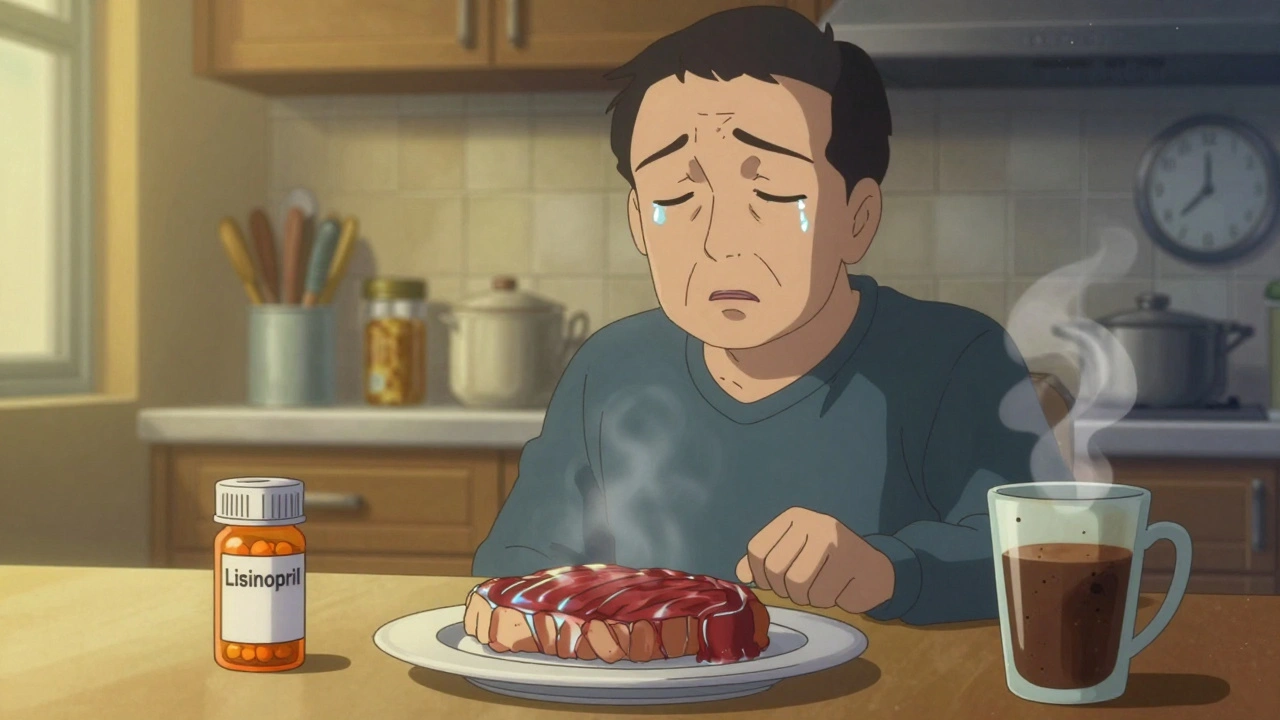
Taste Changes and Metallic Taste from Medications: Proven Coping Strategies
Metallic taste from medications is a common but often ignored side effect. Learn why it happens, which drugs cause it, and proven ways to cope - from zinc supplements to dietary tweaks - without stopping your treatment.
More Detail